
Organic Matters
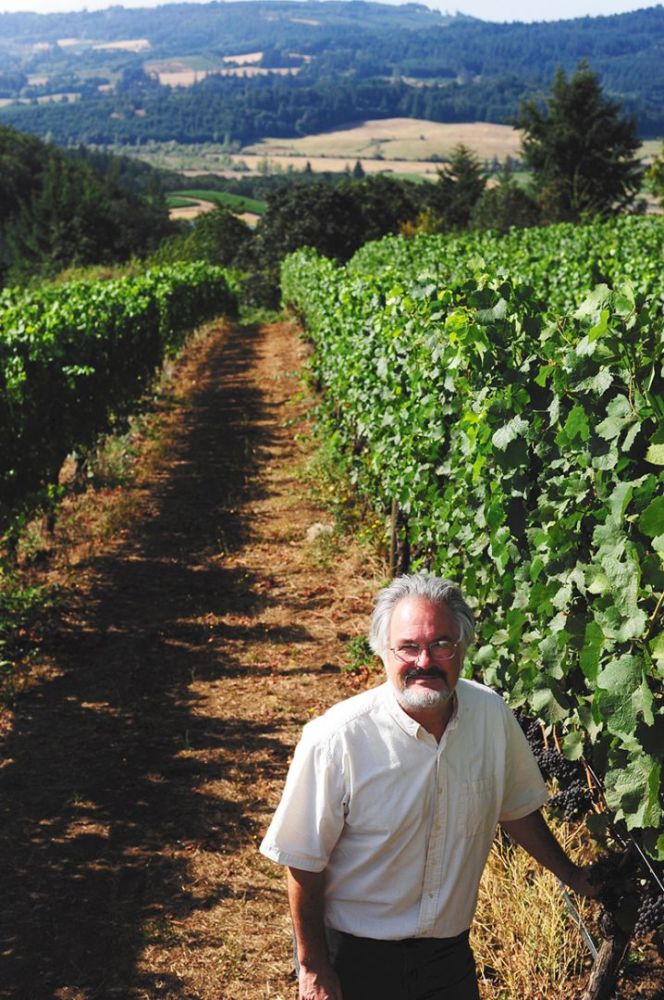
Temperance Hill Vineyard manager retires after 26 years

By Gail Oberst
Life’s twists and turns often alter one’s career path. Before Dai Crisp, longtime Oregon vineyard manager, began caring for his parents’ four acres of Pinot Noir– a former dude ranch they purchased in the 1970s, he set his sights on theater, studying at Oregon State University and UC Irvine. Then, a love of farming called him back to vineyard work in 1985.
On the farm, Crisp began experimenting with organic methods on the wine grapes and other crops. Farming organically was rarer for the time. He took on additional work in the Southern Willamette Valley– planting, hedging, harvesting, and much more.
“I did every single job in the vineyard,” he recalled.
In 1989, with experience and a good reputation in hand, Crisp was hired by Chancy Croft, founder of Polk County’s Croft Vineyards (with his family). Croft approved his plan to create an organic vineyard.
“I’d always questioned the use of herbicides,” Crisp shared. “Now, I was committed to organic farming.”
Following eight years with Croft, and another season at WillaKenzie Estate, Eddy Koo and his family, owners of Temperance Hill Vineyard, hired Crisp to manage their 100 acres in the Eola-Amity Hills. Koo was considering selling Temperance Hill at the time.
“He told me I had five years to bring it up,” Crisp noted. “That was 26 years ago.” The family still owns the vineyard.
After farming grapes at Temperance Hill for more than 30 winery customers over the years, Crisp has shifted his focus back to his family’s farm. Home to Lumos Wine Company, the brand he began in 2000 with his wife and business partner PK McCoy, the vineyard is located a few miles west of Corvallis.
Lauren Eisold, who has worked and managed Oregon vineyards for 22 years, is Temperance Hill’s new vineyard manager. Crisp continues as a consultant.
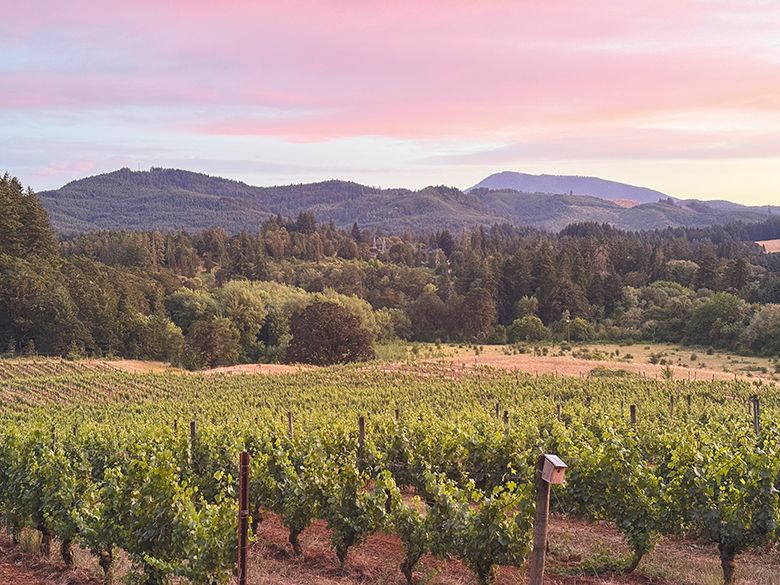
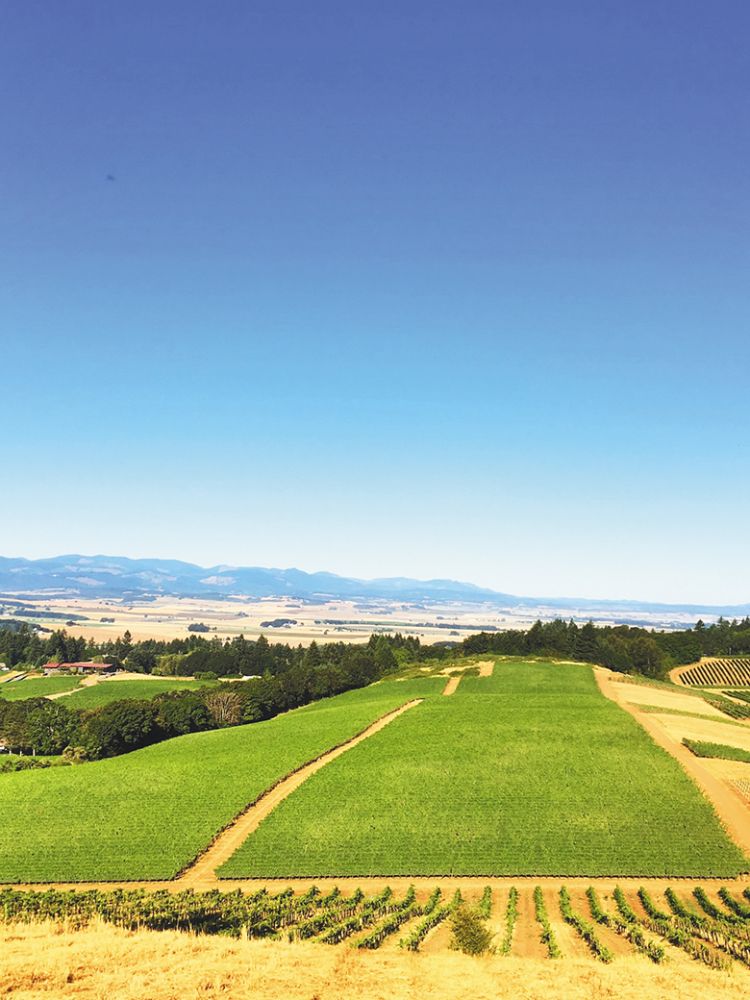
Temperance Hill has provided Crisp with plenty of drama over his tenure. Each of the 45 vineyard blocks is distinguished by differences in soil, aspect, elevation, slope and exposure. While most are generally impacted by the cool marine air flowing through the Van Duzer Corridor, some blocks facing southwest and others on the east side are slightly warmer.
“Every spot in this vineyard produces a unique taste,” Crisp reported.
Crisp’s years of experience organically farming this diverse landscape have made him a valuable resource for growers regionwide. Proof of his acumen is found on the many labels featuring Temperance Hill’s Pinot Noir, Chardonnay, Gewürztraminer and Pinot Gris grapes. Some are considered Oregon’s finest wines.
There has been no lack of dramatic challenges on Oregon’s wine stage. Quality, disease, prices, distribution and marketing will continue to disrupt. Often, these predicaments are beyond the winegrower’s control, Crisp observed.
“Unpredictable weather caused by climate change is driving most of the threats,” Crisp stated.
For example, Temperance Hill can be seen as a microcosm of vineyards across the Willamette Valley, many located at similar elevations ranging between 650 and 900 feet. These hillsides are now vulnerable to sudden storms and unexpected weather shifts that were once rare occurrences.
“Nailing the harvest is tricky,” Crisp admitted. There are often only a few days to capture the perfect sugars and pH balance.
Above a rocky block, Crisp slows his 1980s-era Mercedes 4WD and points out repairs made to “a scary steep grade” damaged by a recent storm. Controlling erosion is rapidly becoming a concern for hillside vineyards, he continued. Water and soil conservation can be impacted– and managed– by row width, cover crops, mowing and tilling.
While phylloxera has plagued our state’s vineyards for decades, new pests are migrating or have been imported. Grape growers often use insecticides to control mealybugs, brown stink bugs and other pests. Now, organic solutions– some as simple as effectively timing organic sulfur sprays– are available.
Crisp acknowledged that additional research on organic pest control is needed.
“We must farm more sustainably and efficiently. We need novel approaches like pheromones and mating disrupters. These should be our focus.”
In other words, organic farming requires modern miracles, not just manure.
“I’ve been farming a large experiment that studies what techniques best enhance wine quality,” he said of Temperance Hill.
Drone technology, electric or fuel-efficient vehicles, solar energy and other innovations are all part of the vineyard manager’s toolkit. Hoping to limit soil compaction, Crisp found a tractor capable of performing two functions simultaneously. It reduces both labor hours and fuel costs, significant in these days of high-priced diesel. Dry farming, tilling methods and timing, attention to silt movement and cover crops all aim at preserving the ground.
In addition to his Lumos Wine Company work, Crisp continues his involvement with the Northwest Center for Small Fruits Research, an organization with 11 USDA agricultural research scientists working in Oregon, Washington and Idaho. In fact, berry farmers and winegrowers face similar problems and a shared set of pests, so collaborating on research saves time and money while benefiting both groups. Crisp has made more than 25 trips to Washington, D.C., all centered on promoting innovative farming methods over conventional practices.
Organic winegrowers in Oregon have long been a collaborative bunch, sharing ideas on how to control voles and powdery mildew. Crisp has championed organic vineyard management through workshops, YouTube videos and online interviews. He supports organic research and training at Oregon State University, Chemeketa Community College and other educational programs. Crisp is also part of the Oregon Organic Winegrowers Network and the American Society for Viticulture and Enology.
How do these grape-growing challenges impact the wine in your glass?
The goal is not merely growing organic, but cultivating grapes that reflect each specific place, Crisp asserted.
Crisp predicts Oregon wineries will continue producing some of the world’s finest Pinot Noir and an expanding list of warmer-weather varieties. The diversity of ecosystems– especially in the Willamette Valley foothills– could offer protection from unusual weather challenges. However, smaller wineries may fold with the shifting market, so visit them while you can. Crisp’s renewed focus on Lumos aims to bolster direct sales at his family’s operation.
Also, prepare to pay more for Oregon wines due to rising grape-growing costs.
Yet, there’s a bright side for locals. Oregon’s reputation for exceptional wines has reached the rest of the world, but that position has narrowed as a result of tariffs and other distribution controls. A market in flex could signal the best availability and prices for those who buy direct this year. That sounds like a good excuse for an Oregon wine tour.
“People are seeking higher quality, authentic, expressive wines,” Crisp declared. “That has not changed.”
Gail Oberst has been a Northwest writer, editor and publisher for decades. Among her favorite gigs was business editor for the News-Register, and editor pro temp for three months for the Oregon Wine Press. Inspired by the OWP, she founded the Oregon Beer Growler with her family, later selling it to Oregon Lithoprint. She continues to edit and write a wide range of articles for magazines, and weekly and regional newspapers. Recently, she published her first novel, "Valkyrie Dance," available on Amazon, and is working on her second, "San Souci." She lives in Independence, Oregon and has four grown children and seven grandchildren.