Field of Dreams
Oregon winemakers let nature shape the recipe
By Luis Romero
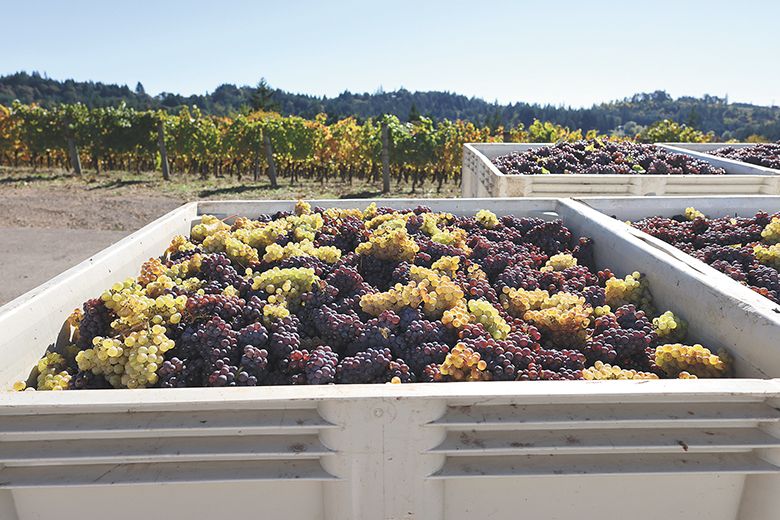
In Vienna, Gemischter Satz, meaning “mixed planting or set,” is a winemaking style where various grape varieties– growing side by side– are harvested and fermented together. In Alsace, the tradition is called Edelzwicker, edel means noble in German and zwicker is blend– a noble blend of whites. These field blends are shaped not by a winemaker’s blending decisions in the cellar, but by the chemistry of unique varieties interacting within a single fermenter.
The ethos of minimal or non-intervention winemaking is part of Oregon’s identity and inspiration for some of the newest and most creative blends. While not all the wines precisely match the definition of a field blend, they do reflect the ingenuity, passion and winemakers’ desire to find new ways to make wines from the land. All allow nature to tell its story. Meet Oregon’s winemakers daring to craft something distinct.
In May, I visited nine producers across the Valley and into Portland. They ranged from industry legends and multigenerational family farms to one-person operations. Borrowing names from Norwegian, French, German, Spanish and Viennese traditions, these wines wed heritage, story and style in the bottle, often using rare varieties in Oregon, including: Golubok, Kerner, Ehrenfelser, Mencía, Siegerrebe and Madeleine Angevine.
This is a story about Oregon’s vineyards and the field blends grown there. Learn how these wines are made, what these blends express about their creators and the state’s winemaking future.
STORIES IN A BOTTLE
Hanson Vineyards, Woodburn
Jason Hanson’s passion for wine was likely inspired by his father, Clark, a longtime hobby winemaker. In 2008, Hanson returned to the property where he was raised. There, he planted Pinot Noir alongside Gamay, Riesling, Gewürztraminer, Maréchal Foch, Auxerrois, Léon Millot, Golubok, Blaufränkisch, Zweigelt, Pinot Gris, Pinot Blanc and Chardonnay.
For Hanson, winemaking is a deeply personal endeavor, using all estate-grown grapes, fermented with minimal intervention and released based on the outcome of the process, not an evaluation of the plan.
His labels are iconography to larger themes. Tre Søstre, Norwegian for ‘Three Sisters,’ is a co-ferment of Pinot Noir, Pinot Gris and Pinot Blanc, honoring the family’s Scandinavian heritage. Poets’ Lament combines Gewürztraminer and Chardonnay on the skins for two weeks, creating a lower-alcohol orange wine.
Each of the six wines I tasted was a unique combination, a different experiment proving a single estate can contain multitudes. The Valley has yet to find a name for Hanson’s style– small estate co-ferments and blends, crafted by a farmer who treats each vintage as a dialogue with the land.
Hanson Vineyards 2022 Tre Søstre (Pinot Noir, Pinot Gris, Pinot Blanc); Hanson Vineyards 2024 Poets’ Lament (Gewürztraminer, Chardonnay); Hanson Vineyards 2024 Chardonnay/Pinot Blanc; Hanson Vineyards 2022 Rustic Red Blend (a partial field blend)
CLASSICAL UNDERSTANDING MEETS CREATIVITY
Franchere Wine Company, Woodburn
While working as a web developer in Chicago, Mike Hinds discovered his love of wine in a bottle of Vouvray, prompting a career change and eventually a move to Oregon. He completed viticulture classes at Chemeketa Community College and apprenticed as a cellar intern at Illahe Vineyards. In 2013, Mike Hinds founded Franchere Wine Company, naming it after his great-great-great-grandfather, Gabriel Franchère, a Montreal fur trade clerk who arrived in Oregon in 1811.
Franchere wines are produced from dry-farmed, organic, biodynamic or sustainable vineyards. Lionesses, a field blend of German varieties Kerner and Ehrenfelser, is aged for nine months and reflects the vineyard’s Jory soils. The acidity drives the wine through a long finish, binding two obscure grapes into something greater than either could be alone.
Both Franchere field blends are bright with acidity, balancing noninterventionist practice with classical winemaking sensibility.
Franchere Wine Company 2023 Lionesses (Kerner, Ehrenfelser); Franchere Wine Company 2025 The Rosé (Pinot Noir, Gamay, Gewürztraminer)
FREEDOM WITH PRECISION
Day Wines, Dundee
Day Wines’ founder Brianne Day shared how she developed both her love of wine and her winemaking philosophy while working harvests across Burgundy, Argentina, Australia and New Zealand. After visiting roughly 80 regions, Day returned to Oregon and trained at Brooks Winery. In 2012, she started Day Wines, gradually increasing her annual production from 125 cases to nearly 20,000.
Day Wines’ Vin de Days Blanc of Pinot Gris, Riesling, Pinot Blanc, Müller-Thurgau and Muscat is modeled loosely on Alsatian Edelzwicker. She co-ferments the fruit in stainless steel to produce a floral, crisp and exquisitely balanced wine.
Day has merged global tradition with Oregon’s pioneer spirit, finding her own precise, refreshing expression.
Day Wines 2024 Vin de Days Blanc 2024 (Pinot Gris, Riesling, Pinot Blanc, Müller Thurgau, Muscat); Day Wines 2025 Vin de Days l’Orange (Pinot Gris, Gewürztraminer, Riesling); Day Wines 2023 Dazzles of Light (Chardonnay, Sauvignon Blanc, Melon de Bourgogne)
STARGAZING INSPIRATION
Long Walk Vineyard, Ashland/Carlton Winemaking Studio
In 2000, Stanford graduates Kathy and Tim O’Leary purchased the 50-acre Valley View Orchard in the hills overlooking Ashland. Two years later, they planted Long Walk Vineyard with 11 acres of their favorite grape varieties and the entire property achieved organic certification.
I sampled two bottles at the Carlton Winemakers Studio, where the wines are made. The Long Walk Vineyard 2022 Field of Stars is a co-fermented field blend of four Rhône varieties: Grenache, Mourvèdre, Carignane and Syrah. It was inspired by the O’Learys’ pilgrimages walking the Camino de Santiago and the official certificate of completion, or Compostela, which some translate to “field of stars.” Delicate and layered, it was interesting to taste alongside the Long Walk Vineyard 2022 Field Notes, made with the same grapes, yet each variety was fermented separately before blending in the cellar.
Side by side, the contrast is immediate. The co-fermented field blend is softer, more integrated and harmonious. The cellar blend is bolder– each variety asserting itself. Two wines grown in the same vineyard, using the same grapes from the same vintage. Yet, producing different conclusions.
Field of Stars 2022 (Syrah, Mourvèdre, Carignane, Grenache)
LEGENDARY CONVICTION
Planet Oregon, Carlton
Tony Soter’s career began in Napa Valley, where he worked at Stag’s Leap Wine Cellars in 1975, before consulting for iconic brands such as Shafer, Spottswoode, Dalla Valle and Araujo. In 1982, he founded Etude Wines, selling it nearly 20 years later, after returning to Oregon.
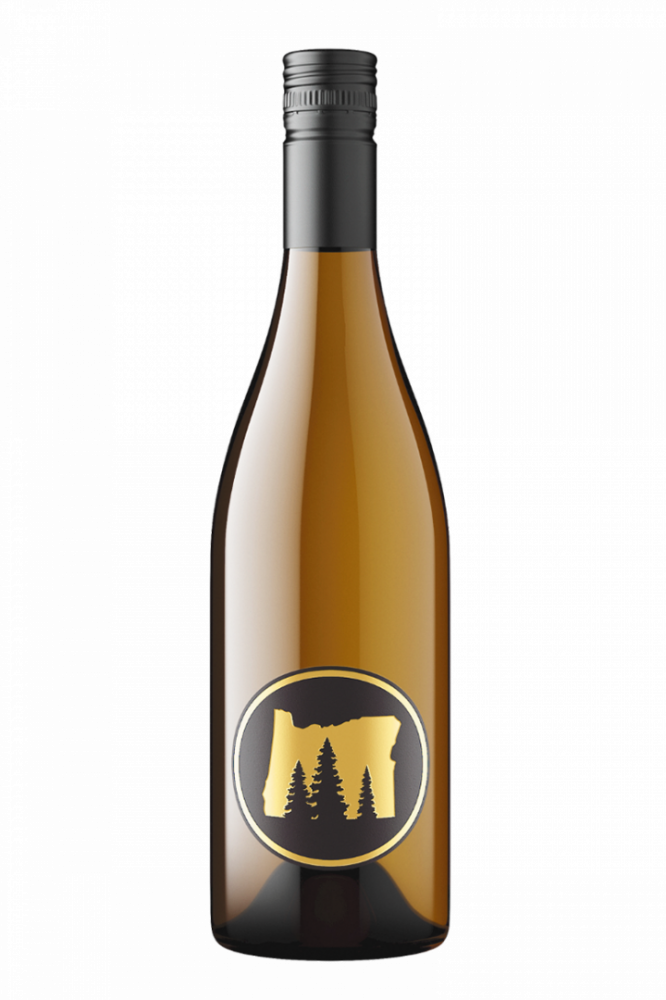
The biodynamically farmed 250-acre Mineral Springs Ranch is home to Soter Vineyards, a winery with the resources to craft high-quality premium wines. Planet Oregon is Soter’s mission-driven brand focused on exemplary value using both estate fruit and sustainably-farmed grapes sourced from local winegrowers. Often, quality and integrity must be sacrificed for volume and price. But Soter rose to the challenge, creating a well-crafted wine without cutting corners. Planet Oregon’s eight-variety field blend includes Madeleine Angevine and Siegerrebe. He’s committed to promoting sustainability, donating one percent of Planet Oregon’s sales to the Oregon Environmental Council.
Planet Oregon 2025 White Field Blend (Grüner Veltliner, White Pinot Noir, Pinot Gris, Pinot Blanc, Gewürztraminer, Madeleine Angevine, Madeleine Sylvaner, Siegerrebe)
FAMILY LEGACY
Elk Cove Vineyards, Gaston
Visiting Elk Cove Vineyards was a homecoming after working there last summer. Considered one of the Willamette Valley’s legacy estates, Elk Cove was founded in 1974 by Pat and Joe Campbell. Now in the hands of the second generation, Elk Cove farms 400 acres of estate vineyards across multiple sites in the Northern Willamette Valley. Among Oregon’s larger producers, Elk Cove is one of the few still operated by the founding family.
Edelzwicker, one of Elk Cove’s newest releases, is an Alsatian-style, partially co-fermented white blend of Pinot Gris, Muscat, Gewürztraminer and Riesling. With fruit sourced from estate vineyards, the acidity provides a refreshing counterpoint to the off-dry style. It is especially delightful during the summer.
The question it raises is part of the broader conversation in this story. Can multi-variety winemaking work at scale in Oregon, or is it fundamentally a small producer practice? Alongside Planet Oregon, Elk Cove Vineyards is testing the limits of the consumer’s perception of Oregon wine.
Elk Cove Vineyards 2025 Edelzwicker (Pinot Gris, Muscat, Gewürztraminer, Riesling)
AUTHENTIC SINCERITY
Fossil & Fawn, Northwest Portland
While Fossil & Fawn’s motto may be “get weird, suck less,” Jim Fischer and Jenny Mosbacher’s winemaking style isn’t strange at all. True to Oregon’s winemaking identity, the Portland couple’s wines are low-intervention, focused more on the process than the outcome.
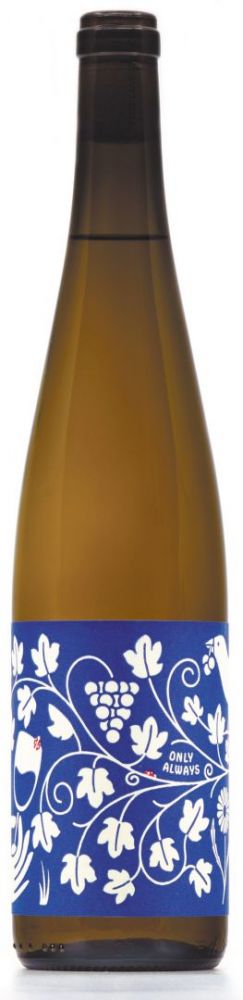
Fossil & Fawn’s Only Always is a Gemischter Satz, with grapes grown at Sunnyside Vineyard in the South Salem Hills. For the 2024 vintage, Auxerrois and Gewürztraminer were picked and pressed together before Riesling was added to the blend, forming an identity that is both clean and distinct.
So, while Only Always doesn’t fully adhere to the Austrian field blend requirements, it is reflective of the experience. Rooted in place rather than rules, this Fossil & Fawn wine is a love letter to Vienna, written in Oregon soil.
Fossil & Fawn 2024 Only Always, Sunnyside Vineyard (Auxerrois, Gewürztraminer, Riesling)
LIVING IN HARMONY
RAM Cellars, Southwest Portland
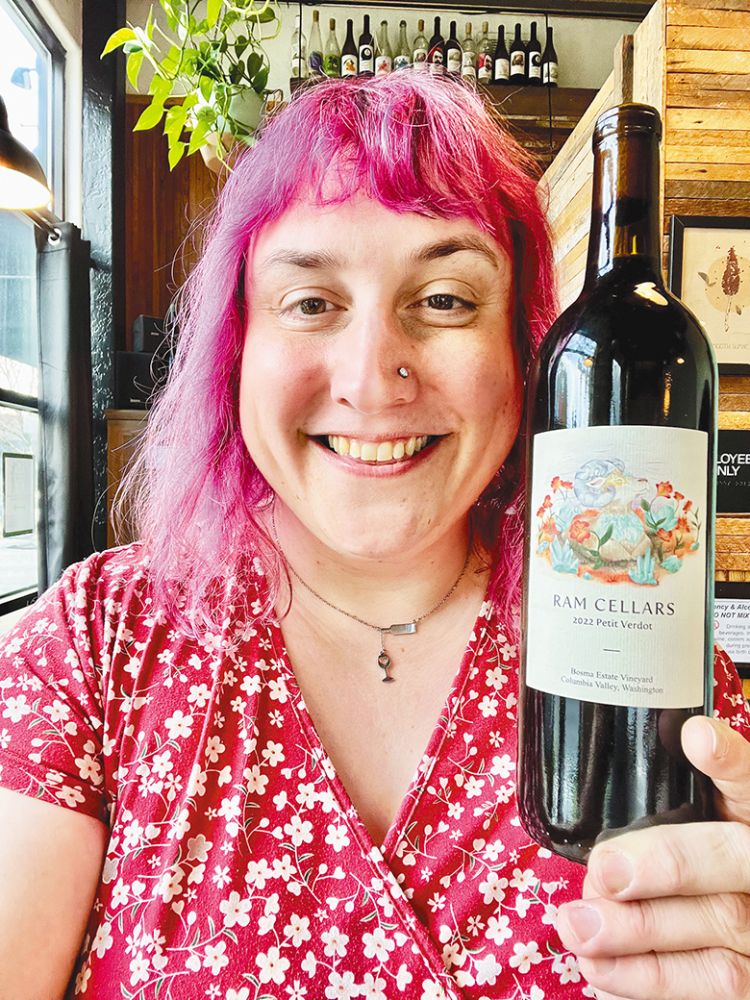
RAM Cellars is a tribute to owner Vivianne Kennedy’s grandfather, Roger Allen Marks, who championed her decision to pivot from social work to winemaking. In 2019, five years after launching RAM, Kennedy started Viv, a label dedicated to living authentically. Three dollars from each bottle is donated to organizations supporting queer and transgender people.
She feels “wine is a social elixir that brings us together. No more gatekeeping.” A visit to Kennedy’s tasting room embodies that welcoming spirit. Her wines are primarily sourced from the Columbia Valley and Columbia Gorge. RAM Cellars 2023 Le Bélier Orange is a skin-contact field blend, spending 25 days on the skins.
Kennedy strives to be a “steward of the process,” using native yeast and minimal sulfites, no fining or filtration, allowing the wines time to fully reveal themselves before release.
RAM Cellars 2023 Le Bélier Orange (Riesling, Marsanne, Roussanne); VIV 2023 Lumière Rosé (Syrah, Malbec); VIV 2023 Almost Red (Marsanne, Syrah, Counoise; Columbia Valley)
KEEP IT FOCUSED
Limited Addition Wines, Gaston and Concinnitas Farm, Yamhill
Owners Chad and Bree Stock are pushing the Oregon wine boundaries with precision and an unmatched comprehensive understanding. Both are deeply committed to winemaking and wine education as they grow two brands: Limited Addition and Concinnitas Farm.
Concinnitas Farm’s Yamhill vineyard is certified organic and dry-farmed. The planted varieties read like a map of the Iberian Peninsula: Mencía, Garnacha Tinta, Trousseau Noir, Godello, Albariño, Arinto, Loureiro, Juan García and Castelão, alongside Pinot Noir, Chardonnay, Aligoté, Chenin Blanc, Gamay Noir and Savagnin.
That connection is intentional, much like their wines. The couple draws explicit parallels between the Willamette Valley and the Ribeira Sacra area in Northwestern Spain’s Galicia region. Both have similar climates, rainfall and proximity to the ocean and forested mountains. These plantings offer a peek into Oregon’s future if the Burgundian hold is broken.
Chad acknowledged the Valley is growing warmer and shared the couple’s focus on climate resilience and the potential limitations of Pinot Noir as a monoculture. By introducing varieties uncommon to Oregon, the couple hopes to extend the state’s winegrowing weather viability another 20 to 50 years.
Limited Addition 2022 Blaufränkisch/St. Laurent; Limited Addition 2022 Bright Lights (Grüner Veltliner, Riesling, Müller-Thurgau); Limited Addition 2023 Vitae Springs Cofermentation (Pinot Gris, Pinot Noir); Concinnitas Farm 2024 Camino (Mencía, Godello)
OREGON’S DIVERSITY
During my trip, I not only discovered grapes rarely grown in Oregon, but also distinct styles and approaches. This is the true spirit of Oregon winemaking– one based on a respect for the land, process and a desire to be unique and innovative. Both a Northwest value and an American staple, it’s fitting as the nation celebrates 250 years since the birth of an ideal turned into a national identity.
Not all of these wines are field blends in the strictest sense. But they collectively represent a shared orientation: plant more than one variety, ferment together or blend later and trust the result will be greater than the sum of its parts.
These producers are small, independent and largely unknown beyond their tasting rooms and carefully curated restaurant lists. The large houses have yet to follow. Elk Cove’s Edelzwicker and Soter’s 200-case Planet Oregon white field blend are as close to scale as it gets.
Oregon law requires 90 percent of the specific grape for varietal labeling, which is significantly stricter than the 75 percent allowed at the federal level. (Although 18 varieties traditionally used for blending are exempt.) This rule pushes multi-variety wines toward proprietary names and borrowed European terminology. That regulatory reality, combined with Oregon’s Pinot Noir identity, means field blends remain unusual.
But the margins are where the future tends to start.
The climate is warming. Monoculture tends to be fragile. These wineries are betting on a future shaped not by a single grape but by many, growing together in the same ground. Each becomes a unique story.
Luis Romero, M.S., M.A., is a wine, beer, and spirits educator, certified sommelier, beverage specialist, and owner of the International Beverage Academy, an approved program provider offering WSET certifications in English and Spanish to professionals and enthusiasts alike. With more than a decade of university teaching and beverage education experience, Luis currently serves as a business lecturer at Highline College in the Seattle area while teaching WSET certification programs at partner schools across Oregon and Washington. He is completing his WSET Diploma as he continues to deepen his expertise in the field. His writing has appeared in Bon Appétit, Plate Magazine and other print and digital publications. His passion for life is only rivaled by his desire to learn and share new experiences with both readers and loved ones.