Busy as a Bee
Oregon wineries are going bee-friendly— and the results are sweet
By Sarah Murdoch
Oregon winemakers are sourcing grapes from vineyards prioritizing healthy ecosystems– long before the wine reaches your glass. This month’s Pollinator Week (June 22-28) provides a wonderful opportunity to learn more about bees and the role they play in wine.
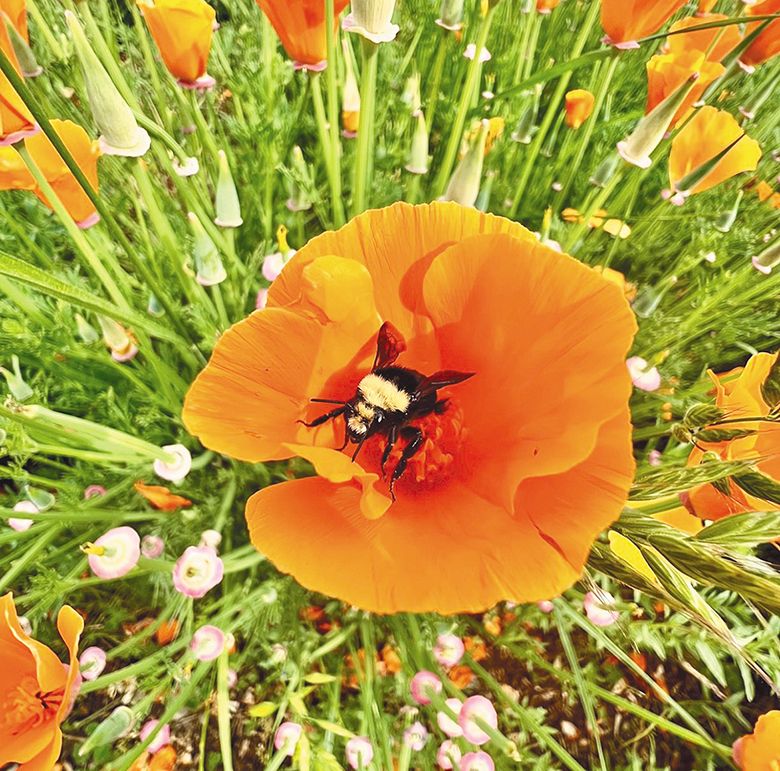
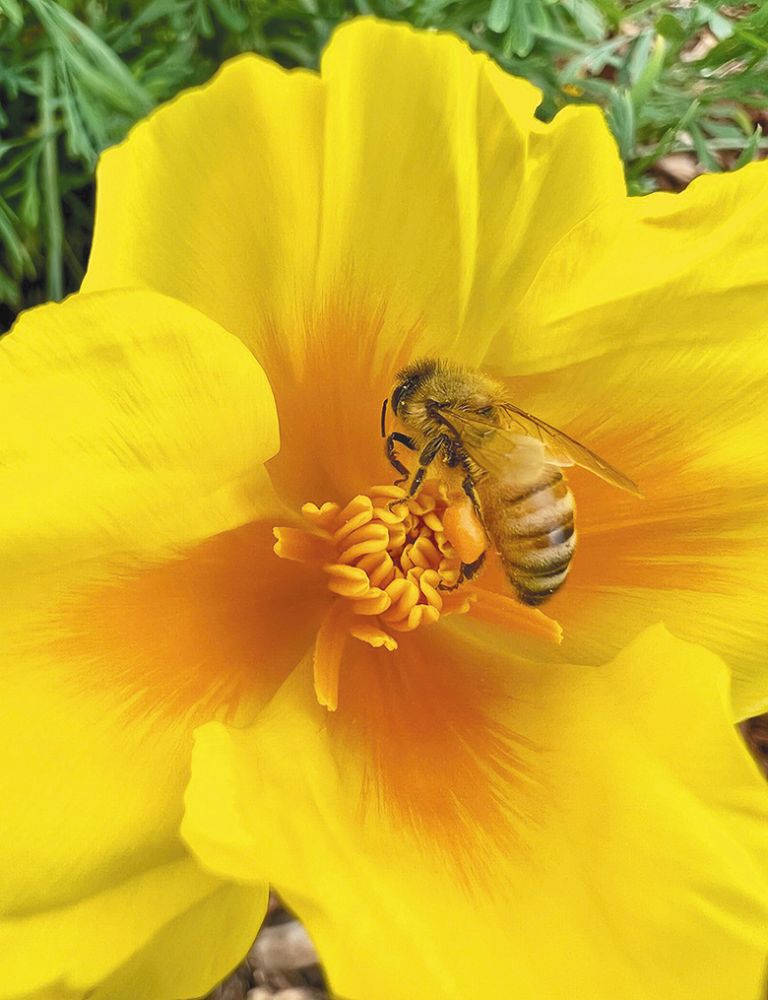
Grapes are magical little machines whose blooms contain both male and female reproductive parts, making them self-pollinating and reliant on wind and gravity rather than bees. Although bees aren’t necessary for grape production, they’re vital to vineyard ecosystems. Bees pollinate flowers and clover between rows to improve soil health, supporting the overall biodiversity of the vineyard. Their presence signals a balanced, healthy ecosystem.
MEET THE BEE GIRL
Equally remarkable is the bee itself; melittologist Sarah Red-Laird has devoted most of her life to bees. A self-described wild child who felt calm only when outdoors, splitting her childhood between Ashland and Alaska, she “picked dandelions and caught voles, salamanders, bees, tadpoles and anything else I could find to bring inside as a pet. Bees just came along with an affinity for all things feral.”
Red-Laird continues, “Honestly, I can’t remember a time I wasn’t interested in bees.” At four, she watched beekeepers work their hives and pull honey at her aunt’s home in Southern Oregon. She was amazed by the fresh, warm July honey and also the bees. “It was a transformational moment,” she recalls, “and I pictured myself growing up to be a beekeeper.”
Red-Laird, aka “Bee Girl,” currently heads Bee Regenerative, based in Ashland. The organization was born “pretty much by accident” when community members began asking her to set up their hives and speak in classrooms. Bee Regenerative’s mission is to inspire and advance bee conservation on agricultural landscapes, including Oregon vineyards. Funded by community grants and donations, donors include the Ashland and Medford Food Co-ops, Autzen Foundation, One Hive Foundation and the Jackson Soil and Water Conservation District.
She points to the nearly 50,000 acres of wine grapes planted in Oregon and asks, “How incredible would it be if each of these acres had more flowers and bees, healthier soil and fewer chemicals?”
BEE FRIENDLY VINEYARDS
Each “Bee Friendly Vineyard” is enrolled in a no-fee, science-based partnership program focused on building thriving pollinator habitats and using regenerative land management practices. Participating wineries include: Bledsoe|McDaniels, Hope Well Wine, Irvine & Roberts Vineyards, Sound & Vision Wine Co., Trisaetum Winery, Troon Vineyard & Farm, Upper Five Vineyard and Weisinger Family Winery.
Hope Well’s Mimi Casteel is a friend of Red-Laird and presented at this April’s Southern Oregon Roots and Wings event with 10 fellow bee advocates. Hope Well serves as a benchmark of regeneration and healthy habitat.
Because bees depend on continuous food sources, they need flowering plants from early spring through late fall. “Bees are facing starvation at the busiest time of our winegrowing year,” states Casteel, “so anything we can do to feed and water them is critical. Taking that extra step to encourage grape growers is what Bee Regenerative is all about.”
Vineyard tillage is another major concern. “About 70 percent of native bees nest in the ground so tilling collapses nest tunnels, killing the developing brood inside. Moving to no-till or reduced-till is key to supporting bees,” reports Red-Laird.
CAN BEES MAKE BETTER WINE?
In 2019, Trisaetum Winery partnered with Bee Regenerative. Over four field seasons, they increased wildflower plantings and reduced mowing and tillage throughout Trisaetum’s Ribbon Ridge and Coast Range vineyards. Since the partnership began, the native bee species count has grown from seven to 44, a 528 percent increase.
The partnership began when James Frey, founding winemaker and artist, presented Red-Laird with an idea “that bees and flying insects might ‘dust up’ the yeasts and fungi that shape a wine’s character…Can bees make a better wine?”
This led to a collaboration with Eastern Washington University’s Jenifer Walke, Ph.D., a microbial and disease ecologist who studies the connections between honey bees, ground-nesting bees, pollen and soil.
“Trisaetum had just joined 1% for the Planet and could have simply written a donation check. Instead, we built a multi-season, data-informed project together. I collected bees and flowers, James tracked the wine and vineyard decisions were shaped by what we learned,” notes Walke.
GROUND LEVEL
Ashland’s Irvine & Roberts Vineyards, owned by Dionne and Doug Irvine, was Bee Regenerative’s first vineyard partner.
Explains Dionne: “Sarah was instrumental in sharing her knowledge with our team and guiding us in many ways, including cover crop seed selection to help foster a healthy habitat for more bees. We saw a noticeable increase in our bee populations beyond the vineyard. Bees are all over the property now. We’ve also observed a significant difference in the overall health of our vineyard.”
As well as eliminating soil tillage, which Red-Laird believes is the most effective action a vineyard manager can take, Irvine & Roberts adopted these Bee Regenerative tenets:
- Eliminate pesticides that harm bees (and people, too). Pesticides like neonicotinoids and other systemic insecticides are toxic, but fungicides can weaken bee immune systems. Timing matters too– even organic-approved inputs do damage if applied when bees are most active.
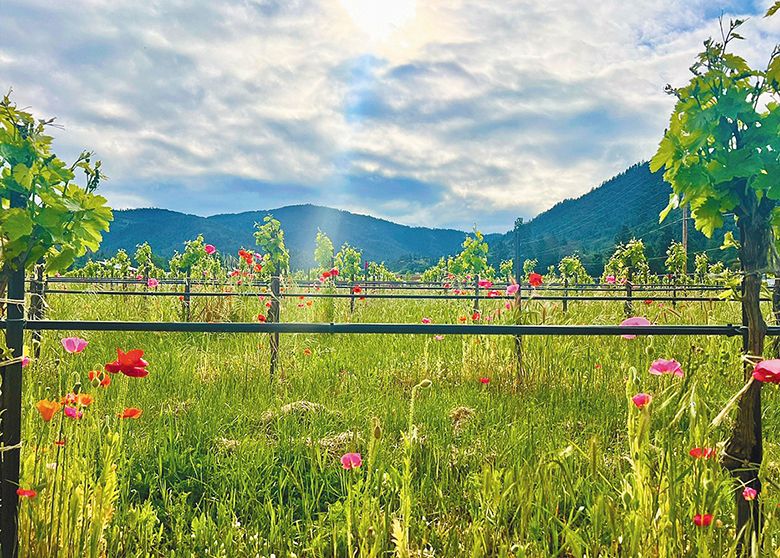
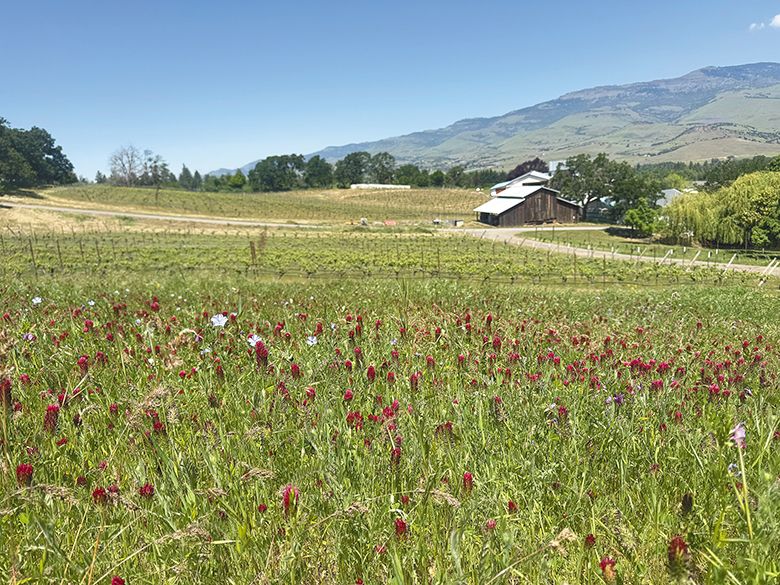
- Increase biodiversity in and around the vineyards. The goal is a variety of plants flowering from early spring through late fall. Bunchgrasses, clover, phacelia, Queen Anne’s lace and native wildflowers offer bee nourishment through summer’s end.
- Educate consumers. Tasting room conversations translate science into choices, influencing buying decisions.
- Leave undisturbed edges. Headlands, fencerows, oak woodlands and vineyard understory are ideal environments for ground-nesting bees. Bare soil, leaf litter and pithy stems also make suitable habitats. Choosing not to mow is the most bee-friendly action a vineyard can take.
- Provide water. A shallow, pebbled water source near flowers lends hydration during Oregon’s late-summer dry stretch.
BIODYNAMIC AND BEE FRIENDLY
Troon Vineyard & Farm is the newest Bee Regenerative partner. Garett Long, Troon’s director of agriculture, explains, “Although still in the early stages of becoming a Bee Friendly Vineyard, Troon has been bee-friendly in practice since transitioning to biodynamic and regenerative practices in 2018. The cumulative impacts of no-till farming, planting flowering cover crops and maximizing biodiversity throughout the farm are astounding.”
Long adds, “We observe more insect and bird species every year…Troon eliminated tillage in over 80 percent of our vineyard acreage and is 100 percent no-till on the rest of our property. We worked closely with Buzz Cover Crop Seeds to develop custom mixes with more than 15 species of low-growing flowering cover crops that don’t interfere with air and light in the grape canopy. Vineyard borders, containing flowering daikon and mustard, are left unmowed well into spring. Troon has more than 10 acres of biodiversity reserves, providing plentiful foraging for our tiniest livestock: bees!”
Southern Oregon is also an essential stopover for monarch butterflies, an important pollinator, which migrate through the region twice each year.
Continues Long, “In addition to becoming a Bee Friendly Vineyard, Troon is a registered Monarch Waystation and hosts a fun celebration each National Start Seeing Monarchs Day. We give away milkweed starts and seeds and offer specials on the Troon Ascendant rosé, with monarchs and milkweed on the label.”
YOUR ROLE IN THE HIVE
Wine consumers can support Bee Friendly Vineyards with both their dollars and voice. Red-Laird suggests, “When visiting a winery, ask, ‘Who’s farming your wine, what’s happening between and under the rows, and what’s the vineyard’s relationship with pollinators?’ When a tasting room associate is asked repeatedly about pollinators, those comments travel back to the winemaker.”
Learn more at beeregenerative.org and pollinator.org/pollinator-week.
Sarah (aka Sally) Murdoch runs Puncheon PR and has marketed many iconic sports and beverage brands, which eventually led her to the Oregon Wine Board where she headed communications for almost seven years. A native Portlander and Oregon Duck with a journalism degree, she is an avid tennis player and captains a number of tennis teams. She recently made Forest Grove her home, and her go-to winery is Tualatin Estate Vineyard. Visit sallymurdoch.com to learn more.