Uncorked Truth
Why the 'wine mom' trope misses the mark
By Aakanksha Agarwal
You see these clichéd phrases everywhere. On mugs, Etsy merchandise and Instagram captions with thousands of likes: “Mommy needs wine.” “Wine because kids.”
They read as humorous, but the premise is clear: parenting is exhausting, and wine is the relief.
This idea– so familiar– is rarely questioned. But, in Oregon, for those building businesses around wine, the reality is far more specific.
The “wine mom” trope didn’t originate from vineyards or tasting rooms. It began in social media parenting culture, where humor is quick and repeatable. Studies of social media and popular media have found “wine mom” culture frequently presents alcohol as a coping mechanism for the pressures of parenting while reinforcing simplified expectations of motherhood and normalizing drinking behaviors.
At the same time, researchers note these jokes also function as a form of connection– mothers sharing experiences while performing an isolating role.
For Portland-based food and hospitality strategist Judiaann Woo, the issue is not that the stress is overstated, but rather the explanation is flattened.
“It becomes shorthand for maternal stress and detracts from the complexity of motherhood,” Woo said. “Moms don’t just need wine. Moms need a village.”
Absent are the reasons causing tension: work schedules that don’t align with school hours, unreliable childcare, imbalanced domestic labor and financial pressure. None of that fits neatly on a coffee mug.
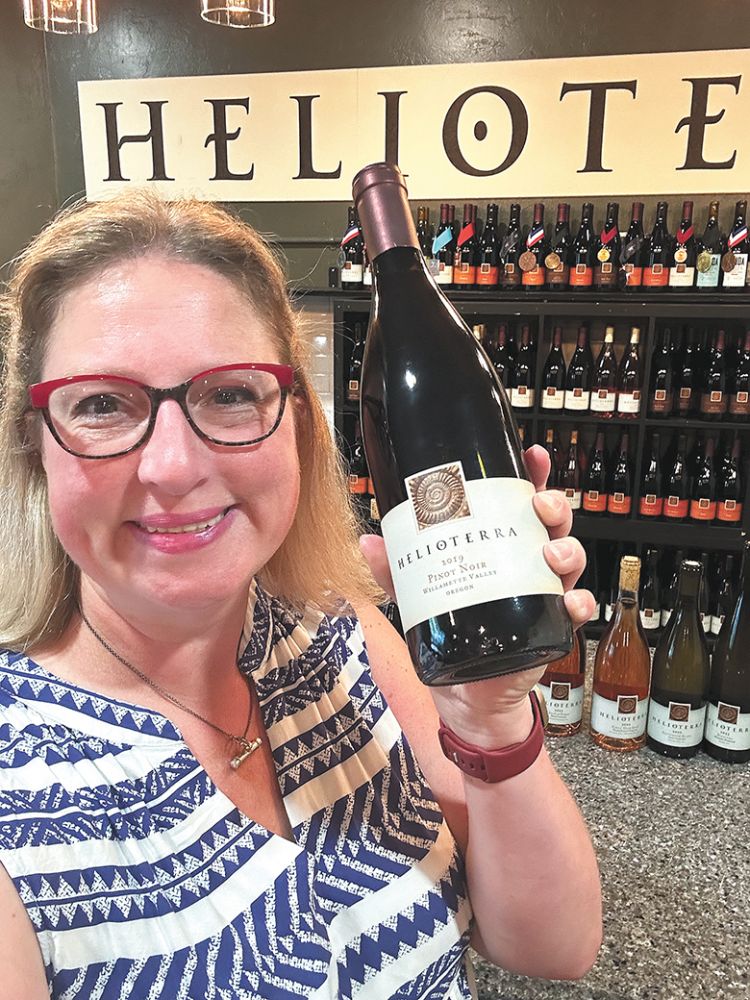
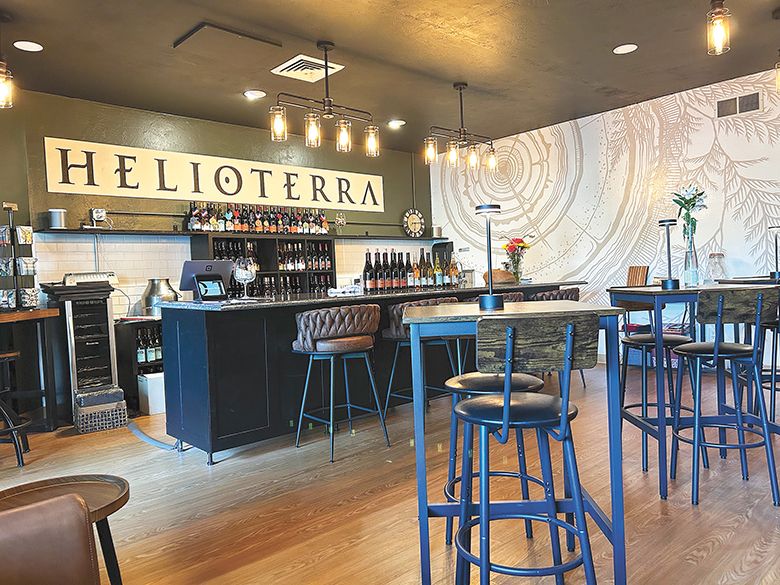
That simplification is also why wine became the symbol. Anne Hubatch, proprietor and winemaker at Helioterra Wines, believes wine has long been framed culturally as moderate, social and often associated with women.
“Wine has always been stereotyped as a woman’s drink,” she noted. Unlike other forms of alcohol, wine is rarely imagined as solitary. “Once you open a bottle, it is meant to be shared.”
In Hubatch’s new Fish Creek, Wisconsin wine bar, tables sit close together; conversations move between them and what begins as a small group often expands. “Many guests arrive as strangers, but leave as friends,” she shared.
A bottle might spark interaction, but conversation sustains it. A mother’s desire for time with other adults, to connect beyond the routines of caregiving, is real. At most, wine merely provides the setting.
In hospitality spaces where Woo works with chefs and beverage teams, quality takes priority over quantity. Glassware, temperature and pairing are deliberate; wine is sipped throughout the meal. “I drink wine because of the pleasure of what it is and an appreciation for the winemaking process,” Woo asserts. “I try to be fully present with it.”
Hubatch notes a similar behavior among younger drinkers; many lack a strong knowledge base but have curiosity. “They don’t know a lot, but are interested in learning,” she explained. “The more they know, the more comfortable they become.” Instead of returning to a familiar bottle, they ask questions, try different styles and develop new preferences.
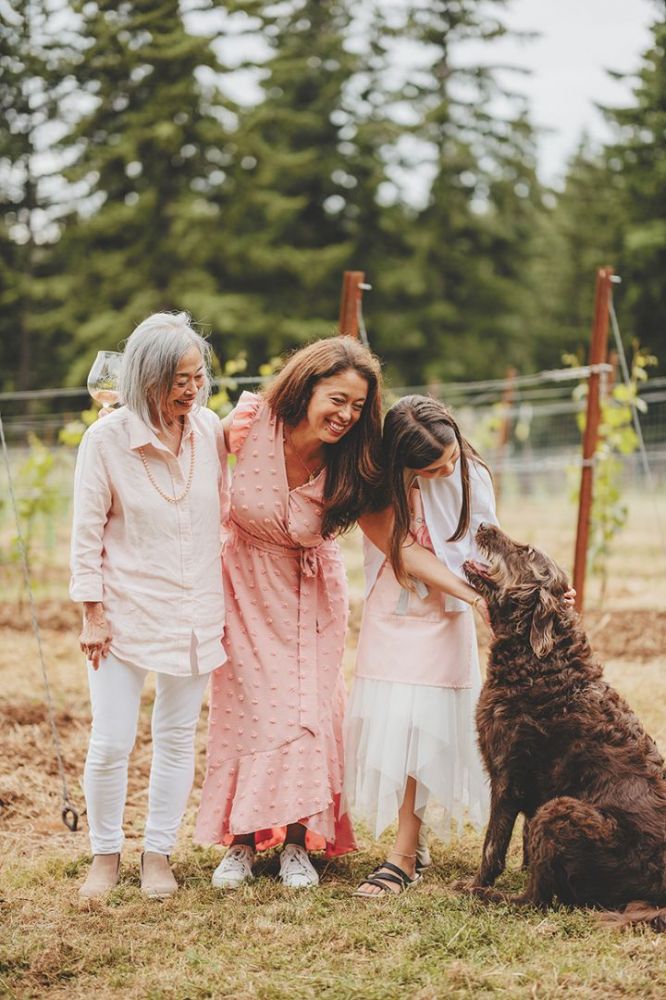
For some winemakers, the distance between the trope and reality is even more pronounced. Jessica Mozeico, owner and winemaker of Et Fille Wines, finds it dismissive. “These are condescending phrases that belittle the pressure of being a mom,” she observed, “making it sound as if wine is a coping mechanism that somehow resolves all issues. “It's a silly stereotype that groups all of motherhood into one simple category. The experience is shaped by 'about ten million other factors,' from work and childcare to caregiving responsibilities.”
Mozeico’s own relationship with wine reflects a different structure. “It is what I pair with dinner to discover new layers of aroma and flavor,” she added. “It is about mindfulness, pleasure and full engagement of the senses.”
At home, Mozeico encourages her daughter to describe what she smells in her mom's glass to introduce aroma recognition and memory. More than anything, she wishes conversations around motherhood allowed for more nuance rather than merely assuming a universal experience.
For Wynne Peterson-Nedry, owner and winemaker at Ridgecrest Wines, the gap between trope and reality is most visible in how closely work and family are intertwined.
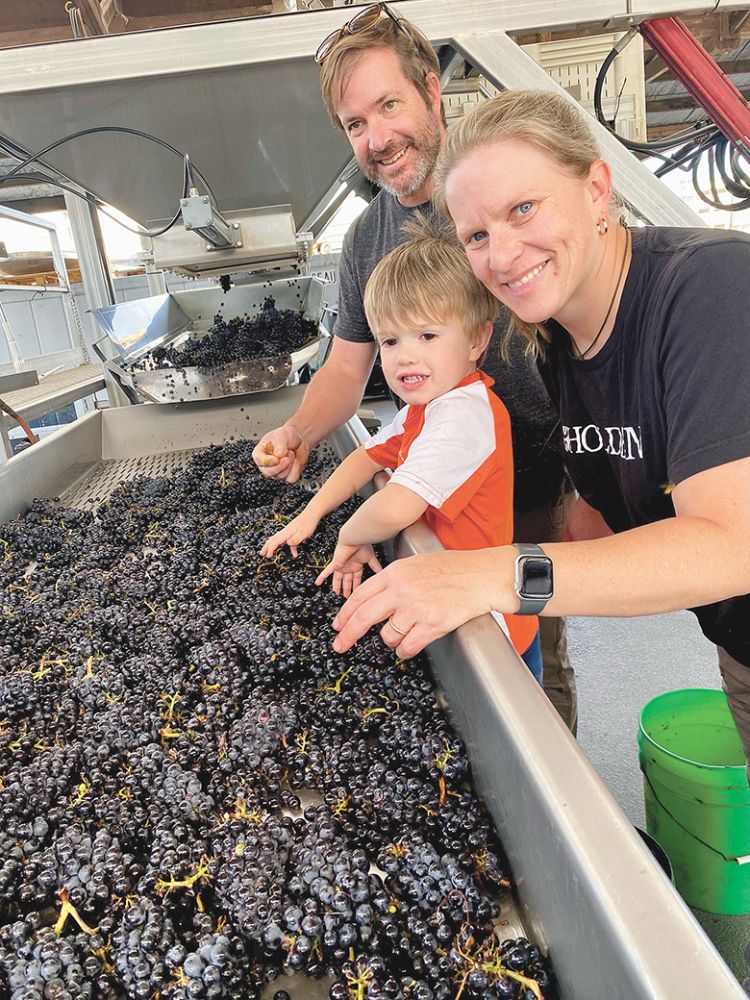
She grew up in Oregon wine country alongside families building the industry in real time, where childhood meant vineyard plantings, harvest weekends, grape sampling and bottling days. “I can’t imagine not sharing these same pieces of my life with my kids,” she confessed.
That continuity shapes how she understands both motherhood and wine. Peterson-Nedry notes how Oregon’s wine industry remains rooted in families raising children alongside vineyards.
“I’m not only a product of being a second-generation member of our family’s vineyard,” she declared, “but I hope one day my kids might be interested enough to take over farming and making wine from me.”
At the same time, the work itself is unyielding. Peterson-Nedry became a mother during the COVID-19 pandemic, when many parents shifted to remote work. Winemaking did not. The grapes still needed harvesting, and the subsequent wine required constant, physical attention.
The year moves in cycles, with quieter stretches followed by periods– especially during harvest– when the work is all-consuming. During those weeks, she works seven days a week, missing school events, dinners and bedtimes. “Harvest is still the most exciting time, and my favorite part of the year,” Peterson-Nedry noted, “but not being home for the little things gives me a pang.”
Like her own childhood, the work is not separate from family life. Peterson-Nedry’s son spends time at the winery, helping where he can and learning by being present. “These moments are so special for me,” she explained.
The overlap is constant, shaped by both commitment and constraint. The industry, she observes, can be supportive of working mothers, but the structure of the work does not easily bend.
“The fact that working from home is often not an option means that families have to pivot,” she added.
Peterson-Nedry also acknowledges why the trope resonates. The idea of mothers gathering, supporting one another and finding time together reflects something real. Having that kind of community “is something essential.” But, she points out, wine itself isn’t doing that work. The people are.
For Hubatch, Mother’s Day is at home– and not centered around a celebratory event. “It is always spent in the yard planting our garden with my kids,” she shared. The day unfolds in sequence: first work outside, then enjoy a home-cooked meal with wine. “It is a very eventful day, full of promises for the future.”
Woo describes celebration in similarly grounded terms. “I think of sparkling wine and pie the same way,” she reported. “Both require a group.”
Wine, in this context, is intentional. It marks the moment when people sit down, extend a conversation and accompany a meal, making it all the more meaningful.
“To me, wine is about having experiences rather than ‘drinking alcohol,’” Hubatch added. “Wine comes from a place, tells a story and changes as it ages. Its consumption is about joy and meaning.”
Across Oregon, wineries are creating Mother’s Day and spring events around these types of moments, whether that’s a guided tasting, a shared meal or time spent in the vineyard.
HERE ARE A FEW WAYS TO CELEBRATE WITH INTENTION:
DANCIN Vineyards (Medford): A rosé weekend with a multi-course focus
The weekend opens with live music, followed by rosé-paired multi-course dinners on Friday and Saturday. The “Roses and Rosé” Sunday brunch, between 10 a.m. and 2 p.m., marks the release of the “En L’air” Rosé of Pinot Noir, which is incorporated across the menu, including mimosas and cocktails. Guests are given roses as part of the experience.
Del Rio Vineyards (Gold Hill): An open-air vineyard slowdown with live music
“Sunday Slowdown,” 3 to 5 p.m., features live acoustic music from Jeff Kloetzel. Admission is free, with wine available by the glass or bottle. The format is intentionally unstructured, encouraging guests to settle into the vineyard and stay.
Rellik Winery (Central Point): Brunch, bubbles and a family-forward setting
Mother’s Day brunch includes a sparkling Grenache mimosa, live music and open seating across the property. The setting includes vineyard views, alpacas, and ice cream service, with space designed to accommodate families and children.
The South Face Winery (Newberg): Private tastings with vineyard access
Open by appointment, May 9 and 10 for private, owner-led tastings at a hilltop tasting room, with indoor or outdoor options. A short vineyard walk is available, and each mother receives a dried lavender bundle from the estate garden. Complimentary tastings for club members.
Stoller Family Estate (Dayton): A market-style gathering with wine at the center
Mother’s Day Market runs May 10, 11 a.m. to 4 p.m., in an open-house format. Vendors include Little Sprouts Outfitters, Illie Boutique and Jewel Box Social. Access the Experience Center, lawn, and Heritage Tasting Room, with wine available throughout. RSVP is encouraged, though walk-ins are accepted. The experience extends across the property. Lawn games keep kids engaged, making it an easy, family-friendly afternoon
Ambar Estate (Newberg): Brunch anchored by a new rosé release
A 10:30 a.m. Mother’s Day brunch coincides with the release of the 2025 rosé, with the tasting structured around the new vintage.
Aakanksha Agarwal is a wine, travel and lifestyle writer from India. Formerly a Bollywood stylist, she now resides in the U.S., embracing writing full-time while juggling family life and indulging in her passions for cuisine, literature and wanderlust.