Simple Math
How Division Winemaking Company trusts curiosity over convention
By Aakanksha Agarwal
Thomas Monroe was living in St. Louis during the late 2000s, completing an entrepreneurial studies program at Washington University. A final project required students to develop a company, research the market and present a full business plan to local executives, venture capitalists and private-equity professionals.
Monroe, with help from wife Kate Norris, decided to draft a plan centered on a winery, the business they actually dreamed of opening.
Although neither of them had made wine, Monroe studied production costs, distribution, inventory and the structure of the wine market. Norris, who had worked in hospitality and event planning, developed the customer-facing side: events, tastings and other ways people might experience the winery.
The panel felt it was the strongest business plan in the program… but a poor fit for conventional investment.
Wine is a slow process, requiring equipment, fruit contracts, storage and inventory tied up for years. Investors looking for rapid scale and a five- or seven-year return were unlikely to wait, Monroe explains.
“Instead of ending our idea, the verdict clarified it,” Monroe admits.
If Norris and Monroe were going to build a winery, it would be a long-term undertaking, they decided.
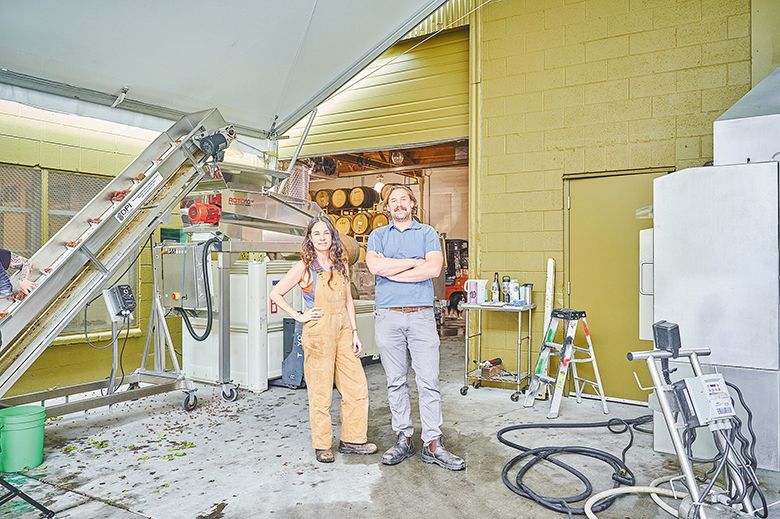
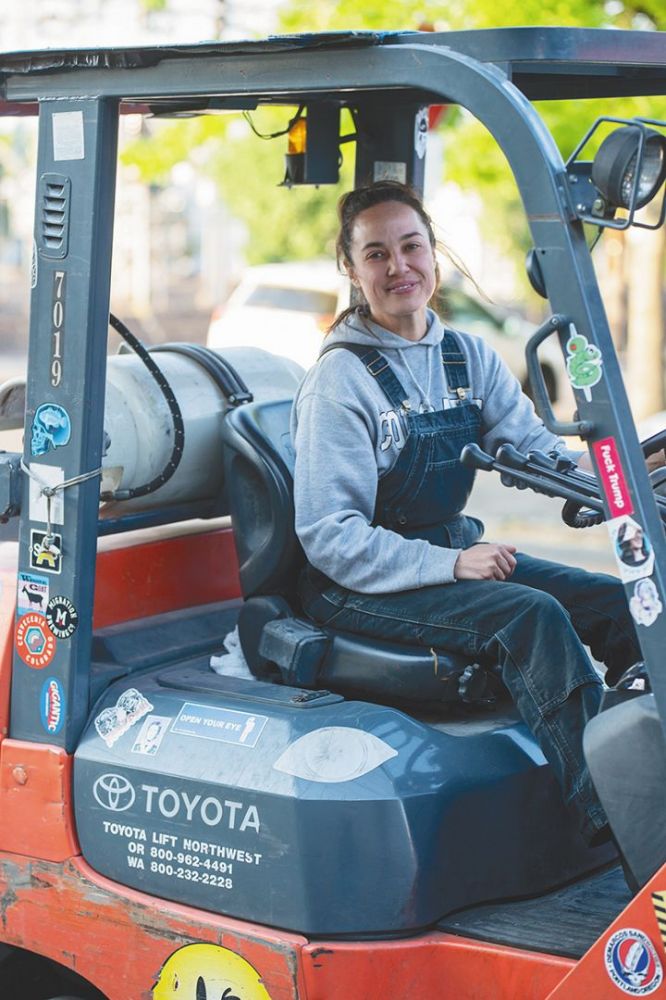
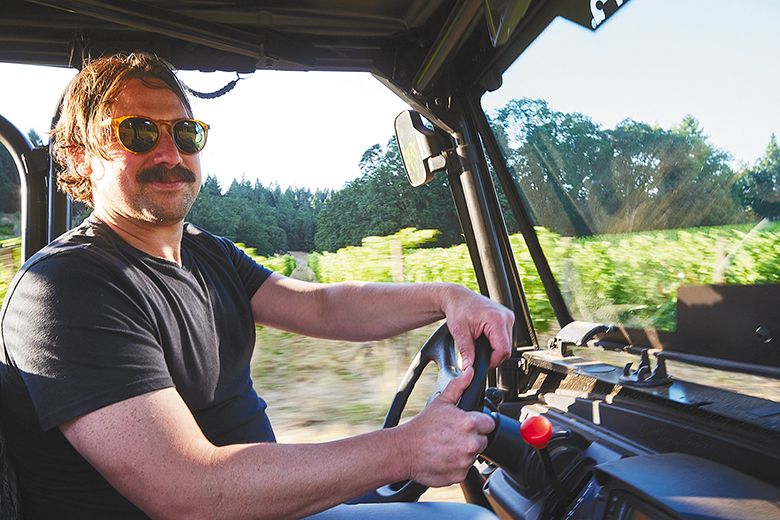
In 2010, they founded Division Winemaking Company in Portland. Division has grown over time from a few hundred cases annually into a wide-ranging Northwest winery known for Pinot Noir and Chardonnay but also Gamay, Chenin Blanc, Cabernet Franc and Syrah.
The winery has also outlasted the marriage in which it began. While Norris and Monroe have established new personal lives, they remain Division’s co-owners
and co-winemakers.
CHILDHOOD INFLUENCES
Norris, born in Bahrain to an English father and a Malagasy mother, grew up in several countries: Unites States, England, Switzerland and France– including near the Loire Valley.
“My parents weren’t winemakers, but wine has always been in my life,” she shares.
While living in Switzerland in the late 1980s, Norris remembers her father arriving home with a bottle and announcing Oregon was making Pinot Noir. She was not yet 10 years old.
She did not understand why the bottle mattered, but Norris remembered his excitement about a young American region taking on one of Europe’s most revered grapes.
FIRST ENCOUNTERS
The couple first met in San Francisco on Norris’ back porch. A few months later, they attended a neighbor’s birthday outing on San Francisco Bay. Monroe arrived so late the boat, already underway, had to back up to the dock to retrieve him.
Norris had brought a bottle of wine but quickly realized the outing’s mood was decidedly more beer than Burgundy. She tucked the wine below deck and joined everyone else.
Later, she discovered Monroe drinking it.
“I was like, ‘Why are you drinking that? That’s mine,’” she recalls. “And the rest is history.”
Their interest in wine deepened. Napa and Sonoma were nearby, restaurant wine programs were ambitious and wine was part of the city’s broader food culture rather than as an isolated luxury.
FRANCE, BY WAY OF A RECESSION
After business school, Monroe pursued opportunities in investment banking. One of the banks where Monroe had a pending offer collapsed. Norris was working in event planning while jobs disappeared around them.
She proposed a different path.
Norris’ family had access to a small cottage in the French village where she had spent part of her childhood. She and Monroe could live there and learn from local winemakers and family friends connected to wine production.
“It seemed like a really lovely way to ride out the Great Recession,” Norris observes.
At worst, Monroe adds, they would spend a year studying something they loved.
They worked with French producers and mentors, including in Beaujolais, and learned not only how to ferment grapes but also how to consider wine in a broader context.
In many villages, the winery was one local enterprise among many, near the butcher, baker, café and other businesses, Norris notes.
Their time in France also sharpened their interest in freshness, moderate extraction and wines crafted for the table. Beaujolais and the Loire Valley became important reference points– showing how Gamay, Chenin Blanc and Cabernet Franc could produce vivid, affordable bottles with seriousness and ease.
A BOTTLE AND A PHONE CALL
While living in the Bay Area, Norris and Monroe saved enough money for a Monday prix-fixe dinner at a celebrated restaurant– the least expensive service of the week.
They gave the sommelier a budget and asked him to choose the best wine for the meal. He returned with an Oregon bottle.
“It was absolutely delicious,” Norris asserts.
The back label contained a phone number. To their surprise, the winemaker answered their call.
The conversation led to an invitation. The producer asked Norris and Monroe to stay with his family outside Salem and offered to introduce them to Oregon wine country.
“We were two young kids at the time,” Norris adds. “We were like, ‘Sure, why not?’”
The visit became a tour through the region’s foundational generation. Norris remembers playing ping-pong with Cristom’s Steve Doerner and walking through the vineyards at Bethel Heights with Pat Dudley.
She was struck by everyone’s generosity.
“They didn’t know us,” she declares. “But they looked at us and said, ‘You’re trying to start something too. Come along. We’ll show you around.’”
That openness became one of the decisive reasons Norris and Monroe chose Oregon.
BUYING POWER
One of their earliest and most important relationships began with Eola Springs Vineyard in the Eola-Amity Hills. Division still works with the site, which Monroe describes as one of the defining vineyards of their career.
Over time, their sourcing network expanded throughout the Willamette Valley, Southern Oregon’s Applegate Valley, the Columbia Gorge and Washington.
“We’re a Pacific Northwest story, through and through,” Norris states.
A NEIGHBORHOOD WINERY
The name Division emerged after Norris and Monroe returned from France and settled near Portland’s Division-Clinton neighborhood. Division Street was the central corridor, and the name also suggested how each brought separate skills into one project.
The area was changing rapidly, filling with new restaurants, shops and small businesses.
“We kept returning to this discussion of the nature of a village or a community winery,” Monroe reflects. “We felt tied to the roots of our neighborhood and wanted to be a part of its growth.”
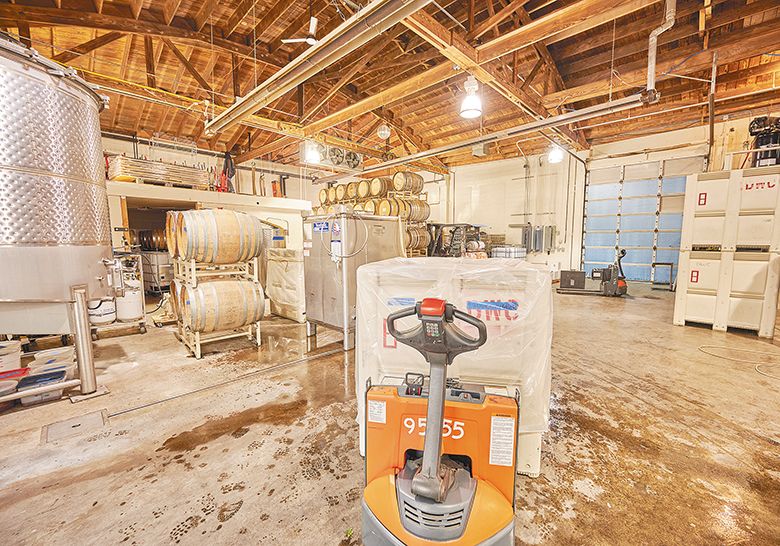
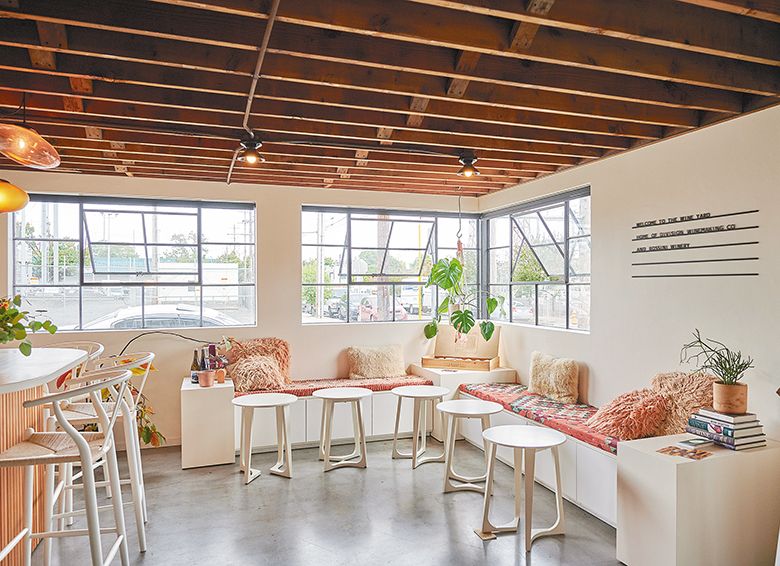
Their first facility near Division Street helped establish the urban-winery concept in Portland. They later expanded that idea through the Southeast Wine Collective, a shared production space and tasting room that allowed smaller producers to pool equipment, knowledge and costs. The collective created a less capital-intensive route into winemaking while making production visible to the public.
TRANSLATING THE VINTAGE
“My work is to take what Mother Nature does and translate her beauty without getting in the way,” Norris acknowledges.
But doing so involves more than farming and fermentation, she emphasizes. She also considers what people are curious about, what they can afford and how wine fits into their lives.
“It’s a really incredible, multidimensional job,” she marvels. “It goes all the way from geology through the economy.” Ignoring any part of that system, she adds, is a mistake.
While Norris and Monroe are committed to restrained, low-intervention winemaking, they are also business owners navigating a changing market. They realize a technically compelling bottle has little meaning if it is priced beyond the people it was meant to reach.
Norris also sees Division’s range of grapes and styles as a celebration of diversity, both in the vineyard and among the people drinking the wines. The challenge now is to keep wine relevant. “That’s the work in front of us.”
A PARTNERSHIP RESHAPED
By the time their personal relationship changed, Norris says, Division was no longer simply a shared dream. It was a living network of employees, growers, distributors, customers and creative projects.
The winery also gave each founder room to develop individual ideas. Norris created Gamine, a Rhône-focused project that sits alongside the broader Division portfolio. Monroe has pursued his own experimental interests while remaining part of the central winemaking partnership.
“We have spent years building a shared palate and a professional language,” says Monroe. They know when to challenge one another and when a wine has reached the point where both are willing to stand behind it.
Today, Norris and Monroe have been divorced longer than they were married, yet they remain partners in every sense that matters to the winery.
“Tom and I eventually realized we were better at putting our energy into the business than trying to make the marriage work,” she confesses. “Division represented the very best of both of us. It deserved our attention.”
“That doesn’t mean we never disagree,” Norris adds. “Of course we do. But our wines are the defining story.”
Nearly two decades after they first sketched out a winery on paper for a graduate-school assignment, Division still runs on the same partnership that built it. They remain one another’s sounding board, make decisions together and continue to shape every vintage side by side.
“Our working relationship really mirrors the evolution of Division itself,” Norris continues. “Neither our business nor our relationship looks like anyone else’s– and we’ve stayed true to that. The winery, the wines, the partnership: all of it.”
DIVISION WINEMAKING COMPANY
At The Wine Yard
2005 S.E. 8th Ave., Portland
Email info@divisionwineco.com to schedule a tasting
Aakanksha Agarwal is a wine, travel and lifestyle writer from India. Formerly a Bollywood stylist, she now resides in the U.S., embracing writing full-time while juggling family life and indulging in her passions for cuisine, literature and wanderlust.