New Frontier
Central Oregon winegrowers petition for official status
By Paula Bandy
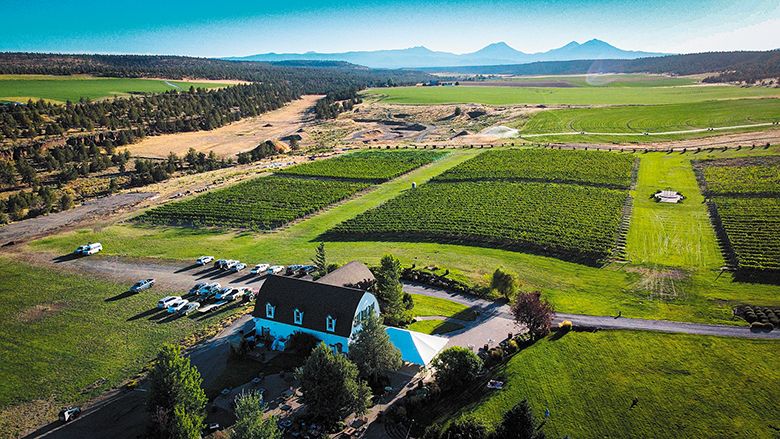
On a high plateau east of the Cascade Range, where ancient lava flows lie fractured beneath sage and juniper, vineyards sit farther from the Pacific Ocean than nearly any in Oregon. Days can be bright and warm, nights sharply cold. The growing season is brief, the winters decisive. Nothing here is accidental.
It is within this landscape that the Central Oregon Winegrowers Association has submitted a petition to the Alcohol and Tobacco Tax and Trade Bureau seeking recognition of the Central Oregon American Viticultural Area, or AVA. The application marks a formal step for a region testing grape-growing limits for more than two decades– planting, adapting and refining viticultural practices in conditions that demand attentive experimentation.
Unlike Oregon’s established wine regions west of the Cascades, Central Oregon is defined by elevation, high-desert climate and ancient volcanic soils. The AVA petition does not argue inevitability. Instead, it documents differences: shorter growing seasons, dramatic diurnal shifts, colder winters and soils shaped not by recent eruption but by extended geological time.
What has emerged is not a single grape or style, but a shared approach rooted in adaptation– matching variety to site, working with cold-hardy hybrids alongside Vitis vinifera and embracing farming models suited to an environment where resilience matters as much as expression.
Volcanic Soils: Central Oregon and Mount Etna — Similar Origins, Different Stories
Central Oregon’s vineyards are often described as “volcanic,” inviting comparison to regions such as Italy’s Mount Etna. While both landscapes are shaped by lava, the similarities largely end there.
Etna is an active volcano, with repeated eruptions depositing fresh layers of ash and mineral-rich debris. These constantly renewed soils are geologically young and dynamic, contributing to the pronounced structure often associated with the region’s wines.
By contrast, Central Oregon’s volcanic soils are ancient lava flows from millions of years ago. Fracturing and weathering over time, they are shallow, rocky and retain little moisture. These attributes limit vine vigor, encourage deep roots and interact with elevation and climate to preserve acidity and moderate ripeness.
Kerry Damon, president of the Central Oregon Winegrowers Association, explains, “Volcanic soils may offer rich minerality but typically are low in organic matter, requiring growers to build added health through thoughtful vineyard floor and soil biology management.”
Damon notes that Central Oregon’s naturally arid high-desert climate and soils also present advantages. Growers, he says, have experienced virtually no soil pests common in other regions and little fungal pressure, reducing the need for pesticide use. In this environment, geology, climate and farming practices are closely intertwined.
Hybrid Grapes: Adaptation, Resilience and Cold-Climate Expression
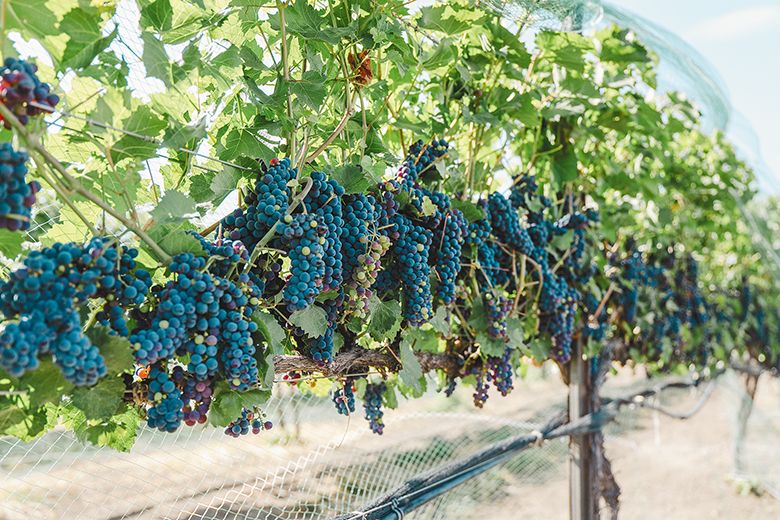
In Central Oregon, hybrid grape varieties have emerged not as alternatives, but as practical choices. Developed specifically for cold climates and shorter growing seasons, these grapes reflect decades of breeding aimed at balancing vine resilience with wine quality in regions defined by elevation and seasonal extremes.
According to the Central Oregon Winegrowers Association, varieties with consistent success include Brianna, Frontenac Gris, La Crescent, La Crosse, Frontenac, Léon Millot, Maréchal Foch and Marquette. These grapes are inter-species hybrids or combine European wine lineage with cold-hardy North American species.
From a growing standpoint, hybrids offer clear advantages in high-elevation, cold-climate regions. They are generally more winter-hardy, tend to ripen earlier and often show natural resistance to disease– reducing risk and supporting sustainable and regenerative farming practices.
In the glass, modern hybrids differ markedly from earlier cold-climate examples. Improved cross-breeding produces wines with clean aromatics, vibrant acidity and moderate alcohol levels– expressions not found elsewhere in Oregon
For local producers, hybrids are not replacements for vinifera, but tools of adaptation, allowing grape choice to follow site reality rather than convention.
Winery Profiles
Lava Terrace Cellars
Owned by Dina and Duane Barker, Lava Terrace Cellars farms a five-acre vineyard at 3,400 feet near Bend. First planted in 2012, the vineyard is sustainably farmed and planted with hybrid grape varieties suited to Central Oregon’s cold winters and condensed growing season.
Set on lava-derived soils that naturally limit vigor, Lava Terrace emphasizes careful stewardship and long-term viability, illustrating how elevation, soil and grape choice define a high-desert expression.
Faith, Hope & Charity Vineyards
Located in Terrebonne, Faith, Hope & Charity Vineyards, named for mountains in the Three Sisters range, is owned by Cindy and Roger Grossman. The 312-acre property, with 15 planted in vineyard rows, also includes llamas and an expansive wedding venue.
Estate vineyards are planted to hybrid varieties, while additional nonhybrid fruit is sourced from Washington and Oregon, balancing local adaptation with broader regional sourcing in a high-desert farming context.
Maragas Winery
Based in Culver, Maragas Winery is owned by Doug and Gina Maragas, whose approach reflects traditional Greek family winemaking methods and natural practices passed down through generations. The winery first planted European vinifera in 2004, early in Central Oregon’s viticultural history.
Today, Maragas farms 20 grape varieties organically and sustainably, with a second vineyard approximately 25 miles north. Both growing sites are rooted in volcanic soils, reflecting the breadth of approaches emerging in the region.
Black Goat Winery
Founded in 2017, Black Goat Winery is a family-owned winery in Terrebonne. Two years ago, one of the original partners departed, and Roberta Durghello joined her husband, Italo Durghello, continuing the operation.
Current releases are crafted from Washington-grown grapes and feature small-batch, Italian-inspired wines. Because the winery doesn’t have a public tasting room, wines are only available online.
Crooked Wine Co.
Based in Bend, Crooked Wine Co. approaches winemaking as an experiment shaped by place and curiosity. The winery cultivates hybrid grapes and produces wines with unusual names such as Freak Flag, Mazama and Fuchsia.
Crooked Wine Co.’s wine reflects the region’s distinct terroir, influenced by sustainable, low-intervention vineyard practices.
Lazy Z Ranch Wines
Located in Sisters, Lazy Z Ranch Wines is a regenerative agriculture-focused meadery owned by John and Renee Herman. The couple purchased 80 acres of an 1885 homesteaded ranch in 2020 to restore soil health and promote ecosystem resilience.
The ranch combines beekeeping, pollinator services, crop-share agriculture and mead production using estate honey, berries and local fruits. A family-friendly tasting room opened last year.
Elixir Wine Group and Ermisch Cellars
Owned by Kirk Ermisch, Elixir Wine Group and Ermisch Cellars brings an international perspective shaped by work across renowned global wine regions, including ownership of a historic winery in Argentina.
Based in Bend, Ermisch Cellars operates as an urban winery and tasting room near the Old Mill District, sourcing grapes from Oregon and Washington. It also provides full custom crush services for other regional producers.
A Region Still Becoming
“Central Oregon has a distinct viticultural identity. Our AVA petition is about giving that identity clarity and recognition at the state and national level by showcasing a region challenging traditional assumptions about where premium wines can thrive,” shares Kerry Damon. “If approved, the Central Oregon AVA will support agricultural diversity, strengthen rural economies and expand the geographic narrative of American wine.”
For now, the vineyards continue to grow at elevation, shaped by cold nights, ancient soils, and the steady work of adaptation.
Paula Bandy and her dachshund, Copperiño, are often seen at Rogue Valley’s finest wineries, working to solve the world’s problems. She has covered wine, lifestyle, food and home in numerous publications and academic work in national and international journals. For a decade, she was an essayist/on-air commentator and writer for Jefferson Public Radio, Southern Oregon University’s NPR affiliate. Most recently, she penned The Wine Stream, a bi-weekly wine column for the Rogue Valley Times. Paula believes wine, like beauty, can save the world. She’s also a Certified Sherry Wine Specialist and currently sits on the Board for Rogue Valley Vintners. @_paulabandy