
Grand Dames
The Her-story of Oregon Wine
By Gail Oberst
It’s no secret: Men often receive credit for accomplishments owed to their wives. Counted among them are the women who contributed to Oregon’s burgeoning wine industry.
Oregon’s wine media, including this publication, has participated in that oversight– and this feature alone can't right it, but it's a start. Luckily for us, Oregon’s wine women didn’t need acknowledgement when establishing wineries or becoming winemakers and winegrowers.
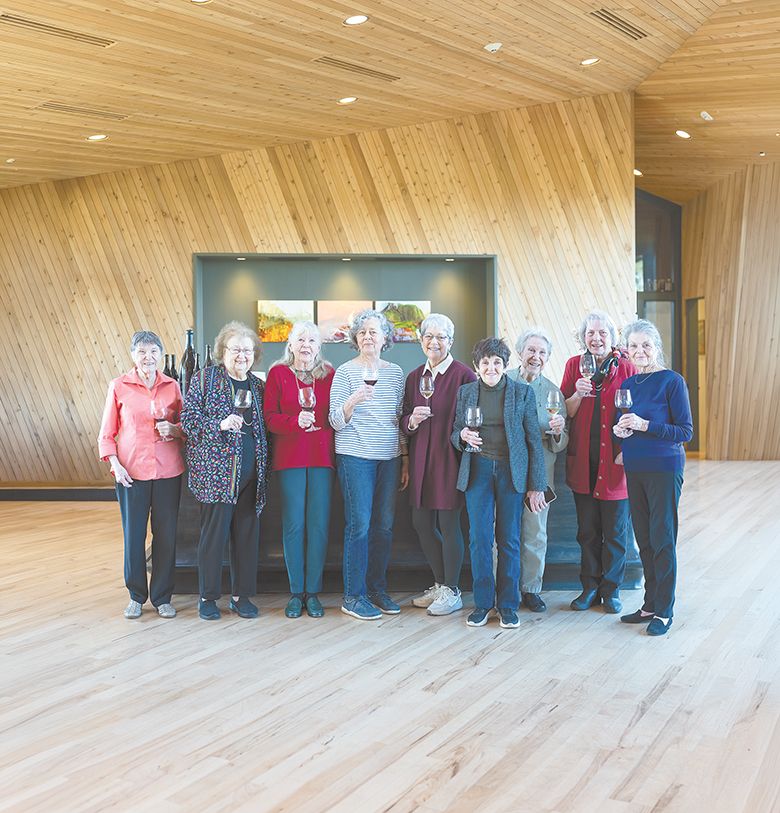
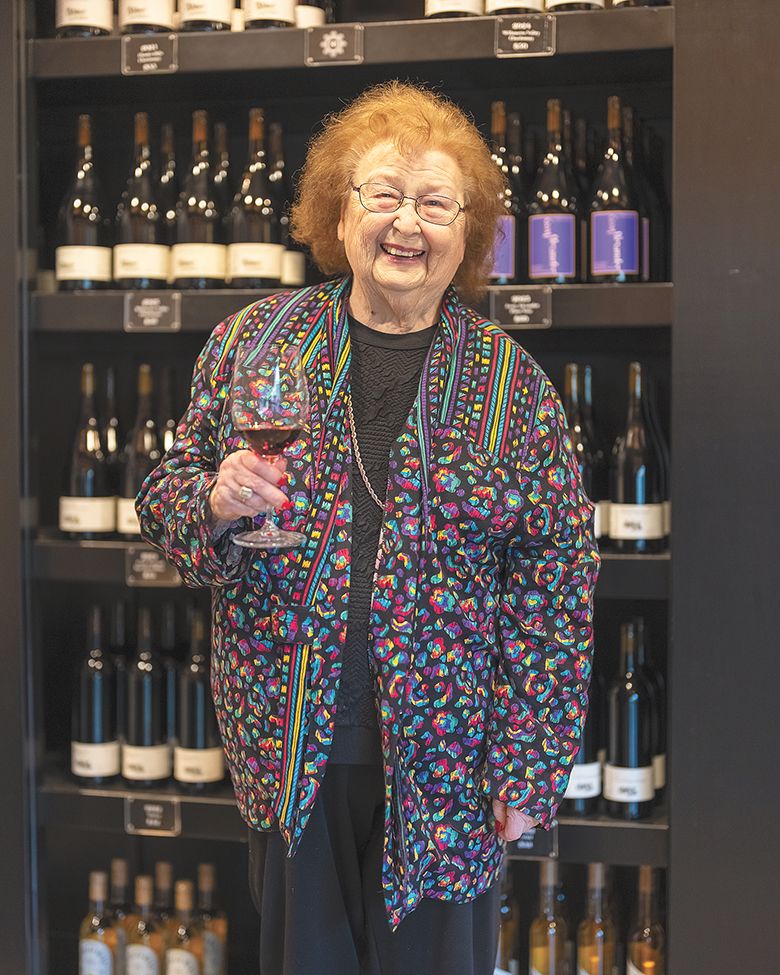
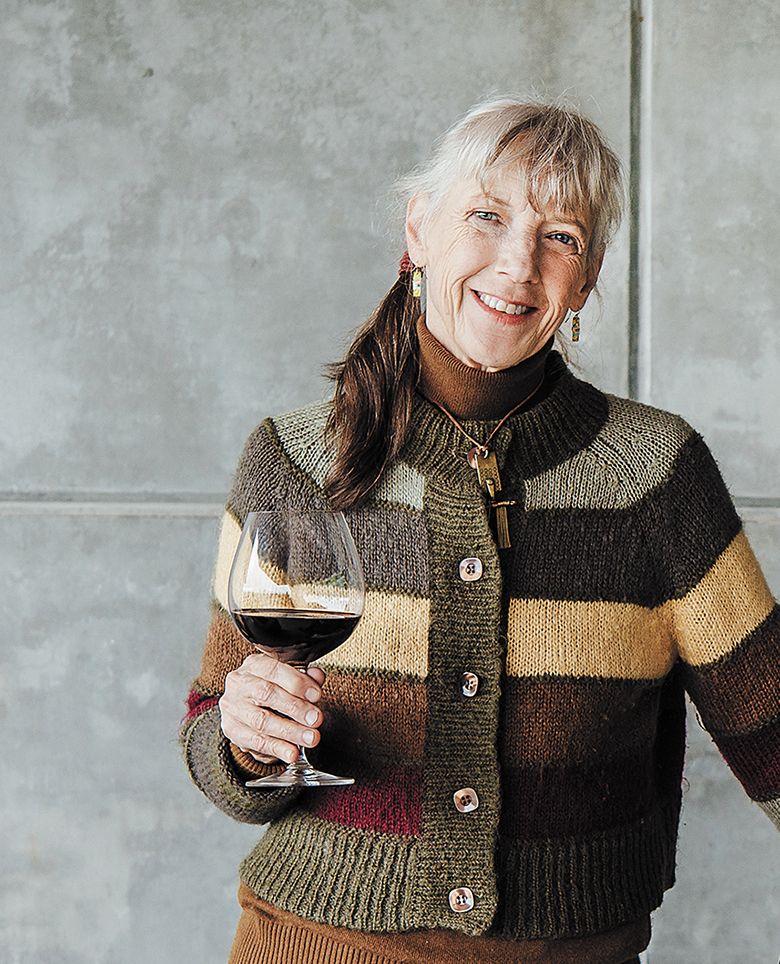
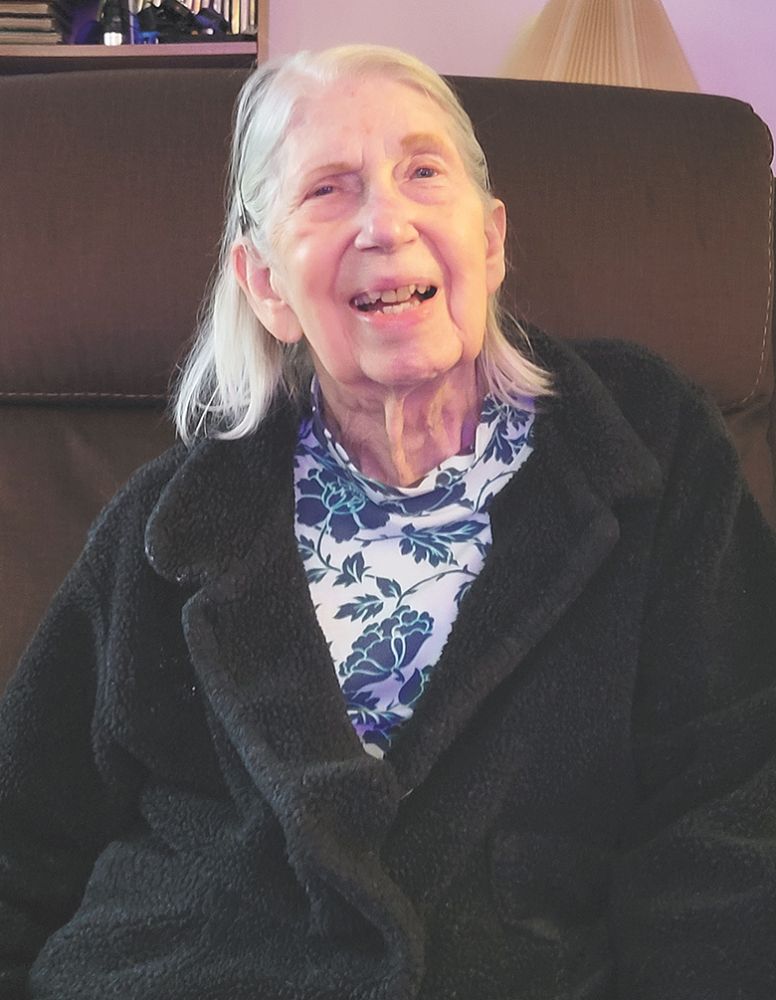
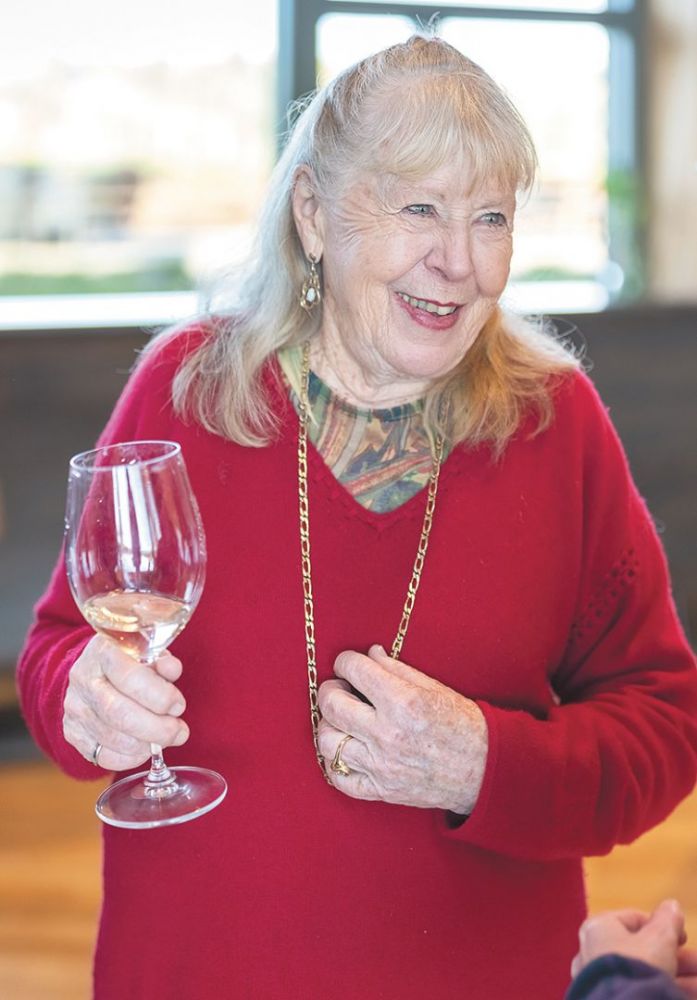
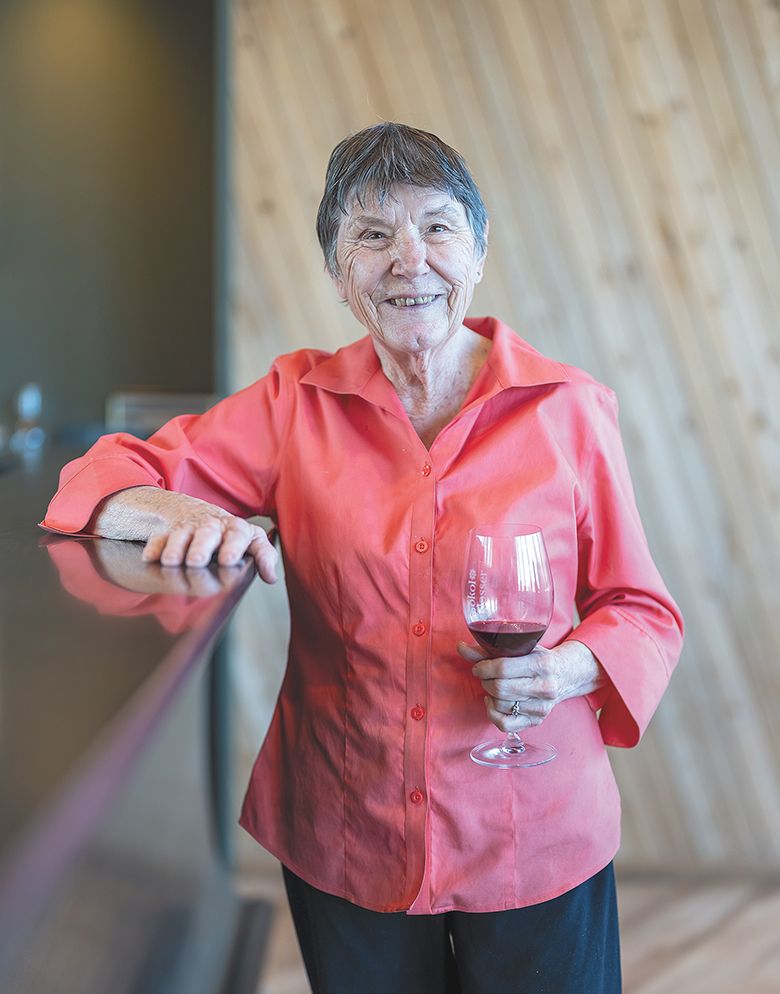
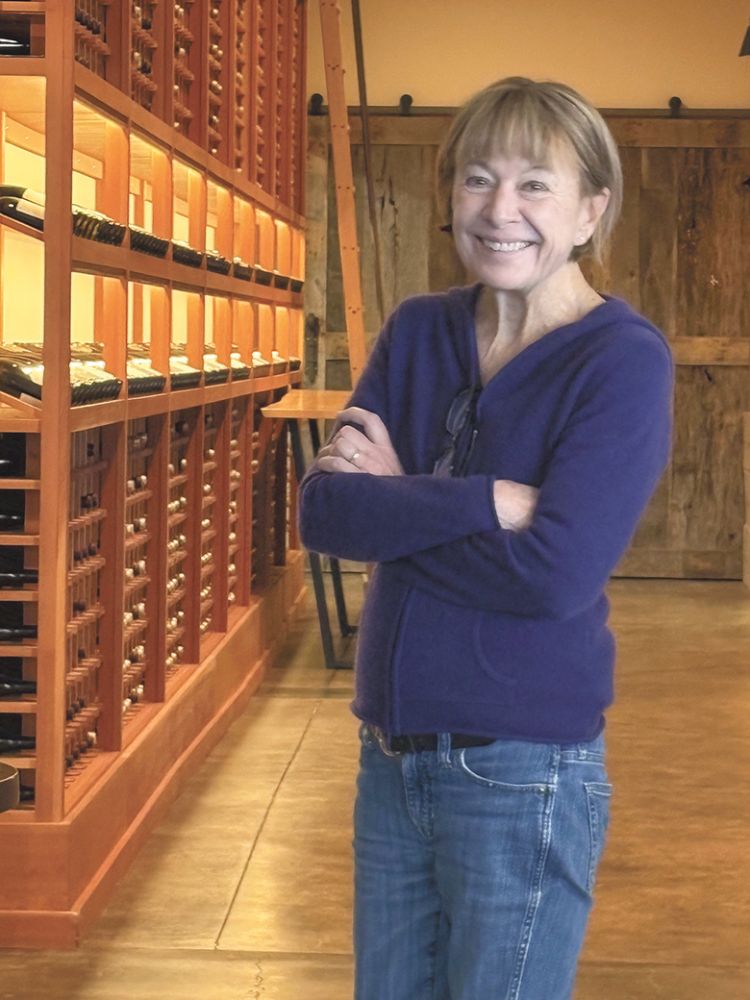
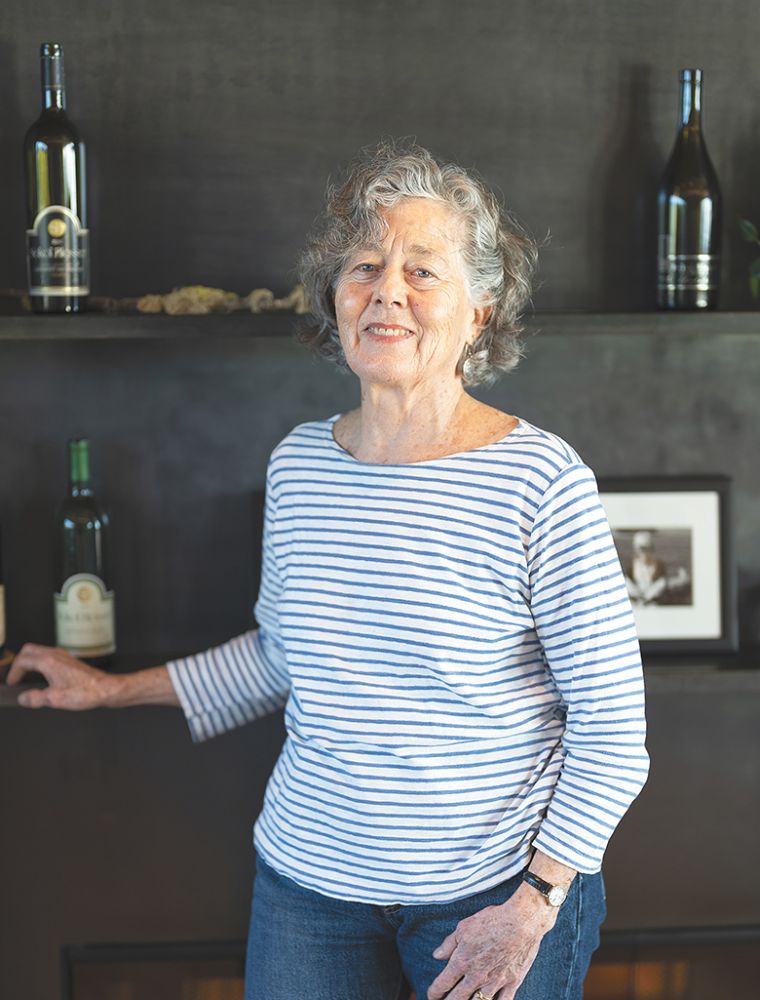
Picture a room filled with women, most in their 80s, a few nonagenarians, all vertical. Each had a hand in launching our state’s wine economy. This room, at Sokol Blosser Winery– perched on a hill supplying sweeping Willamette Valley vineyard vistas, with Mount Hood in the distance. It is a pre-spring day complete with bluebird skies and unseasonable sunshine.
Ponder the hugs, stories and laughter shared by women who, in many cases, worked at professional jobs and raised children while also starting a winery. Their work ranged from winemaking and planting to bookkeeping, marketing and sales. This is a happy reunion of women who labored, sometimes side by side, to promote Oregon’s wine industry, which generated an estimated $8.5 billion in economic impact last year.
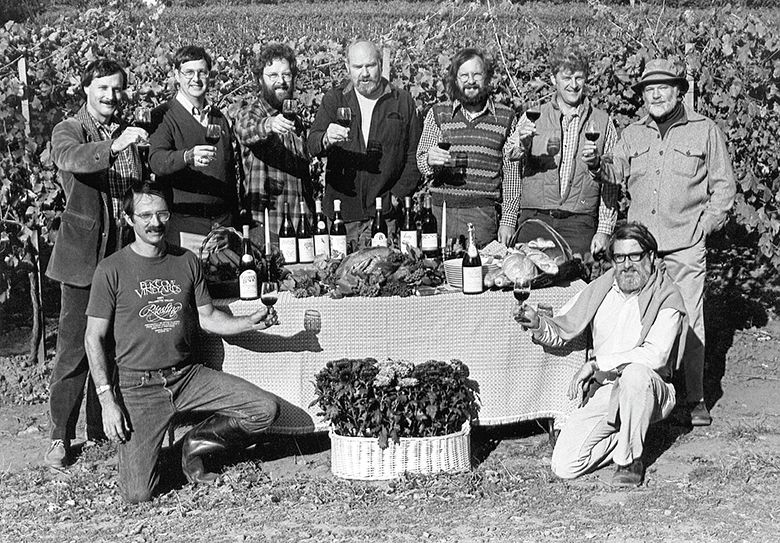
Now imagine a table spread with pictures, newspaper clippings and magazines, many lauding the winery and vineyard work of men. A few women recall insults: Once, a photographer asked them to step aside while he took photos of Oregon’s winery “founders,” in other words, the men.
In interviews with these women, themes emerged– distinct from the male story. The romance, excitement, sacrifices of education and careers, challenges of children and family, particular skills: marketing, business savvy, organization, social friendship, creativity and the stability of hearth and home.
The men considered themselves pioneers who tamed unturned vineyard soil. This is not to say they are wrong.
But many of the women who joined them recognized something else: their lucky chance upon a place and time that provided fertile ground for Oregon’s early vineyard settlements.
For example, many “Grand Dames” referred to a rather unlucky occurrence in 1962 that set the stage for lower land prices. If it wasn’t for that orchard-damaging Columbus Day storm and Oregon’s rather narrow view of what constituted good agricultural land, many of these winemaking pioneers might not have found their property bargains.
Those dilapidated orchards provided prime soil that now produce Willamette Valley’s finest wines.
The Oregon Age of Wine
Here’s where my history intersects with wine. A Portland native, I remember my father holding a young cherry tree during the Columbus Day Storm, the wind blowing both of them sideways. I was five.
Thirteen years later, as a fresh graduate of Roseburg High School, I visited the home of Richard Sommers with my friend’s parents. After dinner with wine (I only recall I didn’t like it), he showed us his vineyard and a cave-like structure in the hill, which he said would serve as both his wine cellar and bomb shelter. Because it was Roseburg, I didn’t think him strange. Bomb shelters are part of Douglas County’s interesting history.
Fast forward to the mid-1980s. While visiting a conference for city leaders with my soon-to-be husband, our group toured Ponzi Vineyards. I remember standing on a charming patio off the veranda of the Ponzi house, with the vineyard behind us. There, Nancy shared industry plans to expand Oregon’s wine footprint in the marketplace.
In the ‘90s, my late husband and I joined other Amity Vineyards regulars to pick organic grapes for Myron Redford and Vikki Wetle. Today, when hosting guests at a barbecue, I attempt to mimic the simple friendship of Vikki’s harvest party and dinner.
Although my writing career has been varied, for the past 30 years, I’ve written articles about Oregon’s vineyards and wines. Aside from my brief foray into beer publishing, no other story topics have been more rewarding.
I’m not alone in tracing my own history along a path marked by Oregon wine milestones. Certainly, many Oregonians recall their first wine and wonder at our industry’s many changes. I feel privileged to live and write about wine during this incredible time.
Do I hope to rewrite the brotherly history of our state’s wine? You betcha. Mostly because current history available online and in print often only depicts the male half of the story.
Also, because I was a wine writer for many years, I am complicit. This is one small way to make up for it.
Let’s all raise a glass to the “Grand Dames” of Oregon wine. What a spread of abundance and good cheer they created for us.
Diana Lett
The Eyrie Vineyards
Diana Lett worked for a textbook company in Dallas in 1966 when she met (and quickly married) David Lett. He was on a mission to prove exceptional Pinot Noir could be grown outside of Burgundy. Diana’s “wedding shovel” was put to good use, helping David plant the vines that launched modern winegrowing in the Willamette Valley. Her love for writing and entertaining was a boon to business at The Eyrie Vineyards. Diana also lent her talents to promoting Oregon’s fledgling wine industry through the development of Wine Country Thanksgiving, International Pinot Noir Celebration and Oregon Pinot Camp. Diana’s “other lifetime career” is providing direct support, along with advocating regionally and statewide for individuals with autism, including her son Jim.
Today? Diana continues her advocacy for Jim and currently serves on the board of Mid-Valley Advancements. You may also find her in her garden, where she grows flowers for winery events. “I’m still using my wedding shovel!” she exclaims. “As for the wine work, Jason’s been doing a great job with Eyrie for twenty years. I just show up for the fun!”
Birth: June 26, 1943 (grew up in Alabama and Arkansas).
Education: BA in English Literature, University of Dallas.
Partners: David Lett, husband (died 2008); Jason Lett, son.
Children: Jim and Jason Lett.
Accolades: Many Oregon wine industry awards; recognition advocating for autism services in Oregon.
Nancy Ann Berry Ponzi
Ponzi Vineyards
Nancy Ponzi is self-effacing when asked about her youth. On the surface, it seems both international and exciting, as her family traveled widely for work. She said she was “playing around” when she met Dick Ponzi, an aerospace engineer, at a convent Halloween party.
Dr. Montessori might say everyone has their process– apt, since Nancy was a Montessori teacher when the couple married in 1962. After researching Burgundian winemaking firsthand, they moved their growing family to a 20-acre property southwest of Portland, where they planted grapevines in 1968. The Ponzis established Ponzi Vineyards two years later, in 1970.
While Nancy continued teaching, the couple produced their first vintage of Pinot Noir in 1974. Her job was to market and sell the family’s wine while also overseeing the vineyard operations. Nancy went on to lead the industry, including planting some of the first commercially available Pinot Gris in 1978 and building one of the Willamette Valley’s earliest sit-down winery tasting rooms.
Her work extended beyond the winery operation, helping to promote the state’s wine industry and the health of its workers.
Nancy’s playful nature persists as she recalls the early days. “We had a whole lot of fun, built the industry and managed to live happily ever after,” she said with a laugh.
Birth: August 19, 1941, Fullerton, California.
Education: High school in Venezuela and Mexico.
Marriage/winery partners: Dick Ponzi, and three children.
Children: Michel, Anna Maria and Luisa Ponzi.
Accolades: Co- founded International Pinot Noir Celebration, ¡Salud!, Washington County Wineries Association, Oregon Pinot Camp, Oregon Brewers Festival, James Beard Public Market, BridgePort Brewing Company; author of “The Ponzi Vineyards Cookbook.”
Today: Tuality Healthcare Board of Directors, ¡Salud! and James Beard Public Market.
Susan Sokol Blosser
Sokol Blosser Winery
If Susan Sokol Blosser had pursued her childhood dream of becoming a ballerina, her family’s eponymous winery would not exist. Luckily for us, she left that aspiration in Wisconsin, eventually starting a winery in 1970 with her then-husband Bill Blosser. Today, Sokol Blosser Winery is Oregon’s sixth-largest wine producer.
Business is in her blood. Her family owned a successful leather company. The youngest of four, her older brothers were the winery’s first partners. However, since 1996, the Sokol Blosser family has owned the winery outright.
Susan’s point of pride? Grandson Alex Sokol Blosser has joined her and Bill on the winery’s family board of directors.
Yes, she’s busy. Susan works with the winery, in politics, and organizations promoting women and sustainable agriculture. She’s written four books, with a fifth on the way, and recently started blogging. For more details, visit: susansokolblosser.com.
Birth: November 15, 1944, Milwaukee, Wisconsin.
Education: BA in history, Stanford University; master's in teaching, Reed College; honorary doctorate, University of Portland.
Husband: Bill Blosser (div. 1999), Russ Rosner.
Children: Nik, Alison, Alex.
Accolades: Many honors for service to industry and community.
Today: Sits on Sokol Blosser Winery Board; founder and president of the Yamhill Enrichment Society; involved in many industry, political and social organizations.
Marj Vuylsteke
Oak Knoll Winery
Marj likes to say she’s from “… the land of cheese, trees, ocean breeze and water up to your knees.” In other words, the dairy-famous town of Tillamook. Her family followed her Army Reserve father across the nation, but Marj returned to Tillamook for high school. Her ancestors traveled across the Oregon Trail to settle here.
When she married Ron in 1955, he was crafting fruit wines at home. One of Marj’s first wines was made with blackberries. “We like to say it had a low gag factor,” she joked.
After moving to Beaverton in 1960, while working at WineArt, a popular wine and beermaking shop, Marj taught classes in home winemaking and formed a club for amateur winemakers.
It wasn’t long before friends and customers were asking to purchase the Vuylstekes’ homemade wine. This was prohibited by state law. However, by opening a winery in 1970, the couple could legally sell their wine. With Ron’s winemaking skills and Marj’s marketing chops, Oak Knoll became a commercial success.
With assistance from a silent partner, the couple established what is now the fourth-oldest winery in the state, appropriately on land that once housed a dairy. Some of the original 1917 structures, including grain silos and the main wine cellar building, are still in use.
Oak Knoll remains in family hands: Jeff Herinckx, a Vuylsteke cousin, replaced Ron Sr. as winemaker in 2001. A family trust now owns the winery.
Birth: March 11, 1934, Tillamook.
Education: Marylhurst University, University of Portland.
Marriage/winery partners: Ron (late ex-husband).
Children: Steve, Ron II, Sara, John, Tom, Doug.
Accolades: WineArt, marketing, Washington County Winery Association, amateur winemaking classes, cooking.
Today: Retired.
Virginia “Ginny” Campbell Adelsheim
Adelsheim Vineyards
Ginny spent her youth in Lake Oswego playing in the woods, digging in the dirt, swimming in the lake and playing the piano. At 80, she continues to sculpt, play the piano and garden with her daughter.
She married David Adelsheim in 1967, while he served in the Army. They moved to Korea, and in 1969, after his tour of duty ended, they rode the Trans-Siberian Railway across Russia to Europe, where they fell in love with European cuisines and wines.
After returning to Portland, the couple was inspired by the Letts as well as Susan Sokol Blosser and Bill Blosser. In 1971, they bought 19 acres and established the first vineyard in the Chehalem Mountains.
Over the next 34 years, Ginny helped design and build their house, planted grapes and tended the vines. During harvests, she and David housed and fed international students working at the winery. Ginny also prepared dinners for visiting winemakers and aficionados.
Ginny illustrated 16 of the early wine labels– mostly portraits of women. When she was asked why men weren’t on any of the Adelsheim labels, she laughed: “Women sell better than men!”
Today, Ginny’s concerns focus on the health of the planet and the growth of Oregon’s viticulture, now an $8 billion industry. “The impact on the land is massive, with some areas turning into vineyard monoculture, negatively impacting the habitat and wildlife,” she noted. “Diversity and respect for the natural environment are essential for a healthy planet.”
Birth: Oct. 10, 1945, Portland.
Education: BA in art/sculpture, Portland State University.
Married/winery partner: David (div. 2006), Lynn Molacker.
Children: Elizabeth “Lizzie.”
Accolades: Art, wine labels.
Today: Piano, ceramics, art.
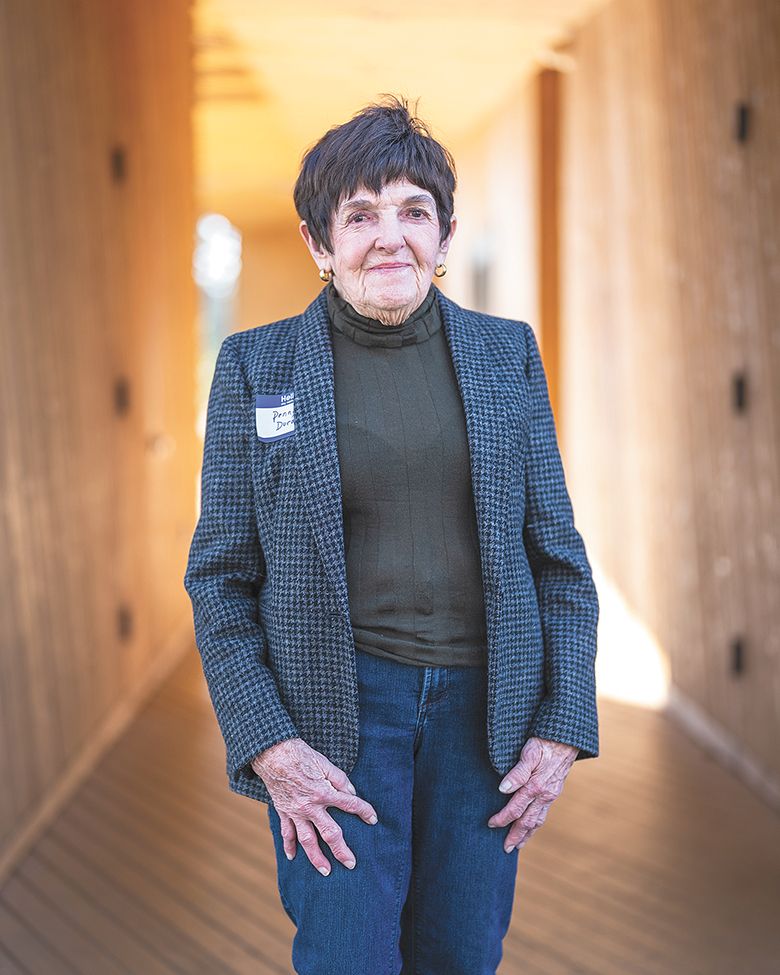
Penny Durant
Durant Vineyards, Red Ridge Farms
In 1973, when Ken and Penny Durant planted the first three acres of grapevines on their 16-acre plot, Oregon had fewer than 20 wineries. The close-knit group of freshman vintners shared ideas, equipment and workers. Several future winemakers even found temporary lodging with the Durants. “Those years were delightful,” she recalls.
Buying land was important to Penny, who grew up on a sheep and cattle ranch.
“Ken wanted a house, and I wanted land. He said it was because I was Irish,” Penny quips with a laugh.
For many years, the Durants focused solely on growing grapes. Eventually, encouraged by neighboring wineries, they began making wine as well.
By steadily purchasing neighboring land, the Durant vineyards, orchards and nursery have expanded to 165 acres. Her son Paul, who returned to the winery in 2010, now runs the business. Meanwhile, Penny has returned to her first love: farming. At her family’s nursery, she oversees nursery health and raises sheep that produce wool for blankets sold at the store.
“I feel very fortunate,” she notes.
Birth: Jan. 15, 1939, Eureka, California.
Education: BS in Biology, minor in English, Oregon State University.
Married/winery partner: Ken.
Children: Paul and Katy.
Accolades: Oregon Winegrowers Association.
Today: Master Gardener, Red Ridge nursery and store, raises Border Leicester sheep, makes wool blankets, and olive oil.
Virginia Fuller
Tualatin Vineyards
“I grew up a farm girl,” muses Virginia Fuller. Her parents raised cotton, walnuts, potatoes and avocados on their Visalia farm. Virginia recalls how she and her sister worked on the farm after attending a two-room country schoolhouse with mostly migrant children. The land remained in family hands until a decade ago.
She met Bill in high school, and he followed her to San Francisco, where she studied nursing. Her career took a back seat for five years while she and Bill started a family and winery. In the vineyard, she drove stakes, strung wires and planted vines in 1973. Their first harvest of estate fruit was two years later. In the winery, she helped with the crush, bottling and labeling.
A 1910 farmhouse became the winery and a nearby shed served as the first tasting room. Despite the couple’s farming background, Virginia remembers how little they knew about growing grapes. One mistaken application of chemicals killed a swath of vines. And some of the rows were installed incorrectly and had to be replanted.
Eventually, she returned to nursing, specializing in urgent care. After their divorce in 1993, Bill sold the vineyard property to Willamette Valley Vineyards.
Birth: July 17, 1936, Santa Barbara, California.
Education: BA in nursing, University of San Francisco.
Married/partners: Bill Fuller (div. 1993), Bill Malkmus (founding winery partner).
Children: Bill Jr., Joanne, Suzanne, Denise.
Accolades: Blue winery highway signs, marketing literature.
Today: Retired.
Pat Campbell
Elk Cove Vineyards
Pat Campbell is counted among an exclusive group of Oregon-born women who founded the state’s earliest wineries. Also rare: She served as Elk Cove Vineyard’s winemaker for its first two decades, before passing the role to her son, Adam.
Her winemaking epiphany occurred on her 30th birthday, as Pat enjoyed a shared bottle of 1963 Burgundian La Tâche. The very next year, she began making wine.
“It was an all-boys club,” describes Pat of the early winemakers’ gatherings. She is grateful to see things have changed. “I have great respect for today’s women winemakers and the work they do.”
Winemaking is in her blood. Pat’s great-grandfather, Jakob Yungen, emigrated from Switzerland to Helvetia in 1886, where he planted grapes and made wine. Helvetia Winery’s owner, John Platt, still uses some of Jakob’s antique equipment while crafting wines for his label.
Pat found a kindred spirit in Joe, a fellow Hood River native and medical doctor who shared her love of the land. After they married in 1966, Joe practiced in the Portland area while Pat managed the family and farm on their first 112 acres near Gaston. The couple established Elk Cove Vineyards in 1974. Today, the farm includes nearly 400 acres of vineyard.
Pat attributes her winemaking skills, in part, to her love of French cuisine. Fermentation and preserving fruits are an important part of her heritage.
Birth: Oct. 23, 1942, in Hood River.
Education: BA in languages, University of Oregon.
Marriage: Joe Campbell.
Children: Adam, Eartha, Anna; and stepsons Klas and Fredrik.
Accolades: Among Oregon’s first female winemakers.
Today: Partner in the winery with her children; tennis, birdwatching.
Marilyn Webb
Bethel Heights Vineyard
Marilyn Webb has vivid memories of visiting Myron Redford and Vikki Wetle at their Amity Vineyards home– an old trailer with a shaky deck. Marilyn needed to keep a close eye on her toddler, Ben, who kept falling off the edge. And another: Myron shooting a deer in his vineyard. He proved to be a good connection, aiding her and husband Terry, plus his twin brother and wife find land.
In 1977, the two families, with help from the Dudley family, bought an old walnut orchard damaged by the Columbus Day storm. The rest, as they say, is Bethel Heights history. Today, the families still own and operate the expanded winery in the Eola-Amity Hills.
Fun fact: the second generation calls themselves “The Goonies.”
Marilyn met Terry at a Seattle protest march for minority workers’ rights. Their love of good wine led to talk of starting a winery.
While raising grapes and babies, the families began crafting wine under the Bethel Heights label in 1984. Marilyn took bookkeeping classes and worked a long career in social services. She also helped market the fledgling industry, as chair of the Oregon Wine Advisory Board (now the Oregon Wine Board) for two years.
In addition to family support, Marilyn feels Bethel Heights owes a debt to others, including David Lett, who helped them in the early days.
“It meant so much that they supported us,” she notes.
Birth: Aug. 30, 1941, in Danville, Illinois.
Education: BA in English, University of Illinois; master’s in social work, Portland State.
Marriage/winery partners: Terry Casteel (late husband), Ted Casteel, Pat Dudley, Barbara Dudley.
Children: Ben, Jon.
Accolades: Past Bethel Heights CFO; wine advisory board chair.
Today: Retired.
Pat Dudley
Bethel Heights Vineyard
Pat Dudley continues her work at Bethel Heights Vineyard, though much has changed since the twin Casteel brothers and their wives purchased the property. In order to buy the land, both families sold homes in Michigan and Seattle. Combining their money with that of Pat’s sister, Barbara Dudley, they established one of the first wineries in the Eola-Amity Hills.
A stream runs through a ravine on the Bethel Heights property, forming a natural dividing line. Providing both privacy and distance, the couples built their homes on opposite sides. Pat believed this was crucial to running a successful family business. Pat and Ted still live in the house across from Marilyn Webb.
“Nobody expected it would work. We were city people, but thought, ‘what the heck?’ Real estate is a good investment,” Pat recalls. The families settled in, sending their kids to Amity schools. Once the children were old enough, they too worked at the winery.
Today, the winery flourishes with the second generation running the business. All five cousins serve on the board of directors as co-owners and employees, including DeeDee Dudley, Barbara’s daughter. Mimi handles viticulture, and Jessie is part of the marketing team. Marilyn’s children hold key roles: Ben is the winemaker, and Jon, who owns Casteel Custom Bottling, bottles the wine.
Birth: February 1, 1944, Corpus Christi, Texas.
Education: BA from Stanford University; master’s in History from Duquesne University.
Married/winery partners: Ted Casteel (husband), Terry Casteel, Marilyn Webb, Barbara Dudley.
Children: Jessie, Mimi, Robert.
Accolades: International Pinot Noir Celebration, Oregon Pinot Camp, Willamette Valley Wineries Association, “Quoi de neuf” column in the Oregon Wine Board newsletter.
Today: Bethel Heights’ president.
Julia Wayne
Abbey Ridge Vineyard, Cameron Winery
Many of Oregon’s early winery owners forged partnerships as well as Pinot Noir. Julia and Bill Wayne were among them. In 1977, the couple established Abbey Ridge, the highest-elevation vineyard in the Dundee Hills. Six years later, in 1983, they joined John Paul, their winemaker, to form Cameron Winery.
Today, Julia Wayne remains part-owner of Cameron, and her son, Ian, works as an assistant winemaker. Daughter Jennie and her husband, Abraham Sutfin, help manage the vineyard.
But the story begins earlier, when Julia and Bill met in Walla Walla while she studied art and he worked on a wheat ranch. During a visit to Dundee, the couple caught grape-growing fever after meeting David and Diana Lett. On Easter Sunday, Julia and Bill found themselves staking grapevines for The Eyrie Vineyard’s South Block.
“David said we need people like you to join this experiment. We were pretty pumped up,” Julia recalls.
By 1977, with assistance from friends, the Waynes had planted vines on the first four acres of their 55-acre property. They were living there in an old trailer when their first child was born.
In addition to raising three children who continue to contribute to Oregon’s wine industry, Julia’s art has graced the labels of many early wine bottles. She continues to paint, lately en plein air.
Birth: 1950, Palo Alto, California
Education: Whitman College, Walla Walla, Art History
Partners: Bill Wayne, John Paul, Terry Wadsworth, and others
Children: Phoebe, Jennie, Ian
Accolades: Wine label art
Today: Part owner, Cameron; fiber and plein air arts
CJ David-Erath
Siskiyou Vineyards
CJ David-Erath was living in Los Angeles when she married Charles David, an engineer who had built a successful career. Seeking a better environment to raise children, the couple purchased Bear Creek Ranch east of Cave Junction in 1972.
“You know the old TV show ‘Green Acres?’ We were like that,” CJ shares. She is among the few women who created a winery in a place where one hadn’t existed before.
By 1978, Siskiyou Vineyards became the first bonded winery in Josephine County. When Charles died in 1983, Siskiyou became the first Northwest winery owned and operated by a woman winemaker. Donna Devine, her assistant, eventually assumed winemaking responsibilities until CJ sold the Siskiyou in 1997.
Later, in 2013, she married Dick Erath, another Oregon winery pioneer; he died in 2023.
CJ and her daughter write a travel blog, The Creative Globe, about knitting and creative crafts from around the world.
Birth: Feb. 10, 1936; South Bend, Indiana.
Education: BA from UCLA in art and art history, languages and psychology.
Married: Chuck David (1972), Dick Erath (2013).
Children: Kristen, Charles.
Accolades: First all-woman winery.
Today: Lacework, painting, travel, author of novels: Cellar Rats and Bad Girl, Bad Girl (available on Amazon).
Vikki Wetle
Amity Vineyards
While reminiscing about Oregon’s wine history from her part-time home in Hawaii, Vikki Wetle insists she and Myron Redford, her husband of 46 years, “… are not retired!” The couple sold their winery to Union Wine Company in 2014 and kept the vineyard until 2022.
Today, they farm the remaining acreage, spending each summer and fall on the land. The orchard produces organic fruits and olives. Vikki and Myron press the olives for oil, but the majority of the fruit is donated to the local food bank.
“Hunger in Oregon is still a major problem,” notes Vikki, whose full-time career focused on health. At Amity Vineyards, she helped create one of the first organic wineries and promoted Oregon’s most popular grape through the International Pinot Noir Celebration. It was one of many projects that united women winery owners across the region.
“We were a bunch of women doing something entirely different from what we expected to be doing. They were a major influence in my life. It’s been wonderful,” she recalls.
Redford founded Amity Vineyards in 1974. The two married in 1980.
Birth: 1946, Bend.
Education: BA Philosophy at Linfield, master’s and PhD in Education at Oregon State, post doc at Georgetown University for International Health Care.
Partner: Myron Redford.
Children: stepchildren.
Accolades: International Pinot Noir Celebration, wrote eight books about health care, college instructor for 35 years, created videos on health care and ethics.
Today: Art, farming.
In Memoriam
I would be remiss if I didn't mention some of the women from those early years who have died, yet the wineries and vineyards they helped build continue to shape Oregon's wine industry. We remember them, along with the year their winery or vineyard was established.
Kina Erath, Erath Winery (1969)
Loie Maresh, Maresh Vineyards (1970)
Julia Lee Knudsen, Knudsen Vineyards (1971)
Donna Jean McDaniel, McDaniel Vineyards (1972)
Saundra Fuqua, Fuqua Vineyards (1974)
While researching this piece, I found these resources helpful. Visit the Oregon Wine Press website to read its extensive archives, along with these sites, for more information.
oregonwinehistory.com/HistoricalWineries
Gail Oberst has been a Northwest writer, editor and publisher for decades. Among her favorite gigs was business editor for the News-Register, and editor pro temp for three months for the Oregon Wine Press. Inspired by the OWP, she founded the Oregon Beer Growler with her family, later selling it to Oregon Lithoprint. She continues to edit and write a wide range of articles for magazines, and weekly and regional newspapers. Recently, she published her first novel, "Valkyrie Dance," available on Amazon, and is working on her second, "San Souci." She lives in Independence, Oregon and has four grown children and seven grandchildren.