
Crushing Old Models
Subscriptions, flexibility and choice reshape winery memberships

By Patty Mamula
Wine sales are declining nationwide. However, a promising solution for boosting wine sales and attracting new, especially younger, consumers has emerged. Wineries offering innovative wine club options are finding success. After attending a session on this topic at the recent Oregon Wine Symposium, I spoke with the panelists about creative wine clubs.
“When you understand your customers, you sell more wine,” stated Andrew Kamphuis, president of Commerce7, a winery commerce platform. “Our software enhances the customer experience. Twenty years ago, if you made good wine, people visited your winery. Now, all Oregon wine is good. People visit for the experience.”
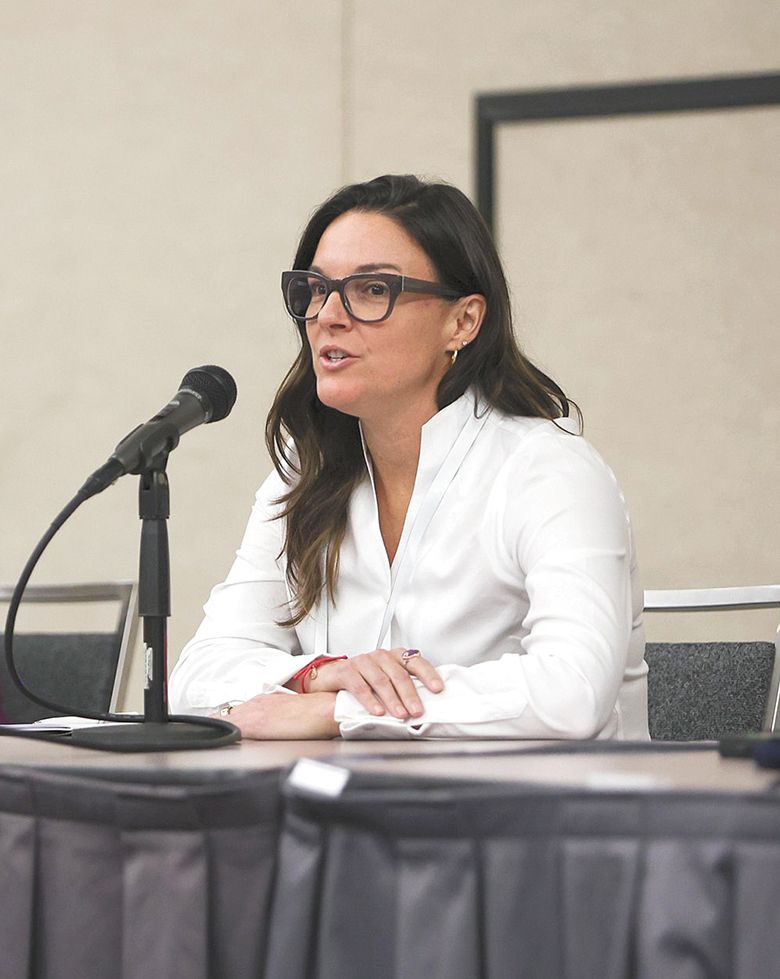
Jen Cossey, general manager of Amity’s Brooks Wine, noted, “We are at an opportunistic point.” After joining Brooks in mid-2024, she observed, “The wine industry is undergoing rapid changes in buyer behavior and wine club participation. These shifts can be related to weather, politics and society… and right now, all of these factors are happening simultaneously,” Cossey added. “There’s no single solution except embracing the changes. I don’t believe the industry can return to what worked in the past, so we must seek inspiration outside ourselves. We need to make consumers the focus, not just the wine,” she argued.
Cossey was joined by Vanessa Hadick, Van Duzer Vineyards’ marketing manager, and Meg Barkley, vice president of marketing and membership for Clif Family Winery and Farm in Napa Valley. Along with Kamphuis, they stressed the importance of putting the customer in control.
Van Duzer recently revised its wine club options: “We only ship wine twice a year now,” Hadick reported. The change aimed to reduce carbon emissions and improve efficiency. “Members can also customize any club offering. We notify them in advance so they can select their wines.”
Hadick found, “When members are allowed to choose their wines, they tend to spend more.”
Van Duzer’s other option, the Select Club, operates on a subscription basis. Members pay $50 per month, can purchase any wines they want, and use their account funds whenever they choose. “It’s more appealing to younger consumers, and they receive all the wine club benefits immediately,” continued Hadick.
“At Clif Family Winery, we decided to follow a subscription model. We also looked at other sectors like coffee and food producers, and connected with industry colleagues,” shared Barkley. The winery initially launched a food box subscription as a test. “It was so successful,” Barkley noted, “that we added new wine club options two years ago.”
Flexibility and choice are key, allowing members to select their wines. “We spotlight new releases, but shipments can be fully customized,” Barkley added.
Sales are strong. Last year, the winery experienced 16 percent growth in memberships. “This January, we signed up four times as many new members as we typically do,” Barkley said. “Customers want to feel empowered and in control of their wine experience. They enjoy exploring our 20 unique wines. That sense of adventure appeals to them,” she reported.
People in their 40s represent the largest group leaving wine clubs, often citing an oversupply of wine. Cossey explained, “From 2024 to 2025, the number of people leaving wine clubs for health reasons increased tenfold. The other main reason is financial.”
While Brooks offers three traditional wine clubs with varying levels of customization, a fourth option, Brooks with Benefits, is entirely personalized. Members pay a quarterly fee of $100, which can be used to purchase wine, tastings, event tickets and merchandise. “It’s about what members want,” Cossey stated. “They can be part of a community without committing to bottles.” A recent addition to the tasting offerings is rotating nonalcoholic wine flights. “We aim for balance, trying to dispel the idea that drinking and health are incompatible,” she added.
Another initiative is the Wine Atlas Collective. Made up of eight family-owned wineries across California, Oregon, Washington, New York, Texas, and Virginia—with a focus on agriculture and sustainability—the idea was born from a desire to offer something special to out-of-state club members. Visitors to any winery in the collective receive the same benefits as in their “home” club.
“People who enjoy wine but don’t have a club miss out on value," Hadick observed. With wine clubs rapidly evolving to attract and retain members, now is a great time to join one.
Patty Mamula is a Portland-based freelance writer focusing on Northwest art, entertainment and culture. Her résumé includes Sunriver Magazine, The Capital Press and other publications. Connect with her at pattymamula@gmail.com.