
Buen Camino
Two Rogue Valley vineyard families and the ancient road that followed them home

By Paula Bandy
The scallop shell on Tim O’Leary’s keychain serves as a constant reminder.
It’s the ancient symbol of the Camino de Santiago, a network of pilgrimage routes followed by travelers for more than a thousand years. Along the way, the shell marks the path. Tim has walked the Camino a handful of times with wife, Kathy. He carries the token every day through their Long Walk Vineyard in Ashland.
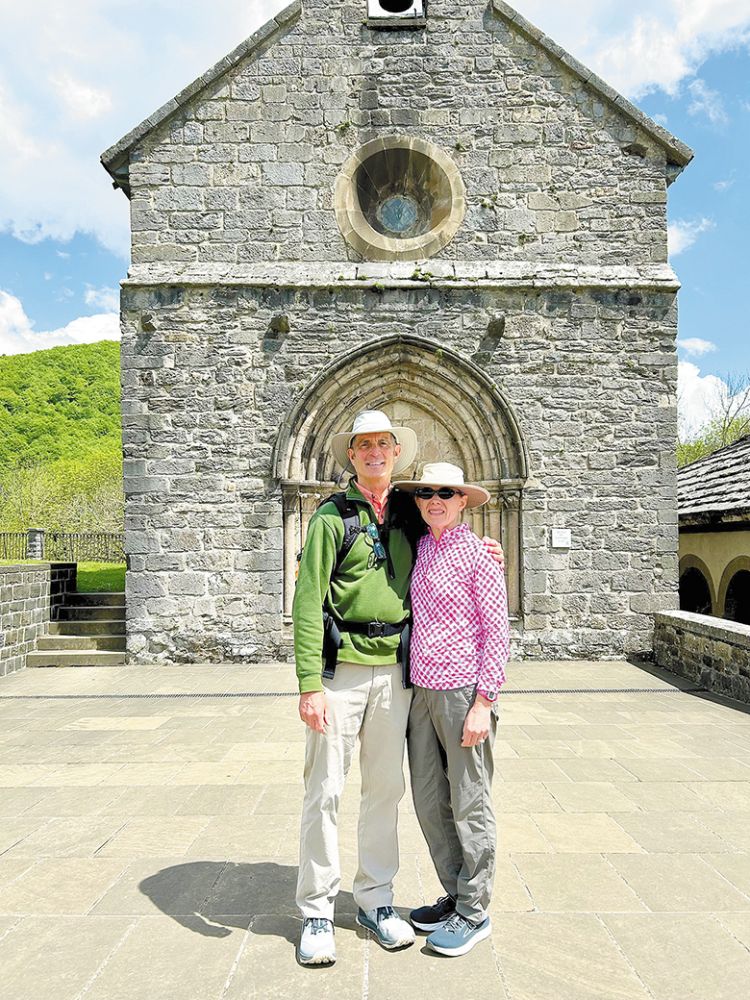
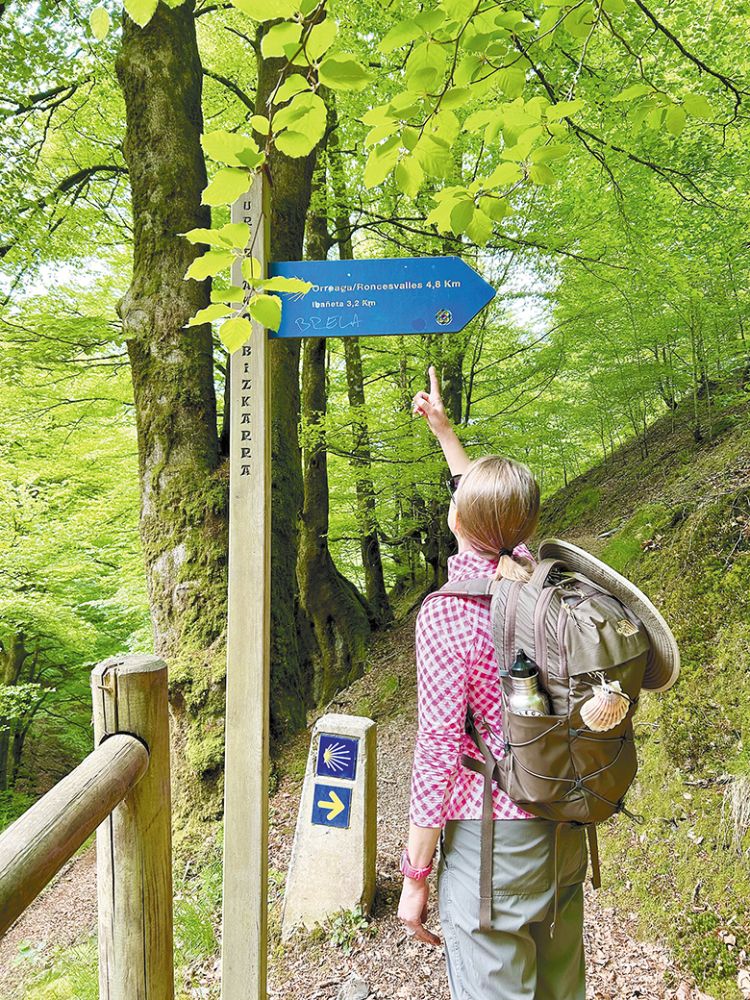
Greg and Debbie Schultz, owners of Schultz Glory Oaks Vineyard, tote shells, too. Theirs hang from the backpacks they wore while walking 150 miles of Northern Spain’s Camino Francés to celebrate their 20th wedding anniversary.
Four people. Four pairs of walking shoes. Two Rogue Valley vineyards. Yet, two different relationships with an historic road. The more interesting story, though, is what happened after they stopped walking.
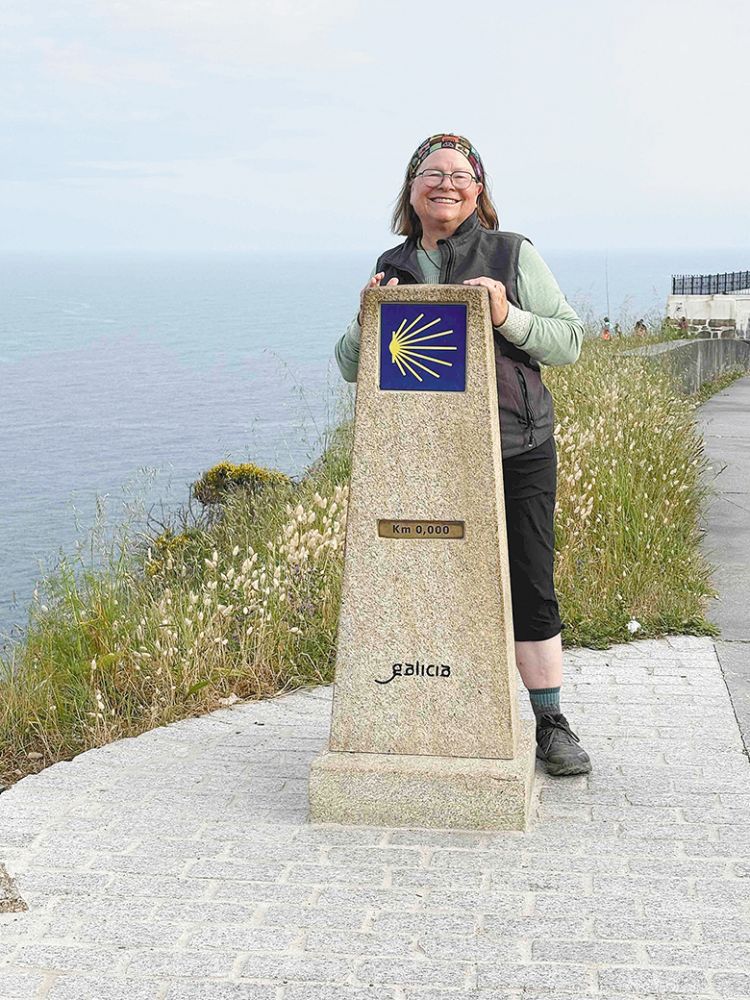
For Tim and Kathy, the Camino has become an ever-deepening rhythm. Four walks had taken them through Spain, Portugal and France, crossing wine regions and farmland, villages and mountains, landscapes where the pace of a day is measured by the distance to the next town.
“You wake up in the morning, have your coffee and Spanish breakfast,” Tim shares. “And all you have to do is walk to another village.”
Twelve to fifteen miles. For six weeks, that’s the job. Put on your shoes. Don your pack. Walk. That simplicity changes how you pay attention.
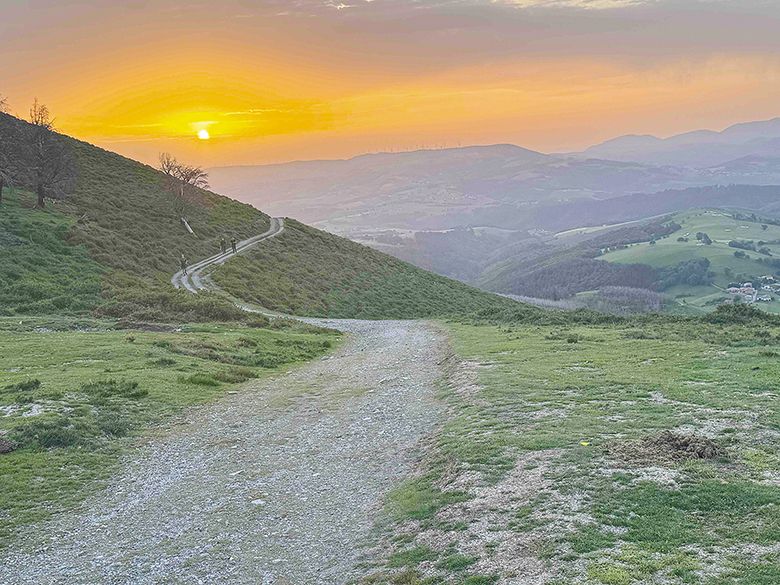
Kathy closes her eyes as she remembers early mornings on the Camino: the light, the coolness before a hot day, pilgrims already moving along the road. The smell of livestock and fertilized earth as ancient paths weave through farms and vineyards. Cows and other animals crossing the road.
She remembers one encounter with other walkers. “We were on the Camino, surrounded by sheep, but so were they.”
Pilgrims carry a Camino passport, collecting stamps from churches, cafés, lodgings and restaurants along the way, representing a chronological record of the journey.
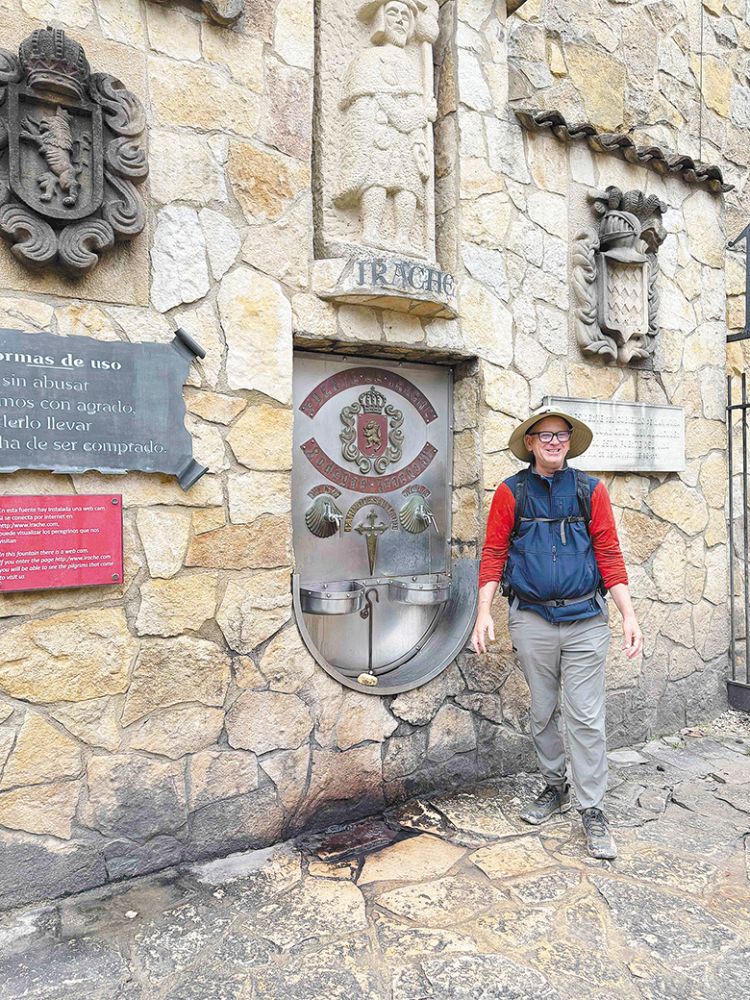
Cafés provide sustenance– and shelter when it rains. Local cheeses and olives are tucked into packs, along with village wines, sometimes without labels. Ask about the wine and suddenly a conversation begins.
Wine on the Camino is simply part of the experience. “It demonstrates wine’s role in sharing and connecting with people,” Tim notes.
And along the road, there is the constant exchange: Buen Camino. Pilgrims say it when they meet, when passing one another, when parting. Hello. Goodbye. Good journey. “I may not see you in the next town,” Kathy acknowledges. “I may not see you ever again.” Still: Buen Camino.
This spring, Greg and Debbie discovered their own version of that shared road. The couple had traveled in Spain, knew Rioja, loved Tempranillo and long imagined walking the Camino. A milestone anniversary supplied the excuse. Obligations in the vineyard made a six-week journey impossible. So, they began near the French-Spanish border, crossed the Pyrenees and continued through Basque Country, Navarra and Rioja. They did not reach Santiago, but that wasn’t the point.
This sentiment is shared between the two couples. Neither talks much about arrival. They instead recount what happened along the way.
For the O’Learys, repeated walks have reinforced something already present at Long Walk Vineyard. After leaving the speed of Silicon Valley for a slower pace in Southern Oregon, their Camino experiences helped them better understand the life they had chosen.
Looking out over the vineyard, Kathy asserts, “This place has always been kind of a mini-Camino for us.”
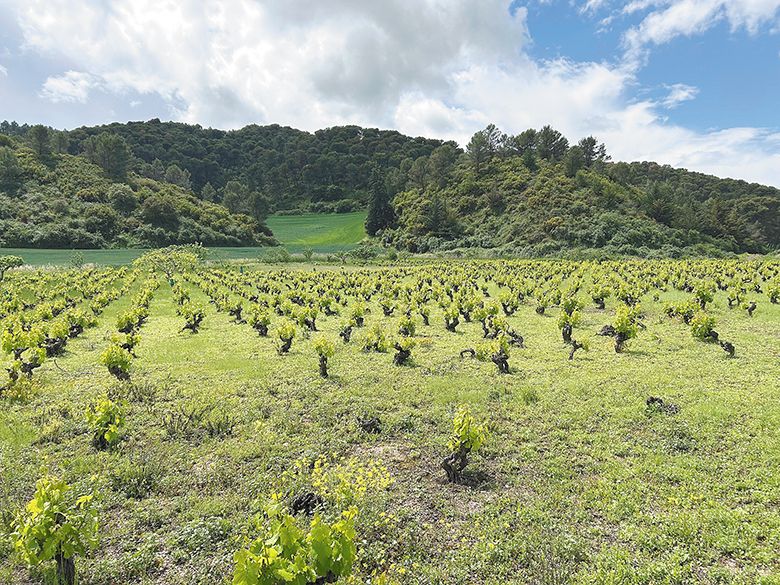
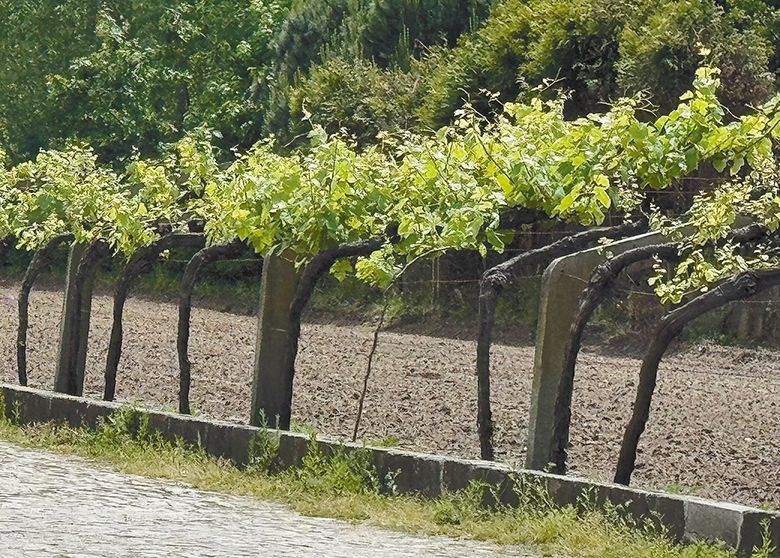
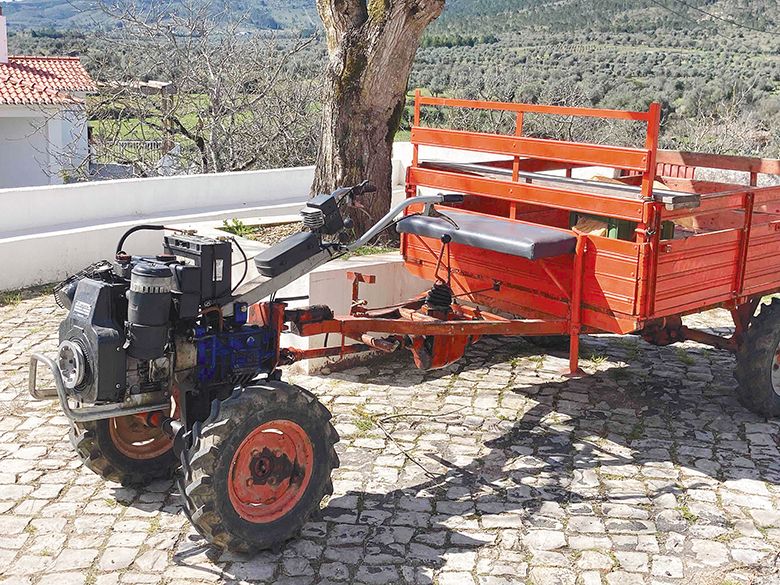
Walk slowly through small European vineyards and you notice things you miss from a car window. Kathy photographs battered tractors and ingenious pieces of farm equipment. They study trellising and farming practices. They notice growers cultivating only a few acres, sometimes with other crops beneath the vines or animals nearby.
Small, they are reminded, does not mean less. Kathy and Tim’s vineyard is organically and sustainably farmed, and traversing miles of European wine country has reinforced their fondness for wine rooted in human-scale agriculture.
“We want to make that wine,” Kathy explains. “Simple and local.”
Simple– but not unsophisticated– wines that belong naturally to a place and table. “We want people who drink our wine to experience the same feeling we have on the Camino,” continues Kathy.
Recently, Long Walk hosted a gathering of the Southern Oregon chapter of American Pilgrims on the Camino. Before long, the group was plotting how they might walk to the vineyard from Ashland. Along busy Valley View Rd. wouldn’t do, but perhaps they could come through an orchard and get permission from a couple of property owners. Within minutes, they had nearly invented a route. “You can’t look at an area or a place without thinking, ‘Well, where would the Camino be?’” Kathy confesses.
For Debbie, the road turned inward. At first the walk was primarily centered around the couple’s anniversary. But every village had a church, and when the doors were open, she and Greg stepped inside. After a few days, something shifted. “I realized I should be spending more time in reflection and prayer, really pausing and thinking about what this means,” she remembers. “It became more than a celebration of our marriage.”
Walking gave Debbie time to consider the people she loves and how she wants to spend the finite time she has with them. “It made me consider what’s most important in my life,” she admits.
Greg found a different kind of quiet.
The couple chose not to activate cellular service, relying instead on Wi-Fi each morning and evening but otherwise disconnected from all the electronic noise. It was replaced by the world immediately around them: the road, next village, a meal, glass of wine, the person standing in front of them.
Strikingly simple, Greg’s experience provided him with “a sense of the goodness of mankind.”
Innkeepers welcomed them. Pilgrims struck up conversations. Families living beside the route opened their doors to another season of strangers carrying backpacks and scallop shells. And somewhere in those encounters, the two stories braid together. Both couples returned home thinking about hospitality.
Tim sometimes imagines the Long Walk tasting room through the eyes of a pilgrim on the Camino– a café or bar where the point isn’t about impressing someone but simply welcoming them. People arrive for wine, but often stay and strike up a conversation with guests at a nearby table.
At their Schultz Glory Oaks Vineyard, Greg and Debbie host travelers through Harvest Hosts. Dozens arrive each year in campers and RVs, often from unfamiliar places. Greg realized the parallel after coming home. For 11 days, he and Debbie arrived as strangers at family-run inns, trusting someone would receive them. Now strangers arrive at their farm. “I’d like to think I’m a little more open and hospitable to our guests,” he notes.
Not everything they brought home was quite so philosophical.
On Debbie and Greg’s first Camino evening, a bottle of local Tempranillo was served cold. Not cellar temperature. Cold. Interesting, they thought. Eleven walking days. Eleven towns. Again, and again– cold Tempranillo. After an entire day on foot, it was wonderfully refreshing, slowly warming and changing over time.
Back home, a new rule was imposed: Chill the Crianza.
The Schultz Glory Oaks Vineyard Tempranillo, aged like a Spanish Crianza, now goes into the refrigerator. Some tasting room visitors understand immediately, while others are skeptical. Greg and Debbie pour it while sharing their Camino story. There may be no better illustration
of pilgrimage: walking 150 miles contemplating marriage, faith, time and the goodness of humankind– and returning home determined to put the red wine in the fridge.
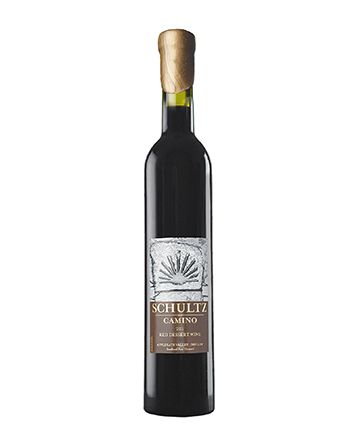
Schultz Glory Oaks Vineyard, organically farmed since 2016, has a port-style Tempranillo called Camino. Its label displays a photo Greg and Debbie took years ago in Burgos: a scallop shell set into a cobblestone street, rainwater gathered inside its ridges. Another wine, King, will carry a photograph from this Camino.
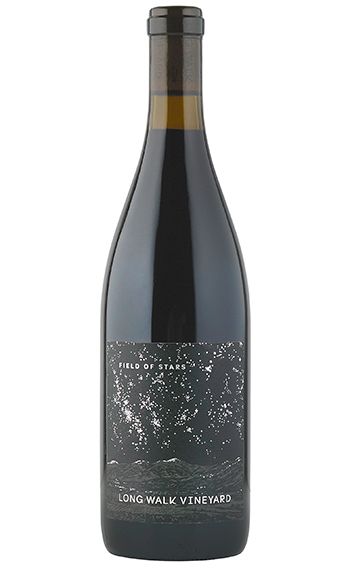
At Long Walk Vineyard, the road became Field of Stars.
Grenache, Mourvèdre, Carignane and Syrah, four estate-grown varieties begin together, co-fermented rather than assembled later in the cellar. Its name echoes the traditional translation of Compostela as “field of stars,” but the picture is unmistakably Oregon. The label features a photo of the couple’s old Labrador, Darcy, sitting on the porch beneath the night sky and distinct mountain horizon.
It’s home, yet resembles Spain, too.
These pilgrimage experiences aren’t about recreating Spain in Southern Oregon but instead shift the way these couples see what is already here.
A vineyard. A road. A stranger at the door. A table with room for one more.
Both couples returned feeling more deeply connected to something ancient: generations of people tending vines, making wine and setting it on tables for new arrivals. “The good parts of life get reinforced every time,” Tim observes of returning from the Camino. “And perhaps some of the baggage gets left behind.”
The four walkers are home for now. Greg and Debbie intend to return to Spain and pick up where they left off. Their scallop shells dangling from their backpacks, waiting. Tim and Kathy are already busy planning another route.
And Tim’s shell? The one on his keychain. He carries it through the vineyard, into the tasting room, on the ordinary errands of an ordinary day– a small reminder of thousands of miles walked and, perhaps, of all the miles still ahead.
The Camino, it turns out, does not necessarily end when the walking stops.
Sometimes you carry the road home in your pocket.
Paula Bandy and her dachshund, Copperiño, are often seen at Rogue Valley’s finest wineries, working to solve the world’s problems. She has covered wine, lifestyle, food and home in numerous publications and academic work in national and international journals. For a decade, she was an essayist/on-air commentator and writer for Jefferson Public Radio, Southern Oregon University’s NPR affiliate. Most recently, she penned The Wine Stream, a bi-weekly wine column for the Rogue Valley Times. Paula believes wine, like beauty, can save the world. She’s also a Certified Sherry Wine Specialist and currently sits on the Board for Rogue Valley Vintners. @_paulabandy