
An Extended Bloom
White Rose Estate marks 25 years in the Dundee Hills
By Annelise Kelly
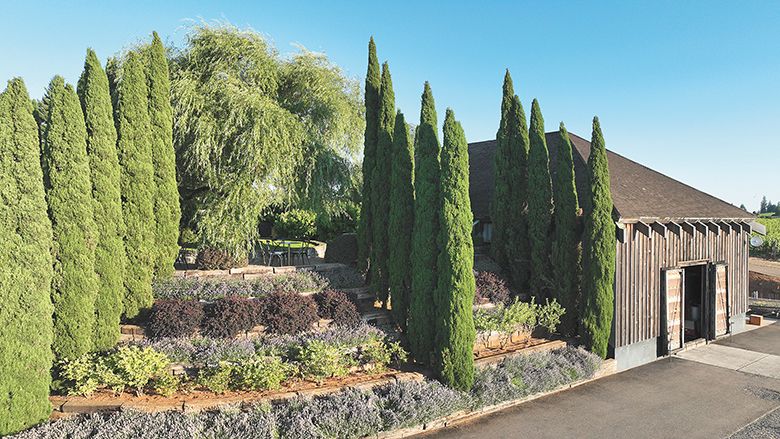
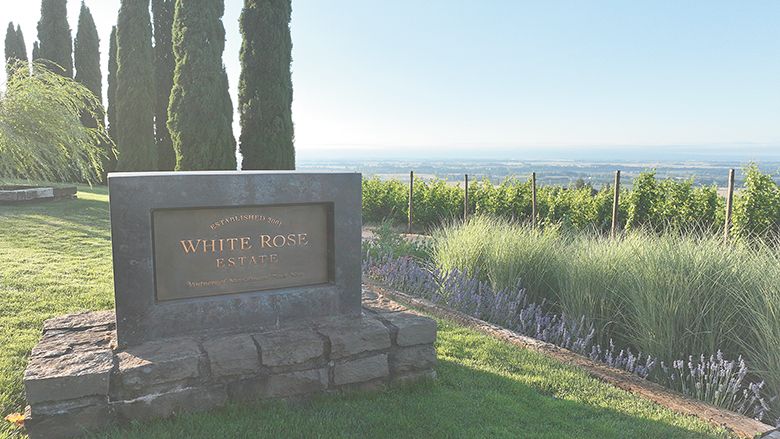
High on a crest in the Dundee Hills, flanked by some of the Willamette Valley's most storied wineries– Archery Summit, Domaine Drouhin Oregon, Winter’s Hill Estate, Domaine Serene– sits White Rose Estate. Ensconced above sweeping views of the Valley, on a clear day, the distant silhouette of Mount Hood is visible.
Since the winery’s first vintage in 2001, annual production has increased from a couple hundred cases to approximately 3,000 cases. Primarily from the estate's 14 acres, 10 planted with Pinot Noir, it also sources fruit from a selection of premier vineyards across the Northern Willamette Valley. The lineup focuses almost exclusively on Pinot Noir.
ORIGINS
After college in Southern California and years in the aerospace industry, owner Greg Sanders sought a new challenge. In 1995, he began viticulture and enology courses at UC Davis. Five years later, he purchased an existing 10-acre property known as White Rose Vineyard. Twenty-five years after uncorking his first vintage, Sanders’ singular vision continues to bear elegant fruit.
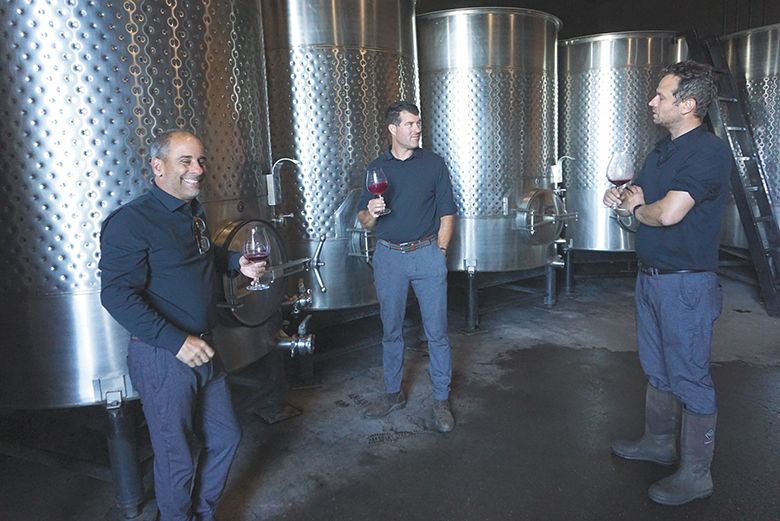
Sanders spoke with Oregon Wine Press about the past two and a half decades, accompanied by right-hand man Greg Urmini. While Urmini’s official job title is winemaking/operations lead, “in any other winery, he would be head winemaker,” notes Sanders. “He's been a head winemaker at top California wineries; here, we consider winemaking more of a collaborative team effort. We are all part of the process. I steer the wines toward very specific conceptual or emotional directions, and then work with the guys to get there.”
“Based on Greg Sanders’ overarching vision for each winemaking objective, the team works together to understand and help coordinate the research and years of experimentation to arrive at the objective,” echoes Urmini.
PHILOSOPHY
Sanders explains, “Rather than focusing on provenance or terroir, White Rose instead explores the variety of memorable moments available to the consumer throughout their wine experience.”
Urmini compares wine to “architecture, theater, sculpting and many other art forms, where the holistic encounter creates a transcendent moment– elevating the overall experience. We focus on how people connect to wine.”
“It's our job at White Rose to find different types of emotional connections,” shares Sanders, and understand how unique winemaking protocols, vineyard selections and viticultural techniques enhance those associations.
After identifying five ways people connect emotionally to the beverage, White Rose wines are tailored to captivate those audiences. “Aesthetes” focus on the subjective component of quality in a wine. “Collectors” engage with both pride of ownership and a wine’s transformation over time. “Convivialists” care about how wine enhances social experience. “Epicureans” relish the relationship between food and wine. And “Explorers” revel in the details, often educating themselves deeply about wine.
THE WINE
White Rose is frequently associated with its research and 100 percent whole cluster fermentation.
“Early on, I was focused on the history of wine and the ‘aesthete’ connection, which is quality, pure and simple,” explains Sanders. “Whole cluster became an important component as I explored those worlds. To this day, whether I’m making an aesthete or historic wine, both include a hundred percent whole cluster.” Destemmers only came into play about a 100 years ago, so “we're recreating how wine was crafted in the old days. Not for a sense of tradition, but to better understand what it tasted like to people before the invention gained popularity.”
Sanders also uses whole cluster fermentation to “impart a sense of nobility, restrain the presentation of the body and focus your attention on some of the more elevated details.”
One of the recent innovations to White Rose’s whole cluster program is the segmented press fraction technique.
Step 1: The initial extraction delivers floral perfume and refined elegance. (Alcohol at 11 percent)
Step 2: The secondary extraction expresses balance, structure and varietal purity. (Alcohol at 12.5 percent)
Step 3: The press extraction contributes depth, power and textural weight. (Alcohol at 14 percent)
These components are aged separately, providing the team with flexibility in presenting a variety of expressions.
The winery’s various techniques have earned accolades. More than 20 of White Rose Pinot Noirs have received 95-point ratings, with four awarded 97 points, and the 2018 Confluence of Nature2 was honored by Decanter Magazine with a 99-point rating.
OLD VINES
The original White Rose vineyard was planted between 1978 and 1982, with an adjacent three acres added in 2001. As the vines approach 50 years, they play a critical role in White Rose’s wines. “Vines that are 10- or 15-years old produce more concentrated fruit notes,” observes Sanders. “Older vines can make increasingly better wines if you have an amazing vineyard. Conversely, if your vineyard is merely average with old vines, you still have average wines. The dream is to have a stellar vineyard with old vines, but every 45 years or so, your vines die, forcing you to replant. So it's really all about the quality of the vineyard and old vines being a subset of that ultimate quality.”
Sanders observes how “the antioxidative condition is often stronger in older vines. It tends to absorb the oxygen and protect the condition of the wine longer. I explain it to my team this way: a wine crafted from young vines is like a flower with five or ten petals. As these petals open up, they smell beautiful before falling to the bottom of the bottle, where they become part of the aging process. When you put grapes from old vines in a bottle, its flower has dozens of petals that open over an extended period of time. Its antioxidative potential, and this ‘flower’ slowly opening, is what makes the aging process exciting and valuable. That's why a vine’s age becomes the heart of the cellaring experience.”
VISITING WHITE ROSE ESTATE
A visit to White Rose Estate includes one surprising element. Despite the beautiful setting, the tasting room has no windows. “It forces guests to hyper focus on the wine itself,” reports Urmini. “When Greg was studying wine and educating his palate, he hosted numerous events to explore all the Pinot Noir he had collected from Oregon, Burgundy and California. He discovered being in a closed room allowed tasters to concentrate exclusively on the wine. So, the White Rose tasting room’s lighting, design and spatial orientation all provide a warm environment that disconnects you from the outside, guiding your concentration specifically to taste and smell.”
Sanders notes that “if you're truly a wine aficionado and care deeply about things that make a difference in wine quality, we have done much work to dissect and present it in a meaningful way. White Rose doesn’t follow the traditional way of speaking about the European wine-making model of sense of place and terroir. Instead, we seek a more eloquent way of connecting emotionally and finding value in wine.”
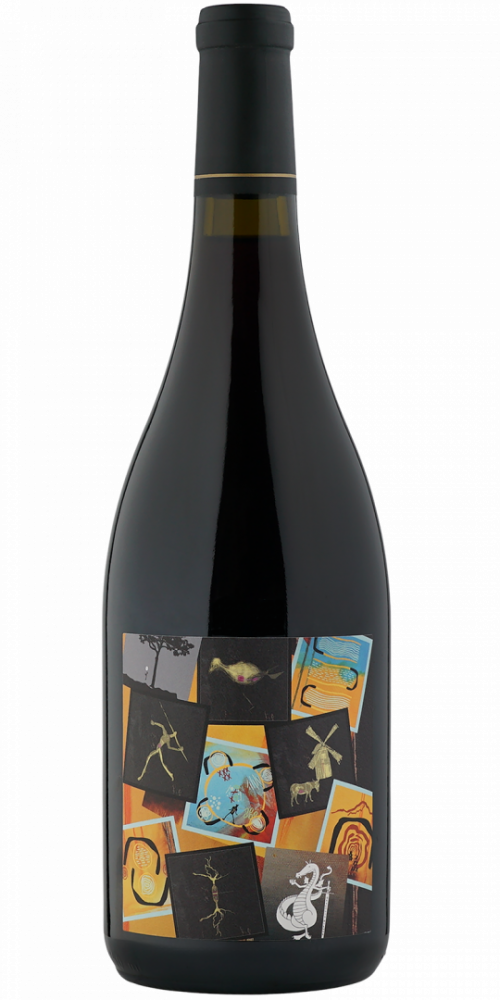
To celebrate a quarter century of pursuing this enological mission, White Rose Estate recently released a special 25th anniversary Pinot Noir and plans to host events honoring the milestone throughout 2026.
WHITE ROSE ESTATE
6250 N.E. Hilltop Lane, Dayton
Sun.- Thurs 11 a.m. to 5 p.m., Fri - Sat. 11 a.m. to 6 p.m. (reservations suggested)
www.whiteroseestate.com
(503) 864-2328
After living in Denmark, the Netherlands, L.A. and the Bay Area, writer Annelise Kelly settled in Portland, where she delights in food carts, Douglas firs, dancing and getting crafty. Thanks to Annelise’s broad interests, her career path has weaved through cooking, events, technical writing, decorative painting and retail display. Wanderlust takes her across borders and oceans every chance she gets. Connect with Annelise at www.annelisekelly.com.