A Natural Pairing
Walla Walla Community College's culinary and enology partnership
By Annelise Kelly
Once a sleepy Washington college town, Walla Walla was best known for growing fruits, vegetables and grains, and the sweet onion that bears its name. In recent decades, folks realized that farmland could grow premium wine grapes. Today, the area boasts more than 120 wineries and dozens of restaurants; a transformation luring food and wine lovers to the town of 34,000 people.
With its culinary and enology and viticulture programs, Walla Walla Community College, or WWCC, plays an active role in this flourishing environment. The two programs complement each other, as food and wine so naturally do, to the benefit of students in both.
ORIGINS
Two decades ago, as the college established its enology and viticulture program, it became clear the area could benefit from developing a culinary program as well.
“When they were designing the facility for the enology program back in the early 2000s, a big question became ‘what do we need for the success of this as a wine region in general?’” recalls Martin Fujishin, director of the College Cellars’ Enology and Viticulture Program. “For generations, wine and food have gone hand in hand, especially when it comes to wine country experiences. And, for the college, it was an easy step to say, let's add a culinary program as we're building this facility. It's become a huge feeder program for both the restaurant industry here in town and the wine industry. So it's been a great partnership over the years.”
INSTITUTE FOR ENOLOGY AND VITICULTURE
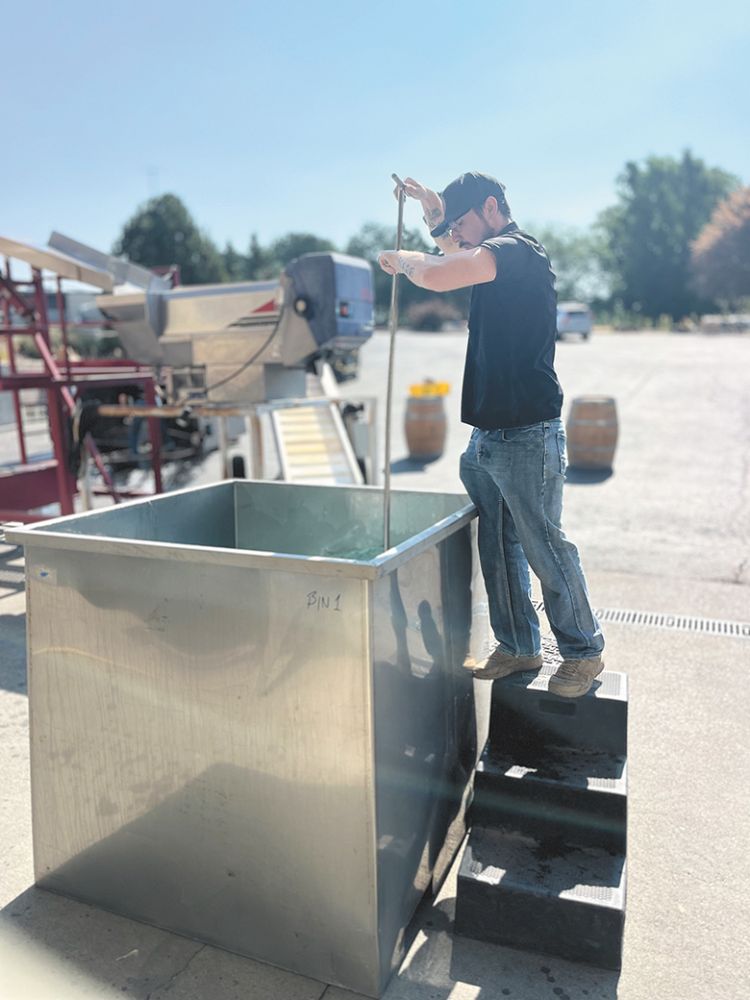
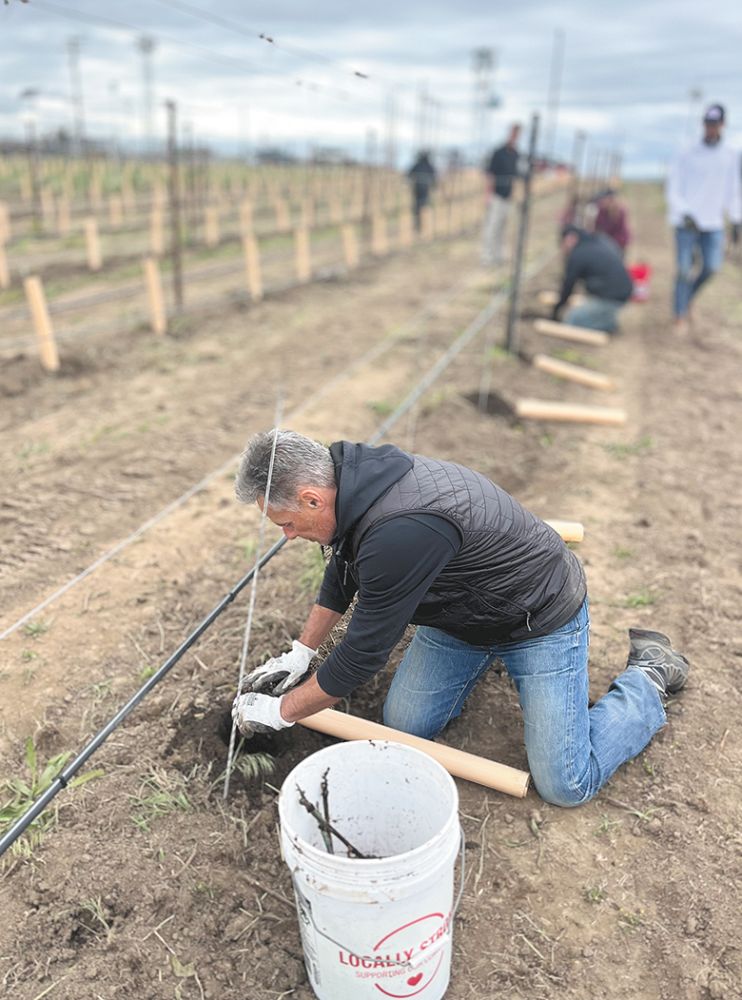
Students engage in hands-on learning at the Institute for Enology and Viticulture. Starting with WWCC’s teaching vineyards, where eight acres are planted with 15 wine grape varieties, they craft wine for the college’s label, College Cellars, while also learning business skills to manage and market a winery.
Multiple options allow students to forge their own course, including a one-year certificate in viticulture or fermentation science and a two-year undergraduate associate in arts degree. WWCC is currently adding a wine business certificate. Fujishin observes that quite a few students start with a one-year certificate, “then eventually fill out their experience with a full associate's degree related to enology and viticulture.”
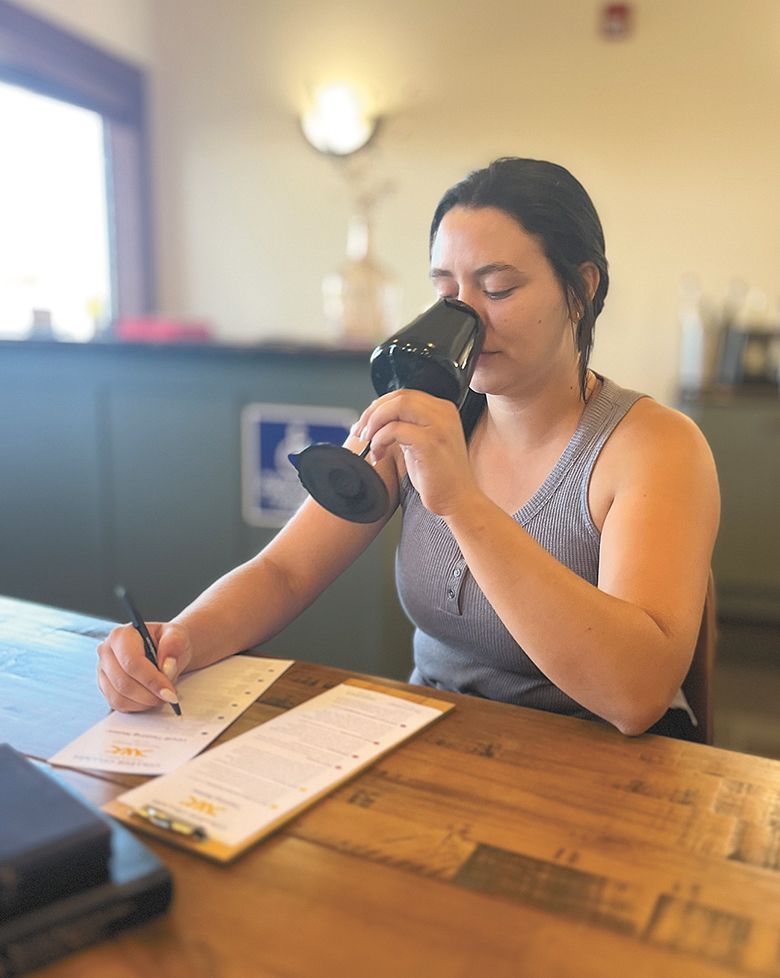
Since the school follows a “sip-and-spit” policy for all courses, students as young as 18 can participate. College Cellars’ wines are sold primarily directly to consumers from the tasting room.
WINE COUNTRY CULINARY INSTITUTE
Successful completion of the two-year program at the Wine Country Culinary Institute earns graduates an applied sciences associate degree in Culinary Arts. Students acquire boots-on-the-ground experience in their second year by working in the college’s venues: a bistro, restaurant, food truck and catering service.
The counter-service Titus Creek Bistro serves standard student fare, with happy upgrades, “depending on the current studies,” explains Dan Thiessen, director of culinary arts programs. “For example, right now we have students in baking and pastry, so last week we offered two types of cookies: icebox and peanut butter and chocolate chip.” This allows students to “gain the knowledge of velocity and volume as part of their competencies,” he adds.
Capstone Kitchen, the on-campus fine-dining restaurant, serves lunch at select intervals throughout the year. The experience allows students an opportunity to work at a station in a restaurant and produce lunchtime meals.
Each fall, students craft and serve a prix fixe three-course menu, with several options. The winter menu is “truly à la carte, where students' competencies are based on various appetizers, soups, salads, entrees and desserts.” At $27 for the three-course menu and $8 to $31 for à la carte items, Capstone Kitchen attracts plenty of locals. Students typically serve 40 guests during a shift.
Thiessen knows how real-life work experience “is incredibly important. Having worked as a chef for a very long time, and been exposed to various culinary programs and graduates, I think that's one of the biggest things culinary graduates are missing.”
The student-operated food truck is the first in the nation operated by a community college culinary program. It pops up at various events, and a catering division serves clientele throughout the greater Walla Walla Valley area.
BOARD OF ADVISORS
Each program relies on an advisory board for “direct industry feedback on ways to improve and strengthen our curriculum,” notes Fujishin. “They're our biggest cheerleaders and supporters in the community. They're talking about our program while also employing our students and interns. Many are even alumni. This ensures our academic programs directly respond to the needs of the local wine and hospitality industries.
SYNERGY BETWEEN THE TWO PROGRAMS
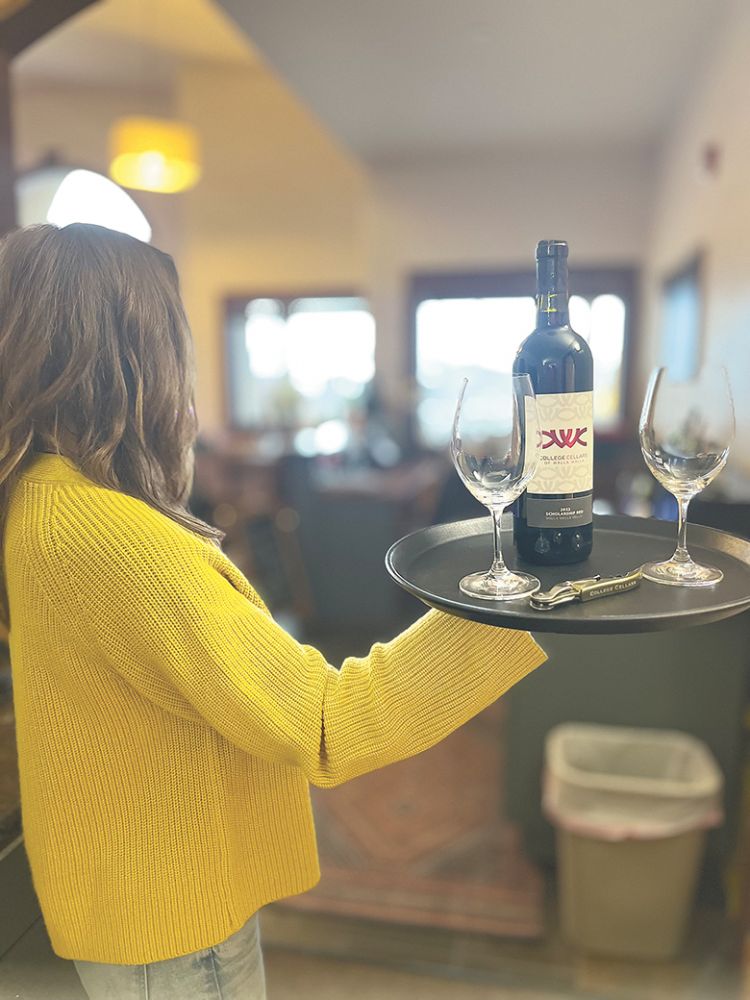
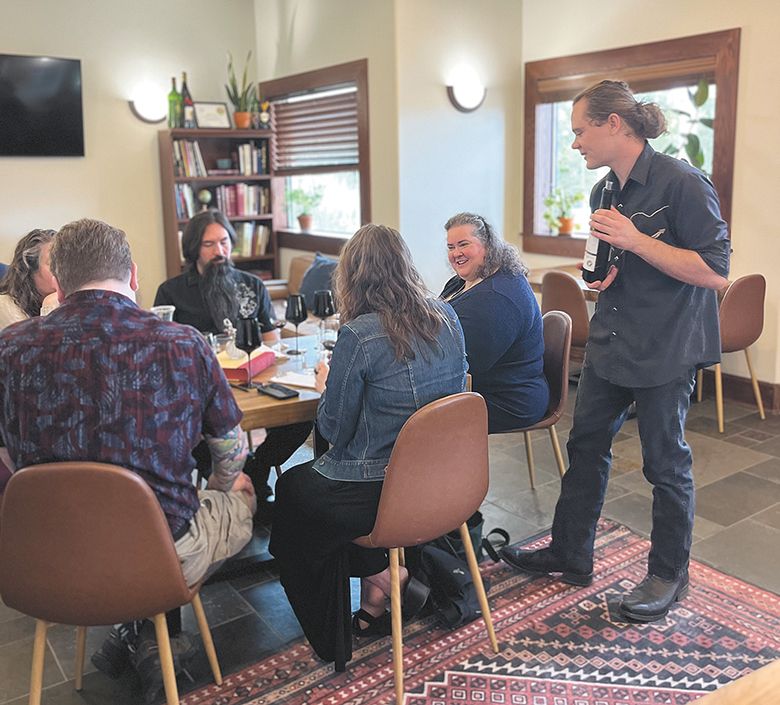
Enology and viticulture students serve the wine at Capstone Kitchen. Fujishin observes, “We want our students to get a well-rounded experience on both sides of the business. Even if someone’s only interested in working in the vineyard, it's essential to understand wine production and hospitality, too.”
He recalls a student’s recent experience at Capstone Kitchen. “It confirmed she doesn’t want to work up front, talking to people. She wants to be out in the vineyard. And learning what you don't like is just as important as discovering what you do like,” notes Fujishin.
Michelle Poulson, tasting room and marketing manager at College Cellars, reports, “Culinary students provide food, such as small bites, for our club events.” This spring, they’re launching a new pairing program. Starting this month, they’ll host a themed event every other month, pairing four bites with four College Cellars wines. May is “Let’s Get International,” and “Porch Pounders” will be held in July.
Poulson believes the experience gained by the enology and viticulture students– in conjunction with the culinary program– gives them a “better grasp of the hospitality industry as a whole. A comprehensive understanding helps when serving your guests.”
Culinary students craft dishes specifically to match individual wines, supporting the program’s goal “to give students the best opportunity to learn as many facets of the industry as possible during their 21-month studies. Enology and viticulture students have an opportunity to serve wines by the glass or bottle in the Capstone Kitchen dining room, exposing them to the retail and hospitality side of the industry. By having conversations with guests (and not merely making wine), they learn valuable skills for future success,” explains Thiessen.
SUCCESS STORIES
Success stories abound.
Poulson recalls, “Josh McDaniels with Doubleback and Bledsoe immediately comes to mind because he started in the early years and was quite young. He has been head winemaker for some time, but studied here before he turned 21. Now Josh is really thriving.”
“We have several graduates with their own businesses,” declares Thiessen. “Efrain Reyes, whose mother started Tacos La Monarca food truck, operates a fleet of food trucks around the Valley with her. I think Efrain catered more than 250 events last year.” Ari Lopez runs The Happy Wanderer Urban Mexican Food, both a restaurant and mobile food truck. Another grad, Sam Shelton, is general manager and executive chef at Passatempo Taverna, a highly rated local restaurant. Former chef Chris Teal owns A. R. Teal's Produce, supplying local restaurants with an extensive selection of raw ingredients. Adds Thiessen, “So Chris is supporting the industry and elevating what is available for wineries and restaurants.”
“Our graduates are also in sales for large food service supply companies,” Thiessen adds. “They build on their education and help other restaurateurs make good buying decisions and product selections.”
COMMUNITY IMPACT
WWCC is dedicated to providing a lasting education and real-life experience for both culinary and enology and viticulture students. By enabling cross-pollination between the two programs, the school succeeds in its mission to deliver a skilled workforce to the community, ensuring Walla Walla continues to prosper as a food and wine destination.
Walla Walla Community College
wwcc.edu/programs/enology-viticulture
wwcc.edu/programs/culinary-arts
After living in Denmark, the Netherlands, L.A. and the Bay Area, writer Annelise Kelly settled in Portland, where she delights in food carts, Douglas firs, dancing and getting crafty. Thanks to Annelise’s broad interests, her career path has weaved through cooking, events, technical writing, decorative painting and retail display. Wanderlust takes her across borders and oceans every chance she gets. Connect with Annelise at www.annelisekelly.com.