Venture Down the Dark Hollow
South African roots blend with the Rogue Valley
By Tamara MC
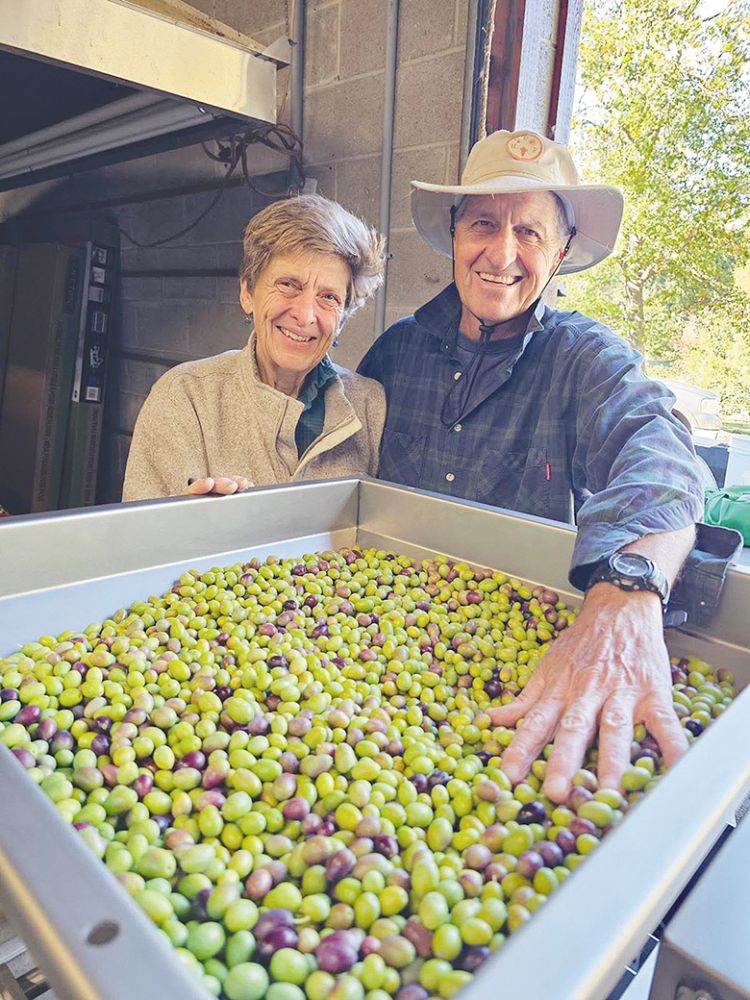
I met Anna Sephton this summer at a Savor Southern Oregon tasting, where she poured her family’s Dark Hollow Farm Riesling and a young Pinot Noir. Her parents, Brian Sephton and Anita Klingenberg, moved from Florida to Dark Hollow Road, a quick drive west of Phoenix in early 2020, about three weeks before the pandemic closed the country. They came to the Rogue Valley for the four seasons and mountains, and to farm olive trees.
“Olive trees were the main thing,” Brian admits.
The couple removed an old pear orchard and an existing vineyard to plant their first vines and olive trees in 2021, adding a second lot of vines the following year.
“Olive trees are marginal here,” Brian explains. “It gets a little too cold in winter, so it’s quite risky planting them, and there have been some hard-luck stories before us.”
So, he kept the grove to a little over three acres and planted grapes across the rest of the farm.
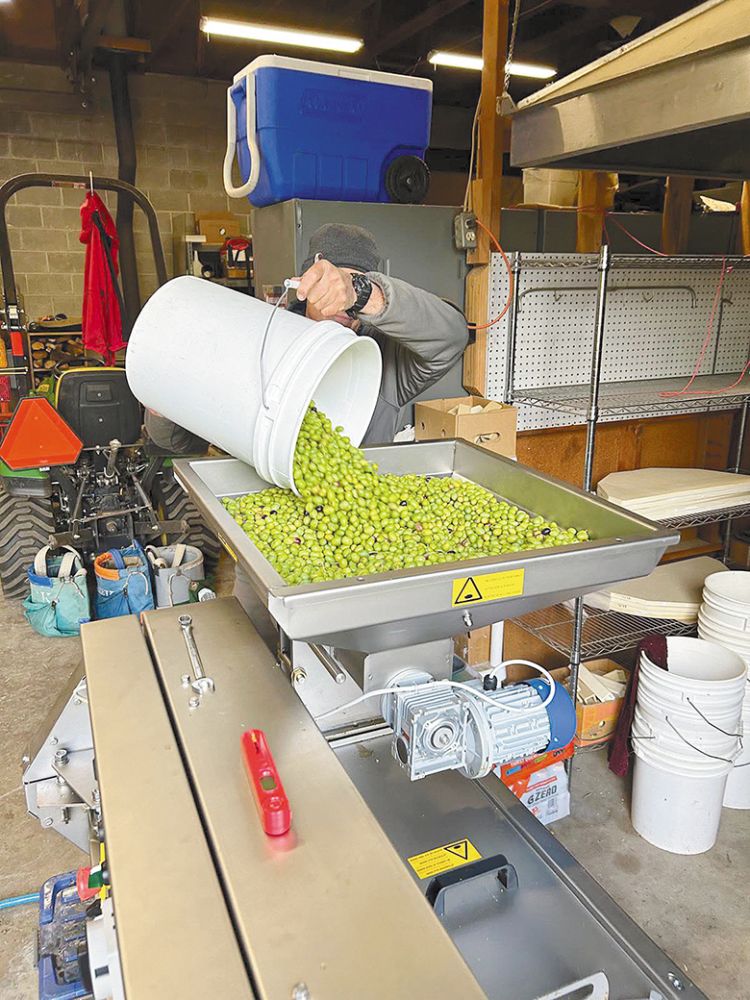
The family picks the olives in October and mills them on the property the same day. The Dark Hollow Farm olive oil took gold and silver at the 2025 New York International Olive Oil Competition, one of the world’s largest blind-tasting competitions in the world.
“We didn’t really have huge knowledge or interest in wine grapes,” Brian confesses. “But we’ve spent days and days in the vineyard and got to know them. They’re amazing plants, and I love growing grapes.”
THE VINES
The Sephtons planted five varieties across seven and a half acres at 1,800 feet, on north-facing silt loam slopes: Sauvignon Blanc, Semillon, Chardonnay, Riesling and Pinot Noir.
The farm earned its organic certification in 2024 under the U.S. Department of Agriculture National Organic Program. “Everything here is organic: the grapes, olives and olive oil,” Anna notes. “It’s a lot of work because inspectors come every year, and Brian has to do all the paperwork and keep detailed records.”
The dry climate has spared the family so far. “If we’re hit with a pest attack, we have fewer tools since chemicals aren’t allowed,” Brian shares.
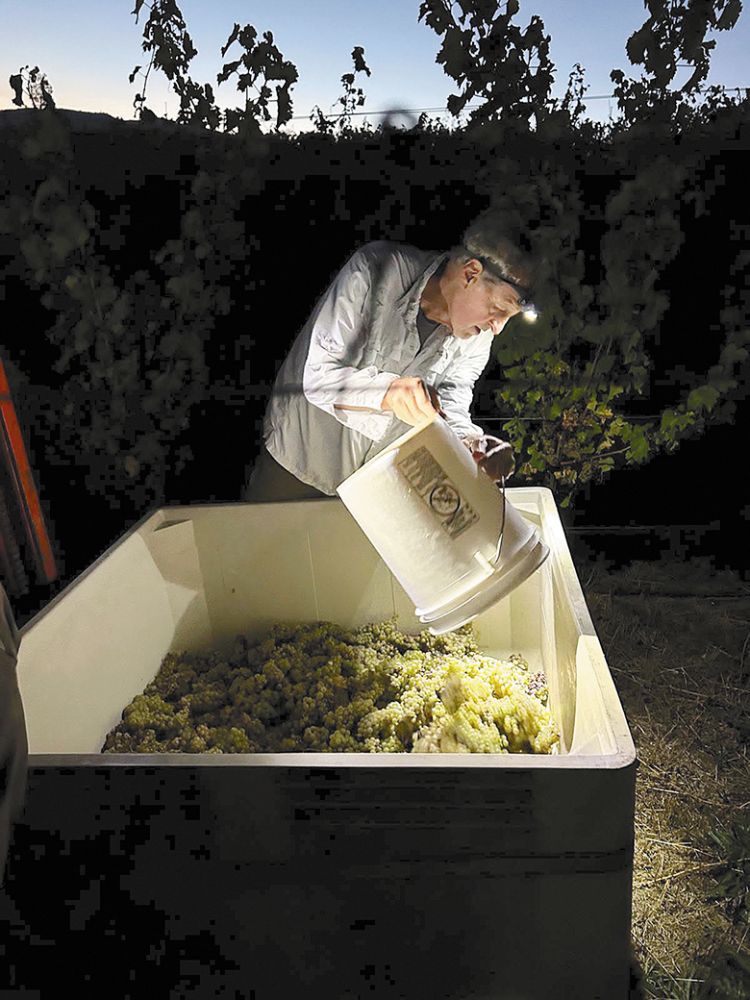
The family pretty much does everything with the help of one employee, Anita says. While they hire harvesters for grape harvest, the three run the buckets of picked fruit themselves.
There’s always work: the vines need to be pruned and tied down; the leaves thinned so the grapes get enough sunlight. It’s a constant process Anita observes, especially in the vineyards. Watering is essential, and Brian waters day in and day out.
THE WINES
Oregon law requires 15 planted acres to build a winery on agricultural land, Brian says, so the family hauls its grapes 20 miles away to winemaker Eric Weisinger of Weisinger Family Winery in Ashland. His father founded the place in 1988 and specializes in crafting small-lot wines exclusively from local fruit.
“Eric is an excellent winemaker,” Brian asserts. “We’re very lucky to have him.”
At harvest time Brian and Anita discuss their preferred wines and style with Weisinger. “Then he handles the winemaking process,” Brian states. As each wine matures, the Sephtons taste it with Eric and decide together how much longer to let it go.
The Riesling is really lovely and dry, Anna shares, and it led sales through the tasting room’s first season. The Semillon and Sauvignon Blanc blend outsells it now, and the 2024 vintage received a silver medal at this year’s Savor Southern Oregon competition.
Dark Hollow also makes a rosé of Pinot Noir, a sparkling wine named Celebration Chardonnay and a late-harvest Sauvignon Blanc. The family bottled Pinot Noir red wine this year, its first of the variety.
VIVA VERJUS
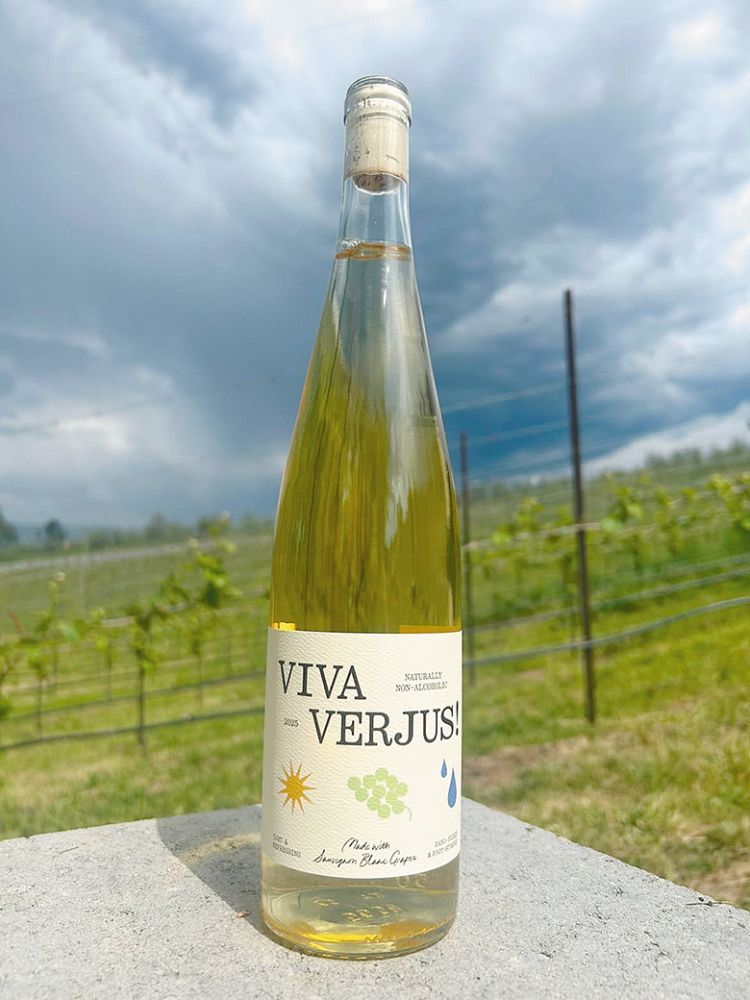
Verjus goes back 1,700-odd years– European cooks used it in sauces, marinades and dressings. It’s basically juice from unripe wine grapes, Brian describes. The organic Sauvignon Blanc grapes are pressed without being fermented, producing something a little bit like green apple juice, but with a tart-sweet taste. The family bottles the juice in an elegant, tall bottle and call it Viva Verjus.
Brian drinks the verjus on its own or in a mocktail. In the tasting room, it’s served as a spritz with honey and thyme syrup, topped up with sparkling water.
As more people seek something nonalcoholic, Anita recognized an unmet need. It’s also ideal for designated drivers and children.
“Kids love it,” Brian boasts, “because it’s cool drinking something from a wine bottle.”
Viva Verjus has become quite popular, selling nearly as many bottles as the Semillon and Sauvignon Blanc blend.
THE LABEL
When I asked where the name came from, Brian explained how the family lived on Dark Hollow Road.
“Dark Hollow is quite an evocative name. It definitely establishes a strong sense of place,” Anna notes.
She took the Dark Hollow name to a close friend in London, graphic designer Lucy Reis, who grew up on a farm in the U.K. Reis designed the logo around the sun, raindrops and an amphora. The amphora, Anna shares, is an ancient method for storing and processing both wine and olive oil.
“It’s very much about working with our land– not against it– taking care of it and farming regeneratively,” Anna describes. “The pomace from the olive oil making goes straight back to the olive grove. It’s about being as circular as possible.”
The image on the bottles was drawn from Betty LaDuke, a 93-year-old Ashland artist who works in her studio every day.
“She used to visit wine farms and vineyards and draw people as they worked,” Anita recalls, “then make these beautiful wood panels.”
One panel, which LaDuke calls “Grape Harvest Frenzy,” honors those who start picking the rows of grapevines at five in the morning under headlamps. It’s featured on the Dark Hollow wine labels.
“Without them, we would not have wine,” she states.
SOUTH AFRICA
Brian, Anita and Anna were all born in South Africa. He grew up on a sheep and cattle ranch in the middle of the country, high in the mountains on the southern border of Lesotho. Brian worked as an investment banker, then as a civil rights lawyer– when he met Anita. Later, in the U.S., he ran the legal and finance department of a public company. Farming, Brian reports, is time spent outside, and it’s so much nicer.
Anita was raised in Kimberley, an area Brian says looks a lot like Texas, where diamonds were discovered in the 1870s and De Beers was founded. She was an art teacher and art therapist, and her experience is reflected in the tasting room décor and activities.
Anna was born in Grahamstown, now known as Makhanda, in the Eastern Cape. After growing up in the U.S., she studied South African colonial archives and earned her PhD in the U.K. In the Dark Hollow tasting room, years of work as a cook and baker pay off.
THE TASTING ROOM
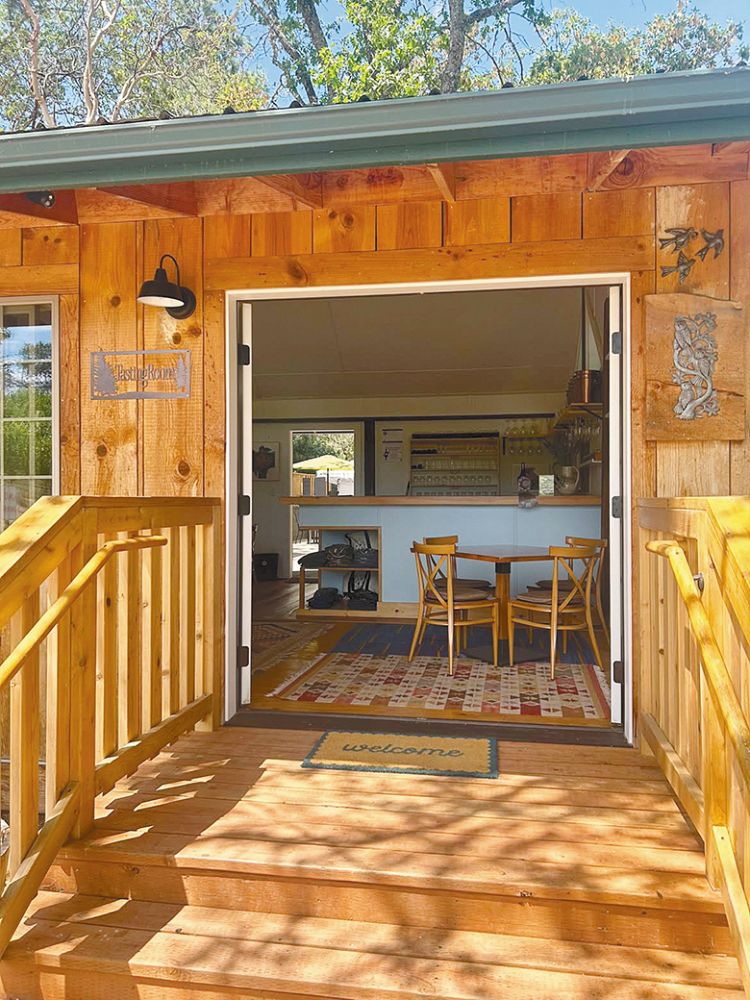
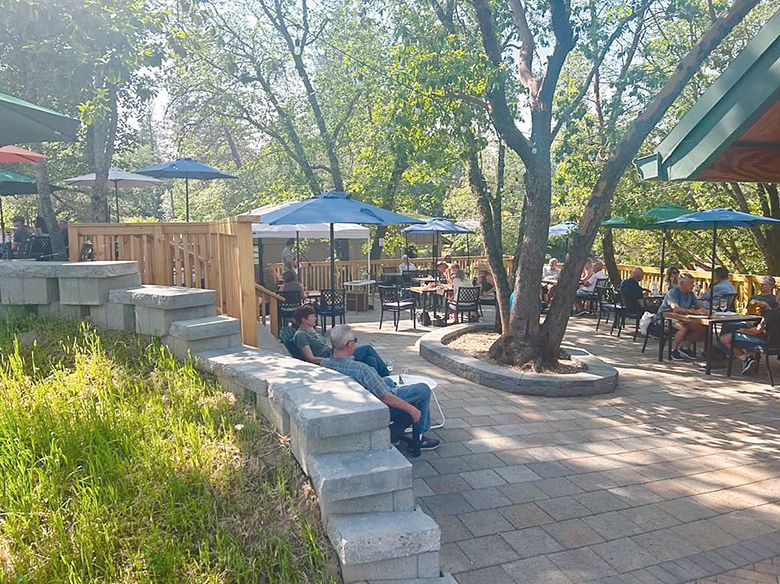
The family opened the tasting room one year ago. “When you come to our tasting room, it feels like quite a South African space,” Anna shares. “We play a lot of African music. We’ve got Betty’s colorful work on the walls, as well as photos taken by my uncle Simon, a photographer in South Africa.”
Anita hosts Paint and Sip, where guests paint a ceramic piece over a glass of wine or verjus, no experience needed. She fires the objects in her kiln and has them ready within a few weeks. A longtime knitter named Jessica Bailey runs Stitch and Sip for knitters, crocheters and hand-stitchers, and will help get a stalled project moving again.
Anna started weekly foreign-film nights on Fridays, free screenings with fresh popcorn and wine or a verjus spritz by the glass. Upcoming 8 p.m. screenings in October are: Brazilian movie “I’m Still Here” and American film “The Last Black Man in San Francisco.”
Regulars have started visiting, particularly neighbors glad to have something interesting to do without driving into Ashland.
“It’s important to us to bring different parts of the world here and show that we’re all very much the same,” Anna declares. “There’s something quite magical about watching films together in groups of people.”
“We get to know the people who come,” Anita adds. “It’s very much a family. I don’t really see it as a business. It’s a family farm.”
Dark Hollow Farm
7121 Dark Hollow Rd., Medford
Open weekends and special events
darkhollow.farm
(458) 488-0407
Tamara MC, PhD, is a writer and applied linguist whose writing has appeared in more than 90 outlets, including The New York Times, National Geographic and BBC. She won the 2024-2025 Lowell Thomas Travel Journalist of the Year (Bronze) award and has held fellowships at Bread Loaf, Ragdale and Sewanee. A low-alcohol drinker, she loves wineries for the place, people and history. Sign up for her amazing mailing list at tamaramc.com.