More Grape Explications
Musings of a Practiced Wine Writer
By Neal D. Hulkower
Fifteen years. That’s when my first wine article, “Borda is Better,” appeared in theOregon Wine Press or OWP (October 2011). I believe that anniversaries ending in 5 or 0 are worth acknowledging, so for the fifth, I published “Grape Explications: Musings of a Novice Wine Writer” (OWP, October 2016). The tenth arrived in the midst of the pandemic and was not commemorated. Now well into my eighth decade, I long ago shed my downy fluff as a wine writer– and was even accepted into the venerable Circle of Wine Writers. Today I share reflections as a more seasoned communicator of vinous topics.
In general, wine writing falls into three categories: academic, trade and popular, each with its own readership. My academic work comprises articles in peer-reviewed journals such as the Journal of Wine Economics published by the American Association of Wine Economists, or AAWE, working papers and PowerPoint presentations. It is here that I allow math into the discussion. Trade publications are aimed at those actively involved in the production and distribution of wine. I placed one piece each in Practical Wine & Vineyard and The Grapevine. My popular work– written for general audiences and free of equations and technical jargon– appears in the largest set of print and online publications.
One of my goals, however, is to break through these silos by creating hybrid pieces introducing ideas and results from academia that educate a broader audience without the formalism and jargon. These are like classical pieces written by composers who also pen film music, for instance, the finale of Howard Hanson’s “Romantic Symphony No. 2.” A wine-related hybrid piece permits the goals of informing, entertaining, analyzing or merely musing to mingle. “Borda is Better” is an example.
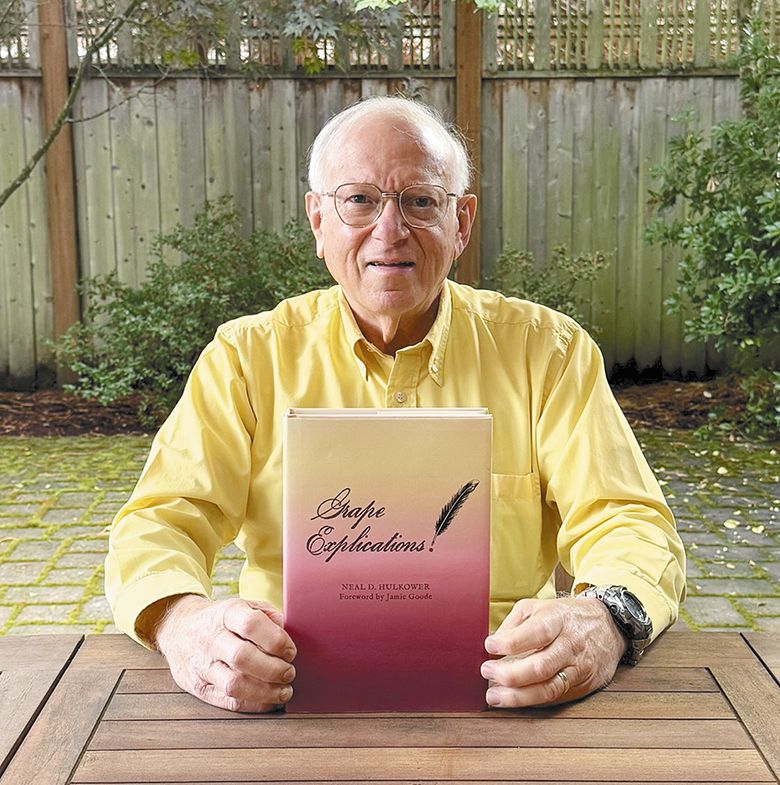
With “Grape Explications,” I became a book author. This collection primarily includes hybrid and popular fare since I was aiming for broader audience appeal. My most successful promotions are book signings at wineries where folks are already in a receptive, vinously induced state.
The book opens with a short piece on the notebooks I kept between 1969 and 1979. As you’ll soon learn, I have serious issues with tasting notes so I rarely write them. One exception is the record of my impressions of Willamette Valley 2011 Pinot Noirs sampled since January 2021. I expect to drink through my stash from the last really cool vintage by the end of the year. Several articles I’ve written since have referenced them. “In Search of Elegant Wine,” on winesearcher.com, attempts to reconcile the meanings of the word as used by mathematicians and wine writers. It earned a place in the last part of my book.
I continue promoting the use of the Borda count, a ranked-choice voting method for wine tastings and recently completed an AAWE working paper titled, “The International Wine and Food Society Judgment 50+ According to Borda,” in which the order of the first and second place Chardonnays are reversed from the advertised ranking by average points assigned. The reds rankings also vary, though the top one remained in place.
My presentations at other recent annual AAWE conferences have focused on: Quality Price Ratio comparisons with Willamette Valley Chardonnay vs. white Burgundy (2024); Willamette Valley Pinot Noir vs. red Burgundy (2025); and Willamette Valley sparkling wine vs. grower Champagne (2026). For a workshop in Melbourne, organized by The Pinot Noir Project following this year’s conference, I presented a Quality Price Ratio comparison of Willamette Valley and Australian Pinot Noir. Of the four studies, this is the only one in which the Willamette Valley wine did not represent the better value. Despite this outcome, I was allowed back into the state.
I have published reviews of wine books in both the OWP and World of Fine Wine. For the newbie, “Wine Confident” by Kelli White (OWP, February 2025). For the health-conscious oenophile, “The Very Good News About Wine” by Tony Edwards (OWP, August 2024). For those who insist on dropping the m-bomb (minerality) in tasting notes, “Vineyards, Rocks, & Soils: The Wine Lover’s Guide to Geology” and “Taste the Limestone, Smell the Slate” by Alex Maltman. Finally, for a most impressive first book, “A Cynic’s Guide to Wine” by Sunny Hodge.
Among the recent happenings, I’ve chronicled Remy Wines’ 20th anniversary, “The Emerald Standard” (OWP, August 2026) and “Smitten with the Mitten,” a taste-off between Willamette Valley and Michigan Pinot Noirs with a surprising outcome (OWP, March 2025).
The birth and early days of AHIVOY, the organization I labeled the “Vineyard Stewards’ Steward,” merited its own part in my book. When I joined the board in 2022, Greg Norton assumed the role of chronicler for OWP.
I left the AHIVOY board and relinquished my role as a field coordinator for the Slow Wine Guide USA due to my travel schedule. Though I do miss my yearly visits to two dozen Willamette Valley wineries, recent trips to Degustas’ Milieu and several wineries in Australia and New Zealand kept me close to the soil.
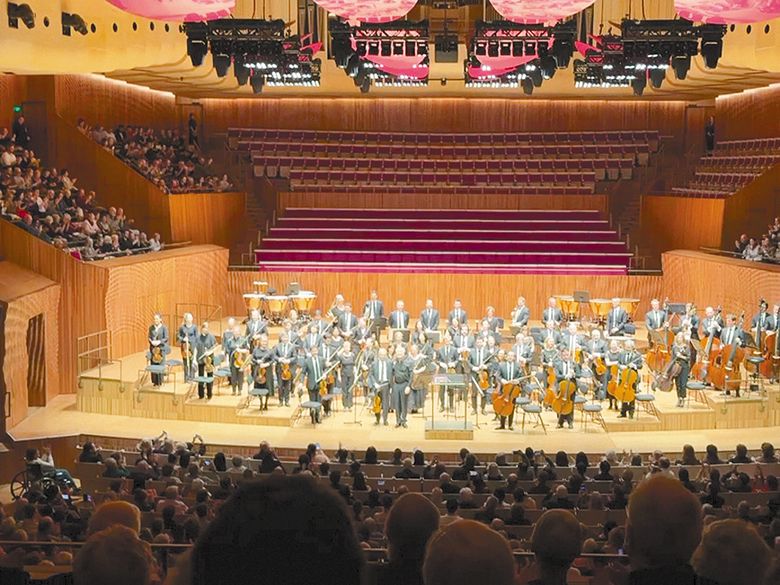
While attending a concert featuring Beethoven’s Violin Concerto with Gil Shaham and the Sydney Philharmonic Orchestra this year, my problem with tasting notes hit me. Reading– or worse, hearing– someone else’s wine description without sampling the wine yourself is akin to listening to a recorded performance instead of attending it live. Detail and nuance are missing. In addition to hearing him unfiltered, observing Shaham’s silent interactions with the concertmaster enriched his performance.
With wine, all of the senses are engaged. Tasting notes, like a broadcast, flatten the experience to a single dimension. Accepting the reality that I can’t muster musicians or attend live performances whenever I wish, I regularly listen to recorded music. On the other hand, I can open a lovely bottle anytime I want. Someone else’s reaction to said bottle, unless written as beautifully as Andrew Jefford’s and appreciated as literature rather than a checklist of things to look for, is of no interest to me. As such, I have no desire to inflict my notes on anyone else. Write unto others as you would have them write unto you.
Grape Explications is perhaps the best two-word description of my meta objective in writing about wine and is broad enough to cover all three types of wine writing. I have gotten more selective in the topics I cover. When my cursor of consciousness stops darting around ideas and finally settles on one, it’s time to put finger to key.
The next five years will bring me into my ninth decade, so although I’m determined to make it to the one beyond that, I’m currently focused on near term wine-related writing. Book reviews and AAWE contributions are still a priority. I plan to submit a presentation abstract based on my working paper about the Judgment 50+ for consideration at next year’s AAWE Conference in Germany. I’ll continue tracking my mind’s meanderings and harvest ideas for essays and commentaries.
Since waiting another decade may be pushing it, a piece acknowledging the 20th anniversary of my first article in the OWP seems like a better idea to consider. We’ll see what will catch my fancy over the next five years. What is certain? It will be mighty tasty.
Neal D. Hulkower is an applied mathematician and freelance writer living in McMinnville. His first contributions to a wine publication appeared in the early 1970s. Since 2009, he has been writing regularly about wine-related topics for academic, trade and popular publications including Journal of Wine Research,Journal of Wine Economics, American Wine Society Wine Journal, Oregon Wine Press, Practical Winery & Vineyard, Wine Press Northwest, Slow Wine Guide USAand The World of Fine Wine as well as wine-searcher.com, trinkmag.com, and guildsomm.com. Neal is a member of the Circle of Wine Writers. His first book, “Grape Explications,” was released in April 2025.