Holiday Blues
'Tis the cheeseason to enjoy locally made, award-winning cheese and wines
By Rebecca Deurlein
Pungent. Piquant. Earthy. Funky. No matter how you describe the taste and smell of blue cheese, one thing is clear: these cheeses are unlike any other, making them tough to pair with wine.
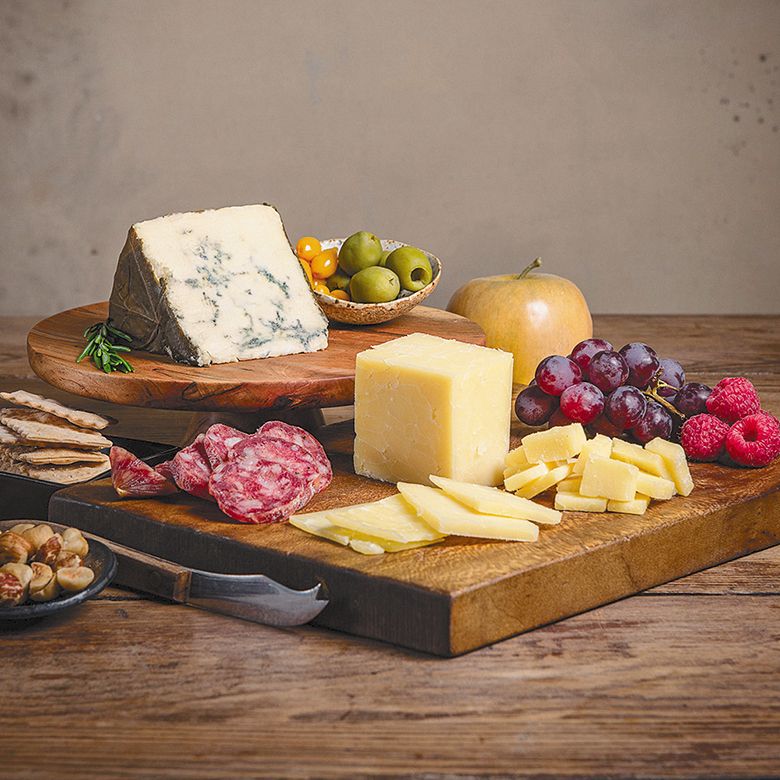
I contemplated this conundrum while standing at the Rogue Creamery counter in Central Point. I was traveling through Southern Oregon, sampling wines that make this region special– the taste of Dos Mariposas Barbera still lingering on my tongue. But the aroma of the blue cheese played tricks on my senses, and I thought, See, this is why I never add blue cheese to a charcuterie board. It’s just too hard to match with a wine that will make everyone happy.
A sampling of Rogue’s blue cheeses only strengthened my convictions. Each was unique, making any complementary match even more perplexing. I needed an expert to convince me otherwise. That pro was Marguerite Merritt, Rogue Creamery's senior brand manager and resident wine and cheese expert, who also happens to be a sommelier.
“Each blue cheese has its own flavor profile, which is usually pretty bold, so they can be difficult to pair,” acknowledges Merritt. “But you shouldn’t be afraid to add blue cheese to your board. Just consider an approachable blue that goes well with a few different grape varieties.”
Approachable, in this sense, means light on bitterness and astringency, and you’re in the right place to find it. While blues coming out of Spain and Italy tend to be very strong and difficult to match, Oregon blues, while maintaining distinctive flavors, are much more wine-friendly.
Here, it’s easier to talk about what not to pair with blue cheese. Merritt notes, “Wines with minimal skin contact, like a light, bright rosé, are not good choices. Blue cheese needs wine with more extraction, deeper flavor, potent fruitiness and body to complement the intensity of the cheese.”
If you’re intimidated by these cheeses, rest easy because I did the legwork for you. It was not exactly a hardship. I started by tasting Rogue Creamery blues with big personalities, then sampled them with various Oregon wines. Merritt, who has researched her own pairings for eight years at Rogue Creamery, helped me find matches to make you the king or queen of holiday charcuterie.
IDEAL OREGON BLUE CHEESE AND WINE PAIRINGS
Let’s start with Bluzu, Rogue Creamery’s newest blue– and one of its most interesting. This cheese is exceptionally creamy with sweet, citrus notes from Japanese yuzu saké. Bluzu wheels are soaked in the saké, then wrapped in yuzu peel. The result is a well-balanced, sweet-savory, fruity blue cheese that cries out for a matching wine.
I turned to Brooks Winery’s selection of Willamette Valley wines and landed on the 2024 Sweet P Riesling. I’m usually not a fan of sweet wines, but Brooks offers 11 Rieslings, with varying levels of sweetness, so it’s easy to find one pleasing to your palate. Sweet P’s notes of lemon peel and raisins perfectly complement Bluzu’s citrus flavors, and its medium sweetness is heaven with Bluzu’s creaminess.
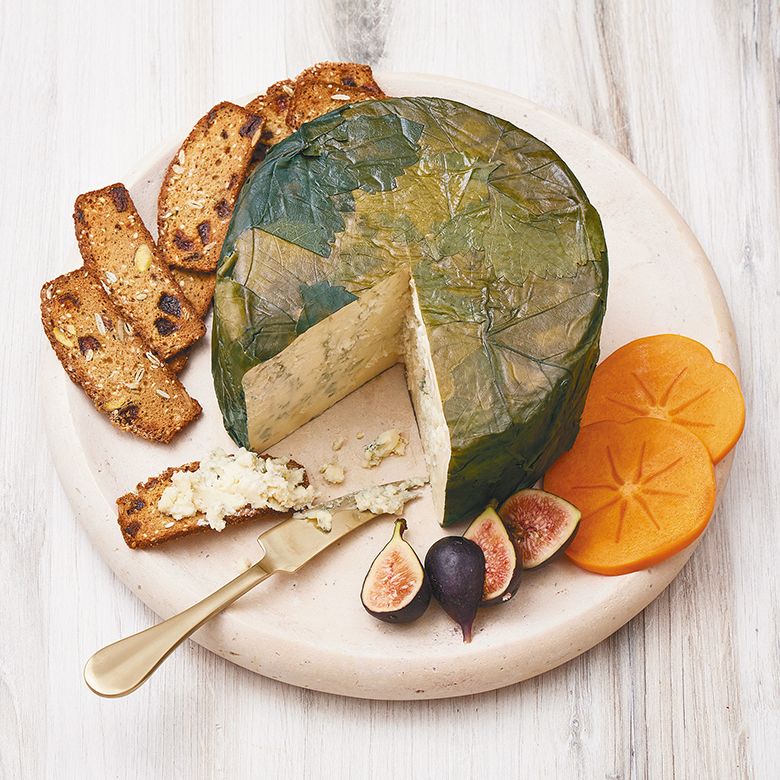
If you really want to impress your guests, splurge on Rogue River Blue, World Champion at the 2019 World Cheese Awards. One taste of this cheese had me pulling out my credit card, no questions asked, and for good reason. It’s produced only in the fall after the cows have summered on fresh, green grass filled with nutrients and flavors. This produces the richest milk of the year, and once that milk turns to cheese, it is wrapped in pear liquor-soaked Syrah grape leaves, making it the strongest, most complex and boisterous of Rogue Creamery’s blues.
What stands up to this hearty cheese? Well, you can bet a cheese wrapped in Syrah grape leaves would pair well with a Syrah; Troon Vineyard’s 2023 Syrah from Applegate Valley was a lovely match. Its earthy composure and soft tannins made it a smooth partner to this standout cheese.
For a classic blue cheese Merritt calls “the workhorse for pairings,” try Oregon Blue, Rogue Creamery’s original recipe blue cheese. It is mild and cave-aged with fairly modest blue notes, which Merritt says also makes it the most versatile with wines.
During my tasting, this salty, traditional blue commanded center stage with the blessing of Trium Wines 2023 Rogue Valley Viognier. If this wine could speak, it would say, “You go ahead with your big, bad self and I’ll accompany you in a way that brings out all of your best qualities.” There’s no competition in this pairing– it’s a beautiful duet that proves there’s a wine for every cheese.
Merritt points out Pinot Noir, Syrah and some fruity Gewürztraminers also work well with this cheese. Aim for a medium- to full-bodied white with minimal oak or a medium-bodied red.
If you’re putting together a board with smoky cheeses, lean into Rogue Creamery’s Smoky Blue, their most popular blue cheese. Cold-smoked over hazelnut shells for 20 hours, it’s infused with savory-sweet aromas and flavors that quell any natural bitterness. If your party guests are new to blue cheese, this is the one to serve, as the candied bacon flavor and hazelnut notes make it mouthwateringly good.
As you can imagine, Smoky Blue needs a robust wine. I found it in the Paul O’Brien Winery 2017 Merlot out of Umpqua Valley. I couldn’t decide which I liked better– the wine or the cheese– until I realized that is the point of a great pairing. They brought out the best in one another, and after tasting them together, I can’t imagine a more perfect match.
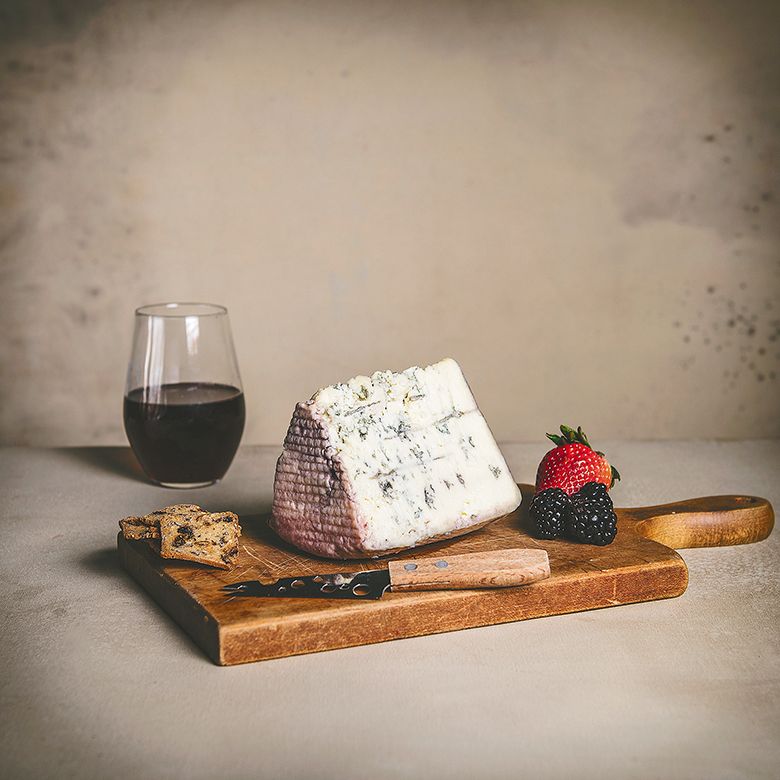
Add wow factor to your charcuterie board with Bluehorn Blue, Rogue Creamery’s prettiest blue thanks to its purply-pink veins created by a red wine soak. Of course, the soak impacts the taste, and if you drink red wine, you’ll enjoy the slightly boozy undertones in this cheese.
I found Bluehorn Blue to be universally likeable, a safe bet for a partying crowd. And I adored it with DANCIN Vineyards’ 2024 Plié Rogue Valley Pinot Noir. As Goldilocks would say, it’s not too bold, not too soft, but just right. Bonus: The label is as pretty as the cheese.
TIPS TO DISCOVERING YOUR FAVORITE PAIRINGS
It’s exciting to find your own perfect match, and trust me, you’ll know when you taste it. Follow these simple guidelines to ensure the best tasting experience.
First, Merritt explains the most common mistake is eating cheese too cold. “The texture, flavor and velvety texture come after at least 30 minutes at room temperature. The veining in blue cheese is only created with exposure to oxygen, so if you don’t see a lot of veining, set it out and it will appear!”
Since cheese arrives vacuum-sealed, you can literally watch it bloom and blue up. In fact, I’d give it a good hour for prime color and flavor.
Second, always serve plain crackers that don’t alter or obscure the taste of the wine and cheese.
Third, follow winemakers’ advice on ideal serving temperature. While most whites are best chilled, the belief that red wine should never be chilled is outdated. Some reds taste best at 55-60 degrees, and no one knows better than the winemaker.
When choosing wines to try with your blue cheeses, focus on varieties with medium body and light tannins. Think GSM and Syrah versus Cabernet Sauvignon and Tempranillo, which can overpower the flavors in blue cheese.
And you really can’t go wrong with a good port. My suggestion: Abacela’s 10 Year NV Tawny Port from the Umpqua Valley. Port and blue cheese go together like mashed potatoes and gravy and leave you just as satisfied.
Finally, heed Merritt’s wisdom. “Don’t be afraid to be adventurous– try combos you’re not so sure about. You never know when you might discover the perfect pairing that makes magic in your mouth.”
Rebecca Deurlein has loved wine since her first pairing at a delectable, unforgettable wine dinner. When she’s not covering food and beverage, she’s traveling the world, finding fantastic destinations, outdoor adventures, wellness and interesting people. Read her work in Wine Enthusiast, Travel & Leisure, National Geographic and BBC. You can find her on Instagram @RebeccaDeurlein or email her at rdeurlein@gmail.com.