Clearing the Air
Smoke research is changing how the wine industry responds to wildfire season

By Michele Francisco
In 2020, Labor Day weekend in Oregon was filled with smoke and fire, not barbecued burgers and potato salad. My eyes stung and throat burned as I packed up important belongings, anticipating a “Be Ready” evacuation order like my neighbors at the end of the street, our homes divided by a county line. Across the Northwest, growers and winemakers were frantically searching for information on how the smoke might affect their grapes.
The Northwest Interagency Coordination Center’s annual report states: "The Northwest 2020 fire season was unlike any in recent history and became the season against which all subsequent fire seasons are now compared." While the number of reported fires wasn’t significantly higher than in years prior, the acreage burned was devastating. In total, wildfires ravaged nearly 2 million acres– that’s roughly the size of Delaware and Rhode Island combined.
This summer brought even more destruction– more than 3 million acres burned. That figure was released in mid-October by the National Interagency Fire Center. Wildfires in the Northwest are now a regular occurrence.
Research on smoke is crucial to the wine industry. During a fire, wine grapes can absorb smoke-derived compounds called volatile phenols. They can create smoky, ashy or burnt flavors in a finished wine. Elizabeth Tomasino, PhD, professor of enology at Oregon State University Department of Food Science and Technology in the College of Agricultural Sciences, has spent years studying how smoke affects grapes and the wine made from smoke-impacted fruit.
She is also a researcher and advisory member of the West Coast Smoke Exposure Task Force, an organization created in 2019 as a unified industry voice whose membership develops and shares smoke exposure research and information.
IN THE CELLAR
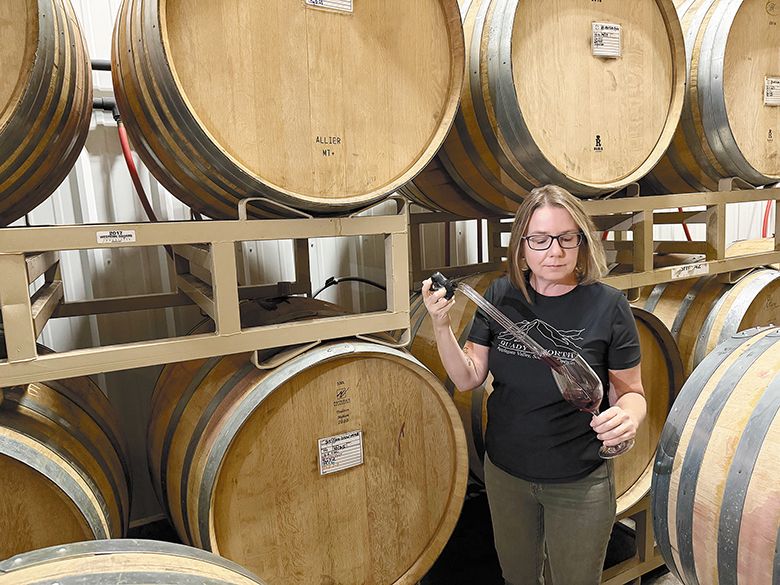
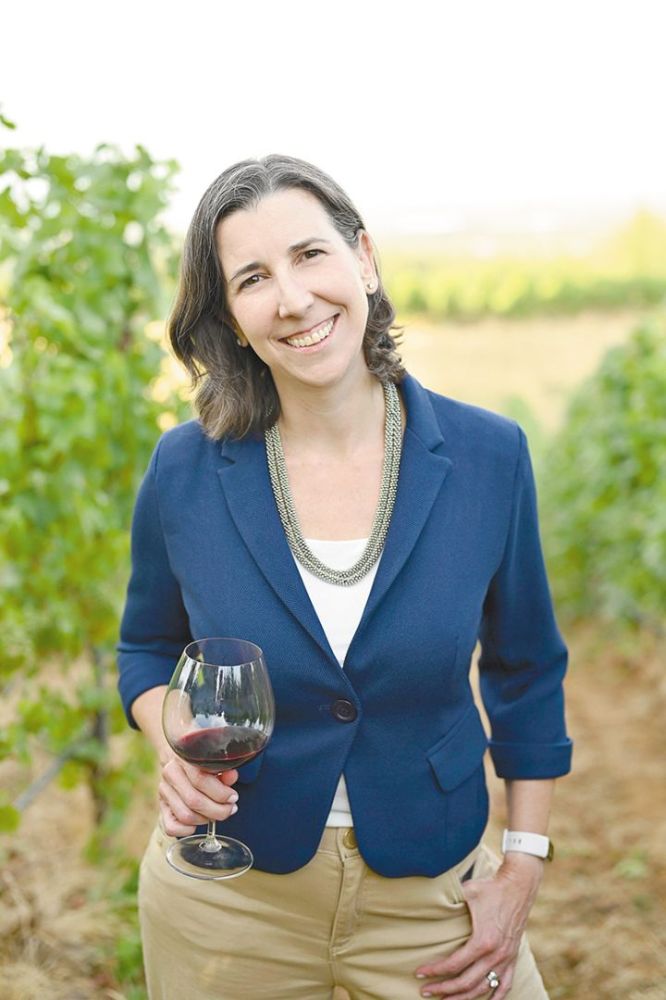
A founding member of the task force, Nichole Schulte is a winemaker at Quady North Winery and Barrel 42 Custom Winecraft in the Applegate Valley. She values “the scientific work being done to implement real-world solutions for this ongoing problem.”
Schulte reports, “We’ve dealt with impactful wildfire events in at least five of the past twenty vintages. The 2018 growing season was particularly noteworthy, when would-be buyers canceled their purchases of Southern Oregon-grown wine grapes valued at over $4 million mere days before harvest. The buyers backed out not because of any verifiable problem with the fruit; fear of smoke-tainted grapes was the sole reason,” she adds. “Nevertheless, wineries did indeed harvest that year and produced wines well-regarded by writers and critics.”
One aspect of Tomasino’s research involves assessing consumer opinions on smoke-impacted wines.
“Dr. Tomasino has focused on the sensory implications of wines impacted by smoke exposure. This is really the critical piece of this complicated puzzle because the ultimate arbiters of wine are the consumers, who judge with their senses,” notes Schulte. “While winemakers and winegrowers fret over objective lab results showing some level of smoke exposure in grapes or wines, consumers have responded differently. The subjective palates and preferences are wide-ranging. Dr. Tomasino's research has shown that while most tasters can identify a seriously tainted wine, they respond positively to some smoke-related compounds.”
These findings aren’t shocking– aging wine in barrels toasted to varying degrees is a common winemaking practice. Schulte acknowledges how “the roasted and toasted notes of a wine barrel are not terribly unlike the exposure of wine grapes to wildfire smoke. Our brains respond positively to these notes, and these flavors and aromas are pleasing in certain quantities.”
Credible research on consumer tastes has empowered Schulte to make science-backed decisions in the cellar. This knowledge “has inspired me to emphasize the positively associated flavors and aromas and minimize the negatively associated notes. I do this by focusing on extraction of quality tannins from the grapes, using yeasts that emphasize fruity esters during fermentation and aging wines in high-quality oak barrels. By playing up the notes that evoke positive responses in tasters, flaws and taints disappear,” Schulte explains.
“Dr. Tomasino's work has given me the tools to make informed choices. My custom crush clients and consumers put great trust and faith in me to make the best wines possible. I rely on fact-based, scientific data, as well as experience, to assess risk, guide the harvest and processing decisions and mitigate economic losses,” shares Schulte. “Her research is essential to the future success of the wine industry.”
IN THE VINEYARD
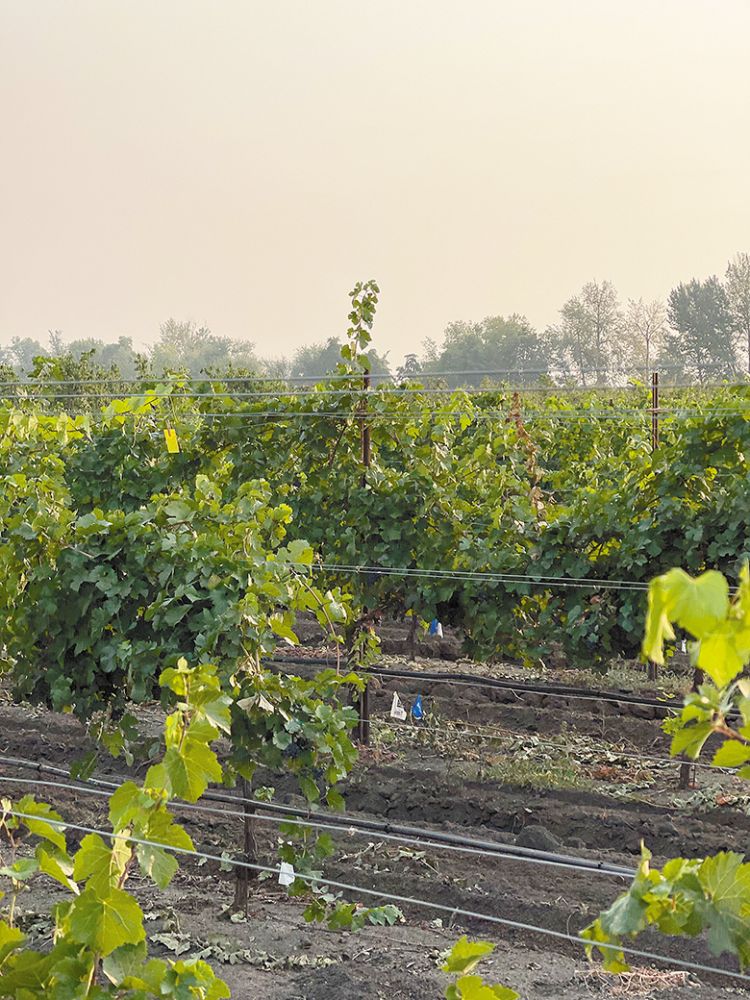
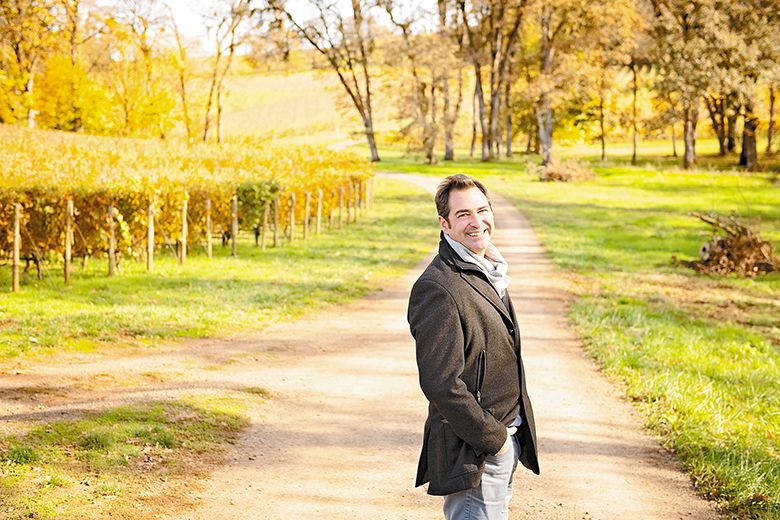
Jason Tosch, vice president of vineyard operations at Stoller Wine Group, oversees 585 acres across four estate properties and cultivates relationships with high-end growers statewide. He’s eager to get his hands on any and all smoke-related studies.
“Smoke research for West Coast wineries remains important. Although advancements continue to be made, our researchers and industry have yet to develop an effective, practical application or treatment that retains the full character of the wine while removing or reducing noticeable smoky or ashy flavors in wildfire-smoked wines. We remain hopeful for a ‘silver bullet’ to this problem,” Tosch notes.
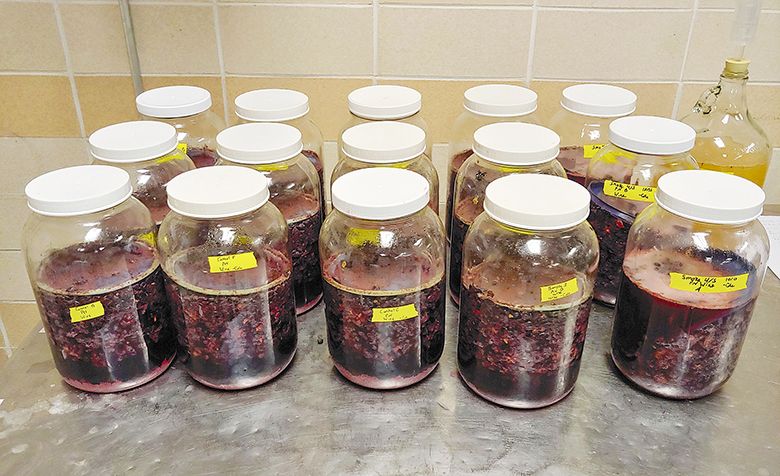
He’s keen to support Tomasino and her graduate students. When the next smoke-impacted vintage hits, Stoller has committed to assisting researchers by donating grapes and time. Tosch shares, “Industry partnerships with researchers are how we are going to get this done, how we are going to find a solution. We have agreed to collaborate with OSU if a future vintage is smoke-affected by donating fruit to the researchers as well as conducting our own fermentation alongside their team. The hope is to answer the question of whether our current best practice using small-scale winery lab ‘micro-fermentations’ is a reliable enough representation to predict what the commercial-scale wine may present as.” He adds, “This is just another step we must take as we work toward finding the ultimate application or treatment.”
During the 2020 Labor Day fires, Tosch, along with everyone else, scrambled to get results from the lab showing how much damage his grapes may have sustained from wildfire smoke. He recalls, “The 2020 vintage is the year we all have permanently in our minds when it comes to making wine in a smoke-affected year. Because the entire West Coast was experiencing smoke impacts, getting a quick turnaround time– fast enough to inform picking decisions– wasn’t possible through the typical commercial laboratories. Then OSU Food Science stepped in and prioritized processing of Oregon wine samples through their analytical lab in Corvallis. This was the fastest route available to our industry for obtaining representative smoke levels in wine. Even though we received rapid help from OSU, it still took several days to get results back.”
Tosch continues, “Through this experience, it became apparent we were not as well prepared as we needed to be for an event like this.” To better support Oregon’s wine industry, OSU recently opened its Smoke, Wine, and Grape Analytical Chemistry Lab, dubbed SWaG for short. The new facility, run by Cole Cerrato, PhD, an assistant professor in OSU's Department of Food Science and Technology who works closely with Tomasino, allows local grape growers and winemakers to submit samples specifically for volatile phenol and smoke marker analysis.
“With SWaG, we now have one of the most well-equipped, high-throughput labs in the nation for this type of analysis. We are prepared in this regard. Fingers crossed, we never have to use it,” asserts Tosch.
FUNDING AND EDUCATION
Jess Willey, research and education director at the Oregon Wine Board, or OWB, also serves as a member of the West Coast Smoke Exposure Task Force steering committee and the communications subcommittee.
“I oversee OWB’s investments in scientific research on behalf of our state’s wine industry and identify opportunities to share research findings through education. Each year, I work with our research committee to review grant proposals and recommend projects for funding based on established industry priorities. The committee brings together about 50 growers and winemakers from across Oregon, whose practical expertise helps us identify viticulture and enology research with the greatest potential to benefit the industry,” describes Willey.
She agrees this research is vital. “As the risk of wildfires increases, understanding how smoke affects grapes and wine is increasingly important to Oregon’s statewide winegrowing industry. Growers and winemakers need reliable information and practical tools to assess and reduce smoke impacts, especially given the potentially devastating financial consequences a smoke event can have on a small business. Investing in smoke research helps sustain both vineyard and winery businesses, protects Oregon’s global reputation for quality and creates a more resilient industry for vintages to come,” Willey explains.
Reflecting on 2020, Willey shared how “OWB provided emergency funding to OSU researchers to help them process grape and wine samples suspected of sustaining smoke impacts following the widespread wildfires. Since then, we’ve supported research to help establish the natural baseline levels of smoke-related compounds in non-impacted grapes and wine, enabling a clearer interpretation of test results. Our goal is to give the industry better information to make timely, informed decisions that protect wine quality and their businesses.”
Willey’s work with the task force involves “sharing research updates and practical resources, contributing an Oregon perspective and making connections among industry partners.” As we spoke, she pointed out how “seriously Oregon wineries and vineyards take potential impacts. Smoke can vary considerably from vineyard to vineyard, and broad claims that an entire vintage is compromised don’t reflect that complexity. Across the state, producers share a longstanding commitment to wine quality, even when that means making difficult decisions about what to harvest, produce or release for sale.”
INVESTING IN THE FUTURE
Tosch shares some observations about agriculture in general. Farming, including wine grapes, has benefited from research for generations. “The return on our research dollar investment may not be easily or commonly understood. Sometimes we spend money to discover what doesn't work, or follow a path that leads to a dead end. But there are times when we discover the one missing piece that solves a previously unsolvable problem, saving our crops.”
He cites a USDA economic brief, published in 2007, that suggests for every agricultural research dollar spent, $10 is gained. It also states: “On average, public agricultural research undertaken today will begin to noticeably influence agricultural productivity in as little as two years and that its impact could be felt for as long as 30 years.” We might continue to see benefits for another decade or more from research conducted when that brief was written 19 years ago.
“It is with this in mind, we remain avid promoters of collaborating with and helping to fund research, especially applied research with real outcomes such as smoke-free wines,” concludes Tosch.
LEARN MORE ABOUT SMOKE RESEARCH
West Coast Smoke Exposure Task Force: wcsetf.org
Oregon Wine Board: industry.oregonwine.org/resources/toolkits/wildfire-smoke-toolkit
Michele Francisco spent her childhood reading and writing, eventually graduating from UCLA with an English degree. She attended graphic design school and began a career in design and marketing. After moving to Oregon in 2010, Michele studied wine at Chemeketa Community College and began Winerabble, a Northwest-focused wine blog. She has been a cheerleader for Oregon wine since her arrival.