
The Long Way Home
Hinman Vineyards returns to the land it once farmed
By Pete Holland
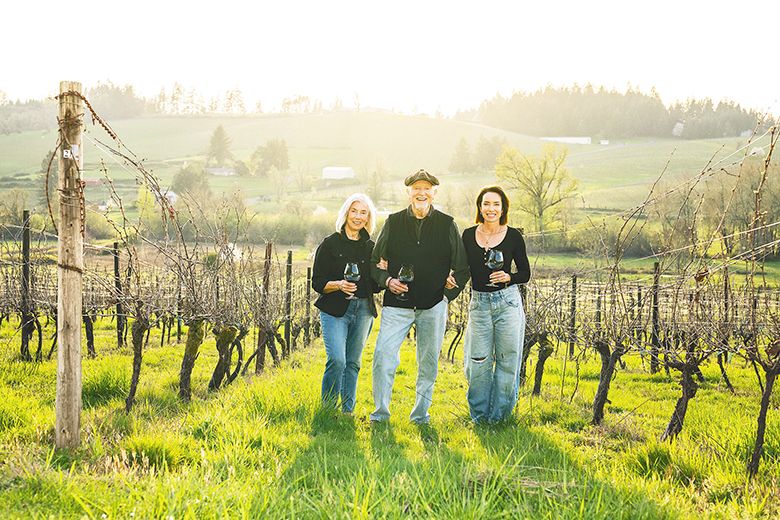
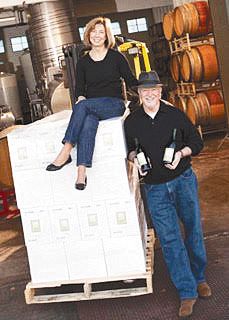
“I knew dad’s history growing up,” marvels Chelsea Hinman Miller of Hinman Vineyards, founded by her father, Doyle Hinman. “But as I listened to him explain it today, I thought, he really is an OG of Oregon wine!”
Hinman planted his first vines in 1972, only two years after Willamette Valley trailblazer David Lett released the first vintage of The Eyrie Vineyard. Now, after repurchasing the estate sold 33 years ago, the Hinman family is back where they made history.
WHERE IT STARTED
Today, the founding families of the Willamette Valley wine industry– the Letts, Ponzis, Adelsheims, and others– are widely known. Had Hinman toiled in the north Willamette Valley’s nascent Pinot paradise, he would likely be as well-known as his contemporaries. But, because Hinman planted his vines in Eugene, 90 miles south of the region’s most famed terroirs, he has remained under the radar.
Still, his foresight and achievements are impressive.
Hinman was struck by inspiration in 1968, when he tasted wines Richard Sommer was making at HillCrest Vineyard in Roseburg. That experience moved him to take courses from the pioneering winemaker, who had crafted Oregon’s first commercially available Pinot Noir the year prior.
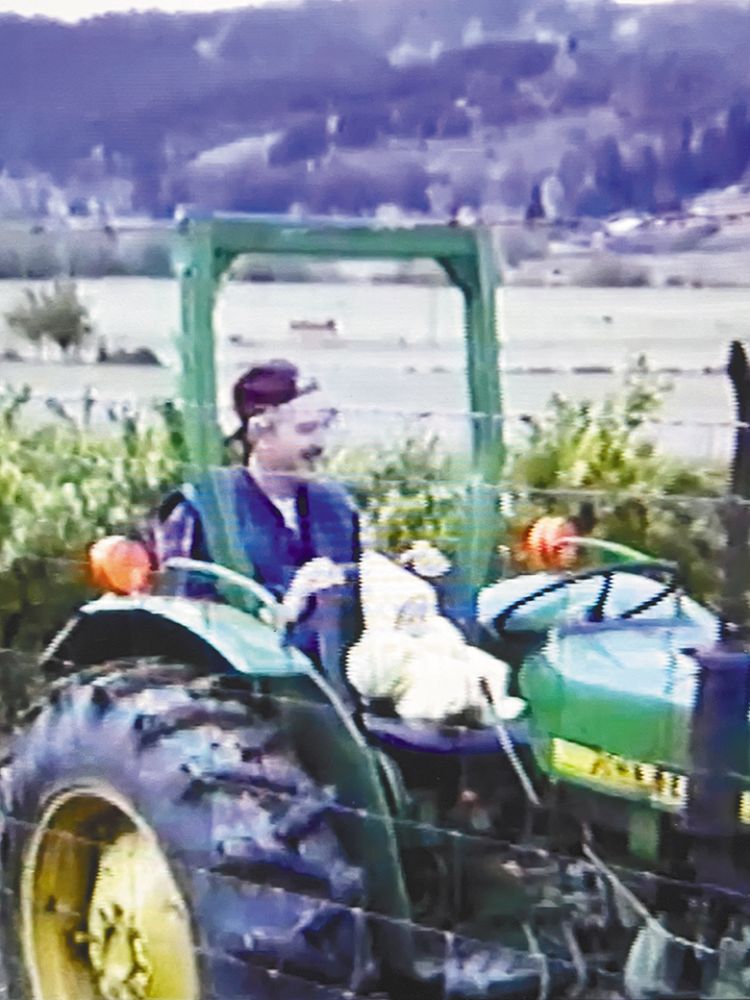
Hinman planted some vines at his home on the McKenzie River. In 1972, he heard of a plot for sale in Eugene, so he drove down to see it– though getting there wasn’t easy.
“I parked my pickup on the road, Briggs Hill, and walked all the way across the creek down there, and up to the property,” he shares, pointing from his winery down the hill a quarter-mile. No expert yet, Hinman realized the property’s south exposure was ideal for grape growing, so he plunked down $32,000 for the plot, built a house and planted five acres of vines.
While teaching at Eugene’s Sheldon High School, Hinman would spend his weekends trekking back and forth to winemaking classes at UC Davis, 450 miles to the south. “I would drive down Friday night, attend Saturday and half Sunday classes, before coming home and returning to work on Monday.”
In 1976, Hinman visited Portland to attend a discussion led by German viticulturist Helmut Becker, director of Geisenheim Wine Institute, located in the Rheingau region. After the event, Hinman approached the gregarious Becker, who urged him to come learn at Geisenheim.
“He was very adamant,” Hinman adds. “Helmut was one of those kinds of guys.”
Hinman, a guy who might wing off to Europe on a whim, secured a sabbatical with the school district and set off to work the 1977 harvest in the Rheingau. He returned brimming with knowledge, a man on a mission.
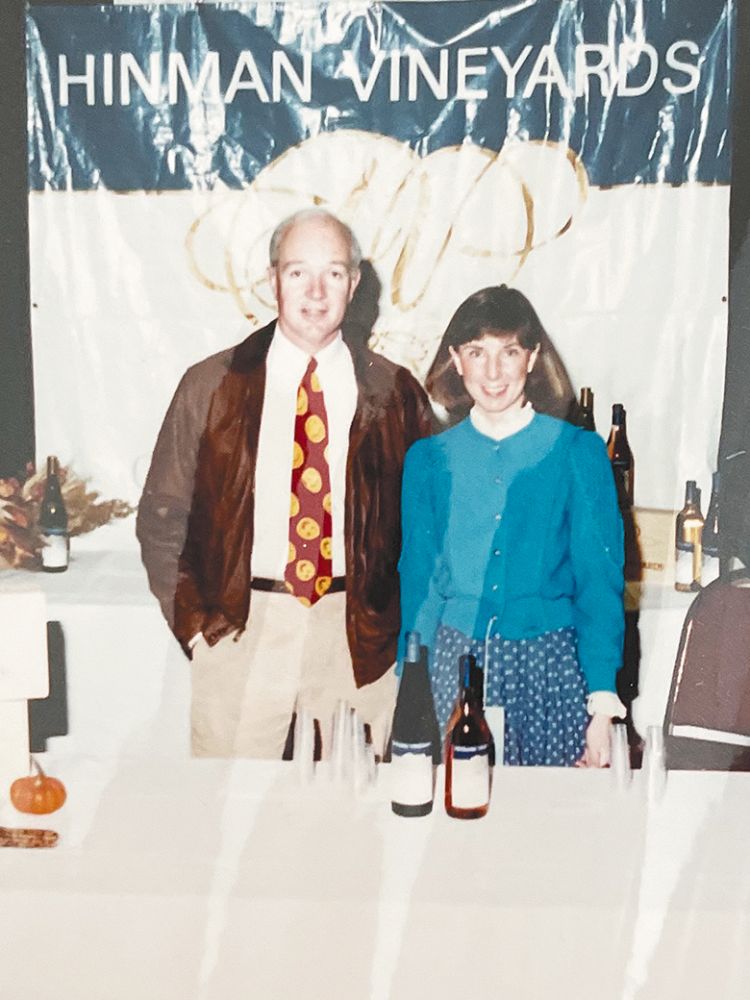
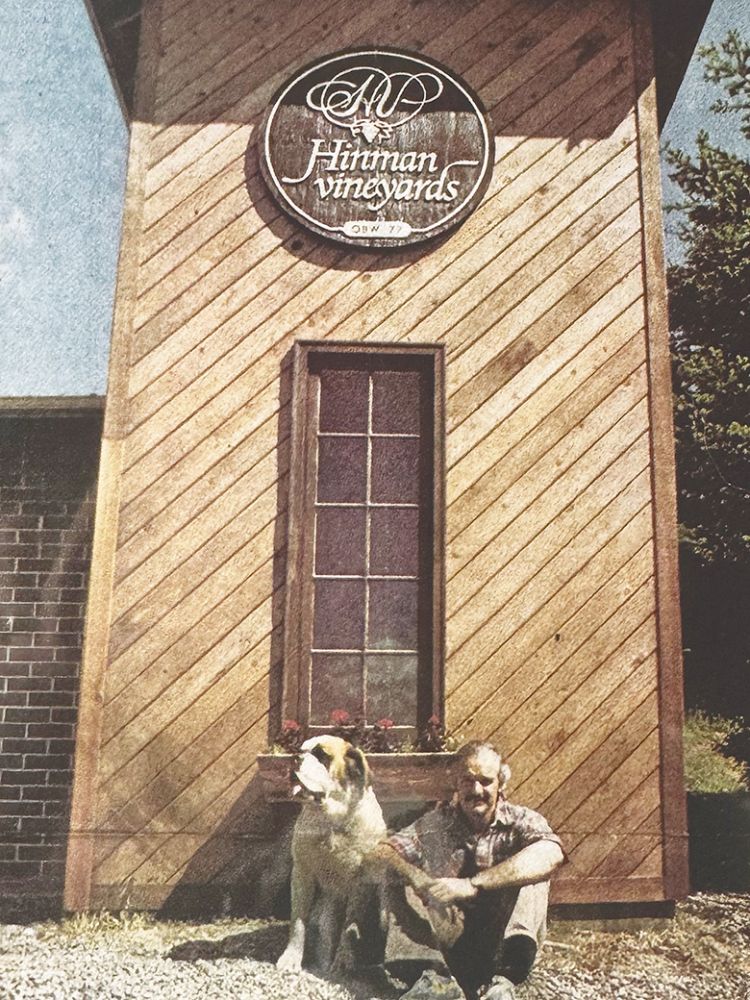
“I came home and borrowed money from anybody who was breathing,” he jokes. In 1979, Hinman Vineyards became Eugene’s first bonded winery, and Hinman produced his first vintage. It was a smash hit, selling out in just three months. “We got all kinds of attention, borrowed money, expanded the building, bought different equipment—we took Eugene by storm.”
In 1980, Hinman met Sue Ann, and they married three years later. The winery gained momentum, and in 1988, Hinman Vineyards sold over 28,000 cases, cracking Oregon’s top five producer list. By the early 90s, the couple had three children. They also had options. “It was time to move into town and change direction,” Hinman continues. In 1993, they sold Hinman Vineyards to the Chambers family, who renamed it Silvan Ridge.
WHERE THEY’VE BEEN
Hinman was a marketing neophyte when he started Hinman Vineyards. After selling the winery, he took a sales job at Henry Estate in Roseburg, traveling the world and cultivating an impressive network of contacts.
“He did a really good job and moved a lot of Henry Estate wine,” recalls Sue Ann, now Hinman Vineyards’ head of financial operations. “And he continued into the ‘90s and 2000s.”
Hinman’s sharp skills and strong relationships proved extremely valuable when his daughter brought him an opportunity. An industry contact had approached her about making a private-label wine. The Hinmans procured some sample wines and sent them to the prospective buyer. A 1,200-case order followed.
D.W. Hinman Cellars’ private-label business achieved a remarkable streak of success over the next two decades, shipping bottlings to well-known U.S. retailers like Trader Joe’s and as far afield as China.
Last year, when they heard Silvan Ridge might be available, the Hinman family felt the pull back to Briggs Hill Rd.
WHERE THEY’RE GOING
In April, they reclaimed the winery Hinman founded a half-century ago.
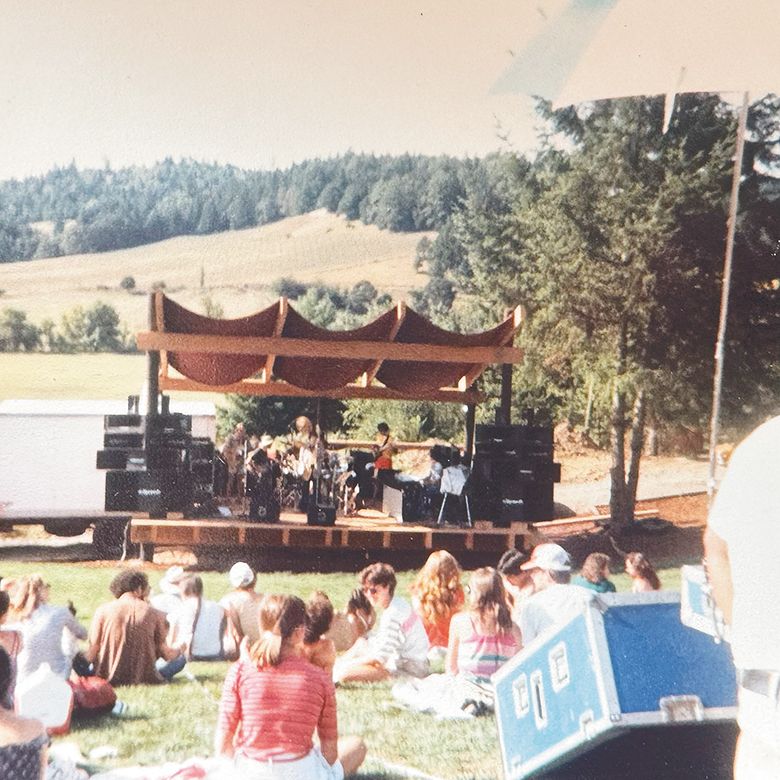
The acquisition was in fine shape: Silvan Ridge’s wine club is 850+ strong, the 2023 Pinot Gris earned 92-point Best Buy honors from Wine Enthusiast, and the winery– known for its idyllic setting and summer concerts– has a 4.7-star rating on Tripadvisor. With little reason to dramatically alter course, the Hinman family retained winemaker Kim Bowman, general manager Angela Bennett and other core staff, several of whom have worked there for decades.
“We didn’t know if they would want to stay,” admits Hinman Miller, a 25-year wine industry veteran who now serves as owner and distribution manager. “We feel very blessed they’re all happy here.”
Of course, with new ownership comes change. Production of the D.W. Hinman Cellars wines will move from downtown Eugene to Hinman Vineyards, where building capacity is estimated at 40,000 to 50,000 annual cases. The Hinman Vineyards label will now encompass mainstream distribution bottlings of Pinot Noir (red and white), Pinot Gris and Muscat, as well as additional bottles for club members and the tasting room. Hinman Miller would also like to add sparkling wine and a nonalcoholic option to the lineup.
At the top of the family’s portfolio sits Tior, a boutique négociant brand Hinman Miller founded two years ago. Centered on Pinot Noir and Pinot Gris, the wines have received impressive accolades: the Tior 2024 Reserve Pinot Noir earned 99 points and Best Red Wine honors in the 2026 International Women’s Wine & Spirits Competition.
The Hinmans plan to replace the decades-old A-frame on the vineyard property with a new home. The winery’s popular summer concerts will continue, and Hinman Miller– mother of two children, one and nine years old– wants to turn the picturesque knoll above the winery into a natural playscape for kids.
Hinman, who has witnessed all of the Willamette Valley’s wine history, now seems slightly bemused as he and his fellow pioneers pass the torch. “It’s interesting to see the second generation starting to kick in,” he observes, smiling. “It just blows me away, the longevity of it all.”
Hinman Vineyards (formerly Silvan Ridge)
27012 Briggs Hill Rd., Eugene
(541) 345-1945
Open daily noon to 5 p.m
Pete Holland is a certified sommelier and writer whose work appears in Decanter, The Somm Journal and The Tasting Panel Magazine. He previously wrote the column Wine in Common for the Nashville Scene and now lives in Eugene. You can read more and reach him at peteholland.com.