The Emerald Standard
Remy Wines celebrates 20 years– and has redefined what a small winery can accomplish
By Neal D. Hulkower
In a short piece recognizing Remy Wines’ 10th anniversary (see “Remy Wines Celebrates 10” in OWP August 2016), I wrote: “Over the next decade, Drabkin says she has no ambitious plans, just refinements and improvements. With her current space filled and no interest in moving, she’s content with her case production.”
That isn’t exactly how things played out…
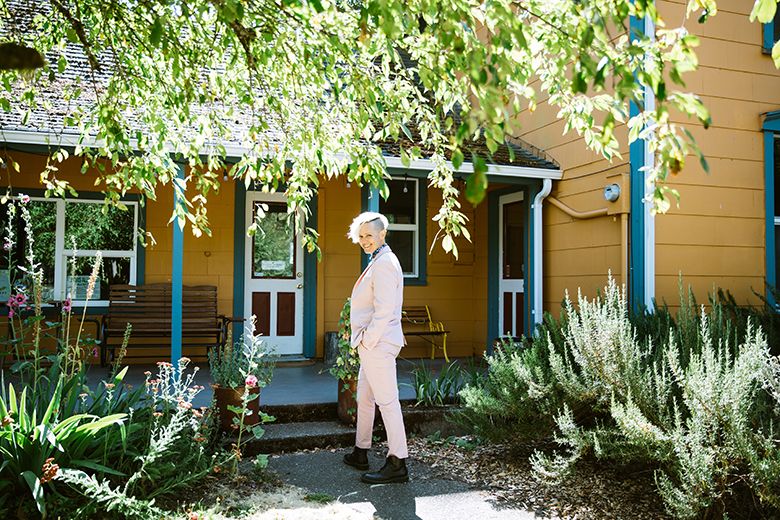
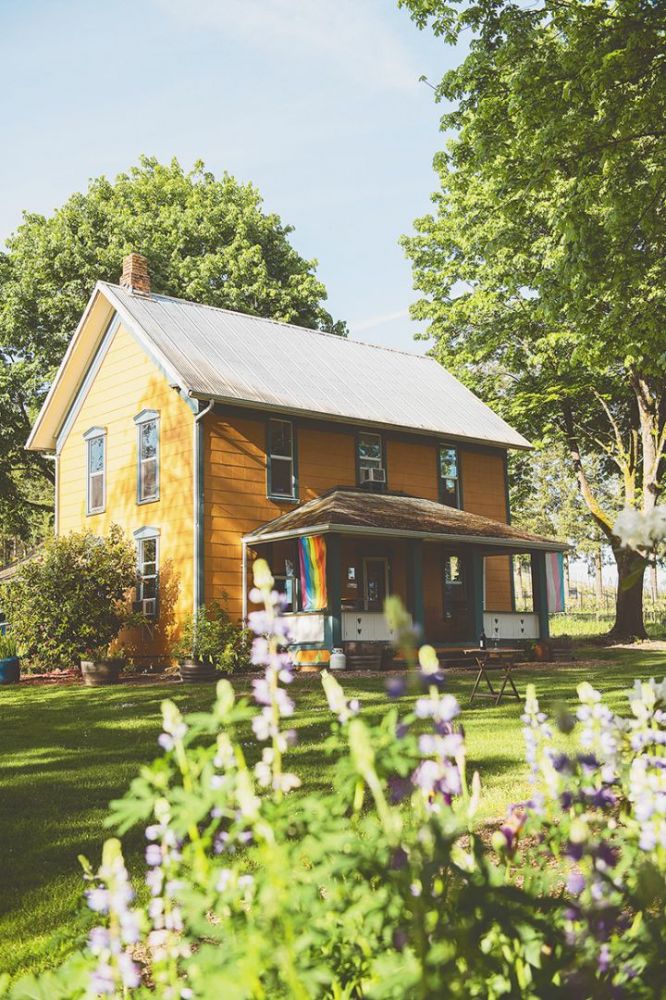
In 2017, Drabkin closed her cozy McMinnville baR (pronounced R bar) and opened a tasting room in the 1900s farmhouse on her Dundee Hills property, previously called Lone Madrone Vineyard in honor of the tree gracing the property. To avoid confusion with a California winery, Drabkin changed the name to Three Wives Vineyard.
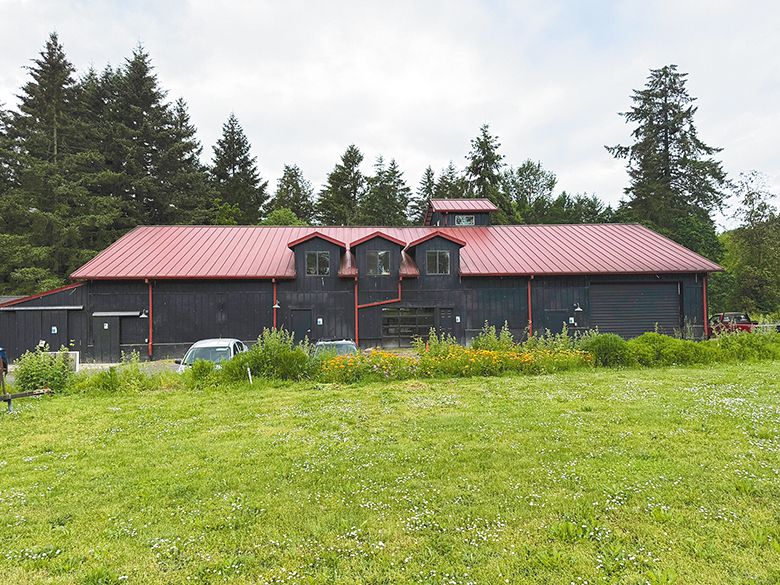
When the winery’s lease expired, she moved it into an updated tractor barn on the vineyard. The barn renovations reflect Drabkin’s emphasis on sustainability. The most heralded feature is the Drabkin-Mead Formulation, a carbon-sequestering concrete using biochar. (For more, see “Pushing the Eco Envelope,” OWP, March 2023.)
“But it’s much more than the concrete in the winery,” explains Drabkin, “Our human-centered design approach created an adaptive reuse facility, using reclaimed materials found on the property and recycled winemaking equipment, including wood from pallets, along with other materials sourced from rebuild centers. The offices are filled with natural light and gas lines used in the winemaking process are plumbed through the facility, limiting waste and creating a healthier working environment. The building has an R-60 rating and is engineered for future sustainable infrastructure, including a planned solar array.”
She stresses “...that project...was an enormous milestone. By bringing us all onsite, it improves the functionality of the entire business. The construction project in and of itself was significant. Remy Wines now has a reputation focused on sustainability. That’s a core value of the winery.”
In 2014, Drabkin was elected to the McMinnville city council and later became its president. With the resignation of Scott Hill, Drabkin was appointed interim mayor in May 2022. She won the election months later and served until the end of 2024. While no longer in office, she asserts, “I am still committed to my community, but now I choose what to work on.”
Drabkin proudly shares, “People work here a long time, and I think that says something about the company. Both Gretchen Phelps, my VP of sales and business development, and Annika Schilling, my VP of operations, have been with Remy Wines since the beginning.”
With everything she has going on, Drabkin admits, “I have stayed intentionally small.” After learning increased production requires more management responsibility, she plans to maintain the winery’s annual production around 1,500 to 2,500 cases. While the wines were “always self-distributed locally,” they will no longer be distributed nationally, only directly to consumers.
Three Wives Vineyard, with eight acres planted in Pinot Noir, Pinot Gris and Lagrein, attained its LIVE certification in 2018. “We actually farm more strictly than what is required,” Drabkin reports.
Remy Wines participated in the Willamette Valley Wine Auction for the first time this year. Five cases of the 2024 Sparkling Wine “The Oyster” were on the block. Intentionally crafted to pair with its namesake, the wine is all-estate Pinot Noir made in the traditional method with zero dosage. To further reinforce the connection, one of the 60 bottles contains a real pearl. The total lot sold for $3,250.
Drabkin is most proud to have “built a values-based company that provides health insurance, a retirement savings plan, flexible schedules for employees and ongoing support to organizations both large and small. For a teeny-tiny winery that’s pretty impressive.” A project with the Confederated Tribes of Grand Ronde planted white oaks and repaired forested areas. Soon, all Three Wives wines will be in refillable Revino bottles.
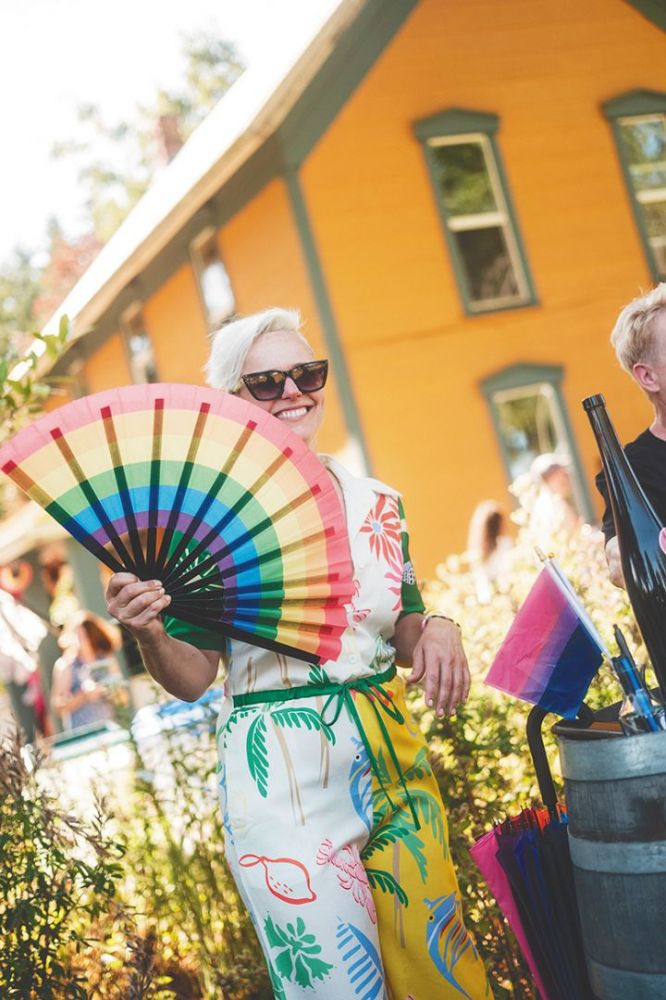
Drabkin, a leading figure in the LGBTQ+ wine community, explains how the word “queer was once used to attack us, but we chose to reclaim it. You can’t hurt me if it’s mine,” she insists.
After realizing the wine industry lacked much queer representation and visibility, Drabkin cofounded nonprofit Wine Country Pride. Its mission is to create “visible celebrations of the queer community while connecting all people through education and economic activity.” She notes, “We’ve done that in droves. It fills a niche and continues to meet a lot of needs.” Remy Wines serves as the home base and hosts board meetings. With its success, the organization has awarded scholarships and sponsored events.
This gave rise to Queer Wine Fest, an internationally recognized annual celebration. Drabkin focused on queer wine producers. “It had to be a value-based festival,” explains Drabkin, budgeting to compensate wineries instead of charging them to be there. and all the necessary elements to feature the wines. The zero-waste event is a fundraiser for Wine Country Pride. “I wanted to bring people together and give them something to do in addition to tasting.” Each year the event supports approximately 36 queer-led businesses, including wineries, artists, chefs and marketers. It was essential to provide lunch before the event, ensuring the winemakers were well-nourished, connected and ready to engage with guests. “Queer Wine Fest helped cultivate a growing professional network while addressing other systemic problems within the wine industry. That’s huge,” adds Drabkin.
Why was the final one this year? She explains: “Queer Wine Fest achieved its goals; we highlighted the queer contribution to the world of wine, put queer wine producers on an international stage and proved you can host financially and environmentally sustainable wine festivals. No one can take away what’s been built. The relationships outlast the festival, Queer Wine Fest has launched several small brands. And queerness is now a recognized part of some larger brands’ stories.” Drabkin notes, “Often, before we can aspire to be in those positions, we first need role models. Queer Wine Fest is ending on a high note, while it’s really successful– it’s graduating.” Although she allows for the possibility of a reunion in the future.
Over the years, Drabkin has received significant recognition, including earning the Governor’s 2024 Diversity, Equity, Accessibility and Inclusion Award for Tourism. She was listed on Wine Enthusiast Magazine’s 2022 Future 40; named an Imbibe 75 Person to Watch in 2022, included on Wine Industry Advisor’s 2023 list of Wine’s Most Inspiring People and received this year’s LIVE Award for Excellence in Sustainability. Remy Wines was also recently rated “Best Woman-Owned Winery” in America by The Zoe Report readers’ choice awards. And Queer Wine Fest has been nominated three times for a USA Today 10Best Readers’ Choice Award for Best Wine Festival.
What about the next decade? Drabkin plans to “lean more into environmental sustainability.” She has applied for a grant with the Oregon State University Food and Beverage Research Institute to explore agricultural waste and using parts of the grapevine beyond the fruit. In particular, Drabkin hopes to develop packaging material made from parts of the vine that are normally discarded. “That’ll take years,” she admits. With this increased emphasis, Drabkin’s domain of influence continues
to broaden.
As a core tenet of Remy Wines, Drabkin continues to focus on producing high-quality wine. “Making really good wine is important to me.”
These accomplishments clearly merit a grand celebration of the winery’s 20th anniversary. On Sunday, Aug. 23, from 10 a.m. to 1 p.m., Remy Wines is hosting an expanded Opera on the Lawn event. Visit remywines.com for more information.
Remy Wines
17495 N.E. McDougall Rd., Dayton
Open Thurs. – Sun., noon to 5 p.m.
(503) 864-8777
20th Anniversary Celebration Opera on the Lawn:
Sun., Aug. 23, 10 a.m. to 1 p.m.
Neal D. Hulkower is an applied mathematician and freelance writer living in McMinnville. His first contributions to a wine publication appeared in the early 1970s. Since 2009, he has been writing regularly about wine-related topics for academic, trade and popular publications including Journal of Wine Research, Journal of Wine Economics, American Wine Society Wine Journal, Oregon Wine Press, Practical Winery & Vineyard, Wine Press Northwest, Slow Wine Guide USA and The World of Fine Wine as well as wine-searcher.com, trinkmag.com, and guildsomm.com. Neal is a member of the Circle of Wine Writers. His first book, "Grape Explications," was released in April 2025.