
Swimming Dinosaurs
Raising living fossils in Fort Klamath
By Paula Bandy
When Carl Krause first told me about a sturgeon hatchery in Klamath Falls, I was intrigued. Having once called the town home, sturgeon was the last thing I expected. Historically, Fort Klamath is known as the place where the last of the Modoc leaders (including Chief Kintpuash, aka., Captain Jack) were ‘tried,’ hanged and buried. Located on the Volcanic Legacy Scenic Byway to Crater Lake, the surrounding springs and streams are popular spots for fly fishing, birding and kayaking. (I once fell out of a canoe while birding on the Wood River.) The nearly pristine landscape is wild and beautiful. And, now home to the Oregon Royal Sturgeon Company.
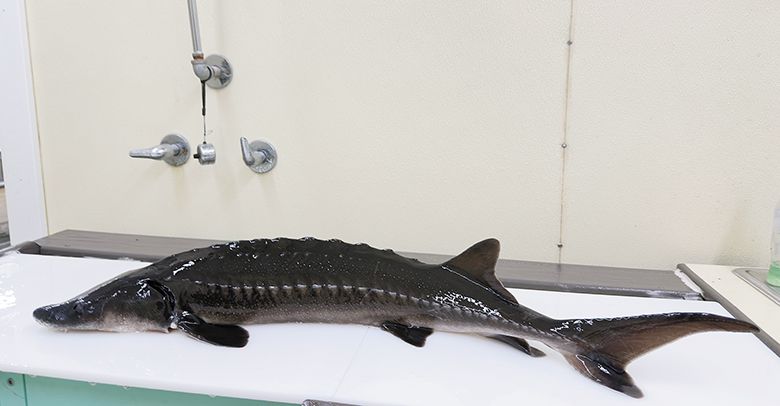
Sturgeon are often called “living fossils.” These prehistoric fish have inhabited rivers and seas, mostly unchanged, for more than 200 million years. They were swimming in rivers when dinosaurs roamed the land. Known as royal sturgeon, the fish were a plentiful food source for Native Americans throughout the Northwest. After indigenous tribes introduced the Lewis and Clark Expedition to the fish’s rich taste and texture, white sturgeon became a reliable resource as they traveled.
During the 19th century, rising global demand for caviar supercharged overfishing. Soon, river dams blocked ancient migratory routes, water pollution and sediment buildup destroyed spawning grounds and intense commercial harvests reduced populations.
Today, nearly 85 percent of sturgeon face serious threats, according to the International Union for Conservation of Nature. On the western North American coast, green sturgeon have plummeted 88 percent, with only three known remaining spawning populations, including one in Oregon’s Rogue River.
White sturgeon populations have also declined, due to pollution, altered river flows and poaching. The species in the wild is now catch-and-release only. Recovery efforts are underway: captive breeding and restocking, removal of dams or construction of fish passageways and stricter regulation of harvests and community-based habitat restoration programs. Survival now depends on aggressive conservation, policy enforcement and public awareness– because without human action, these ancient giants may disappear entirely.
But in one corner of Klamath County, an unlikely engineer-turned-rancher may have found a way forward. When Darryl and Deborah Goodson first purchased Fort Klamath Ranch, sturgeon was the last thing on their minds. Married over fifty years, the couple’s story began far from Klamath County’s clear waters and mountain meadows– on the farmlands south of Fresno, where they were high school sweethearts.
Deborah became a teacher, Darryl an engineer. Together they traveled, following job opportunities to nuclear power plants in Washington’s Tri-Cities to infrastructure and highway projects in South America, Montana and California. One of Goodson’s last professional milestones was leading the massive highway construction effort ahead of the 2002 Winter Olympics in Salt Lake City. “I’m not an engineer who sits down and designs things,” he says. “But rather one who goes out and builds them.”
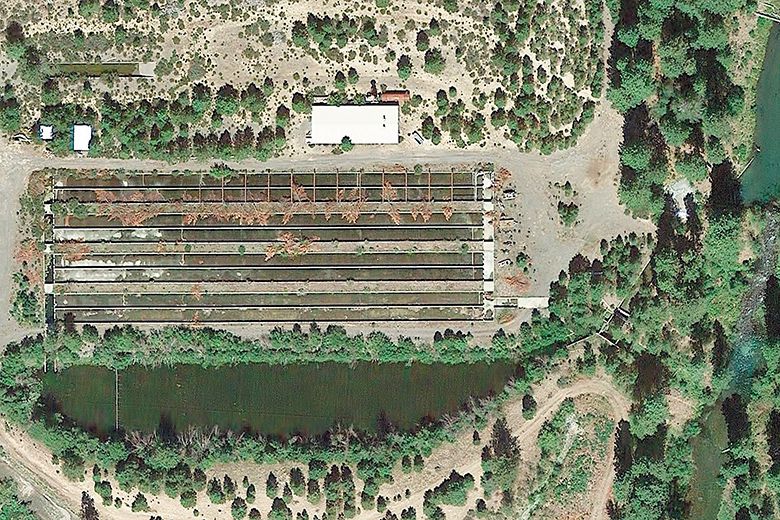
While raising a son and daughter, the Goodsons kept watch on the Fort Klamath Ranch– a property with history and beautiful landscapes he’d admired for decades. When it finally came up for sale in 2012 through an auction, Goodson bought it from an IRS Marshal right on the courthouse steps. The ranch carried its own storied past– a salmon hatchery built in the 1980s and a once-popular fishing resort called Take It Easy Ranch. This piece of Oregon history was ready for its next chapter.
Goodson hired a forester to develop a management plan for the 130 acres of merchantable timber, untouched for forty years. His goal? Simply thin enough trees to open a view of the mountains. The U.S. Forest Service, however, required a land-use plan for the newly cleared acreage. “Oh, well, I’m gonna put cattle on it,” Goodson explained. “Really?” they asked. “Yeah, cattle,” he proposed.
To make it official, he bought three registered Angus cattle from a ranch in White City (near Medford). He soon discovered all were pregnant by a Wagyu bull. Within six months, he had purchased the rest of the herd, expanding to fifteen head. Today, more than a decade later, his herd is nearly 100 percent Wagyu, and the beef is sold out years in advance.
Interestingly, those first Angus came from Buxton Ranch, a cattle operation along the Rogue River. That very land is home to Kriselle Cellars, linking Goodson’s ranching venture– quite literally– to wine country.
Goodson laughs, “I got into both the cow and fish business through the back door.” As he tells it, about five years into ranch life, someone suggested he consider raising fish. “I’m an engineer– I didn’t know anything about raising fish,” he admits. “I quickly realized we had the ideal location with the proper infrastructure. It was one of those answers just waiting for the right question.”
That question led to the Oregon Royal Sturgeon Company. After extensive research, along with help from fishery experts, Goodson updated the ranch’s old hatchery with modern, environmentally-responsible technology. Unable to legally use water from Fort Creek, he built a private water treatment facility.
“The permitting process in Oregon is very rigid, really stringent,” he observes. “If I hadn’t been an engineer, I probably would have given up. We’re the only permitted sturgeon producer in the state. And, without the property’s hatchery, I doubt we’d be here.”
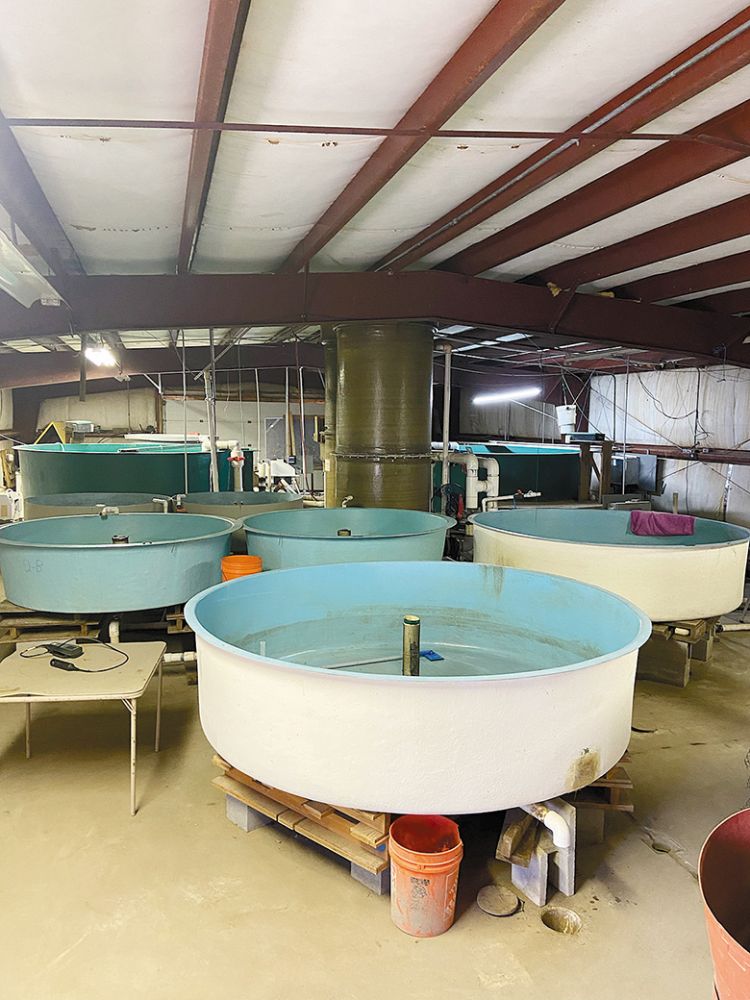
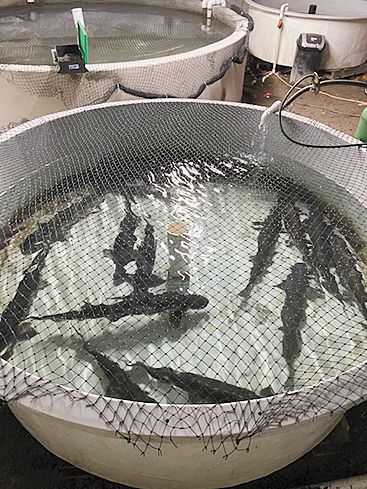
Working with design engineers from Vancouver, B.C., Goodson installed a small recirculating aquaculture system housed inside the original hatchery building. It is closed-loop so continuously filters and reuses water, minimizing waste and environmental impact. “You’ve got to start with small fish,” he shares. Finding those fish required some creative bartering. In 2016, Goodson traded half a Wagyu cow for 3,000 five-inch sturgeon from Canby, California. “And that,” he grins, “is how I got into the sturgeon business.”
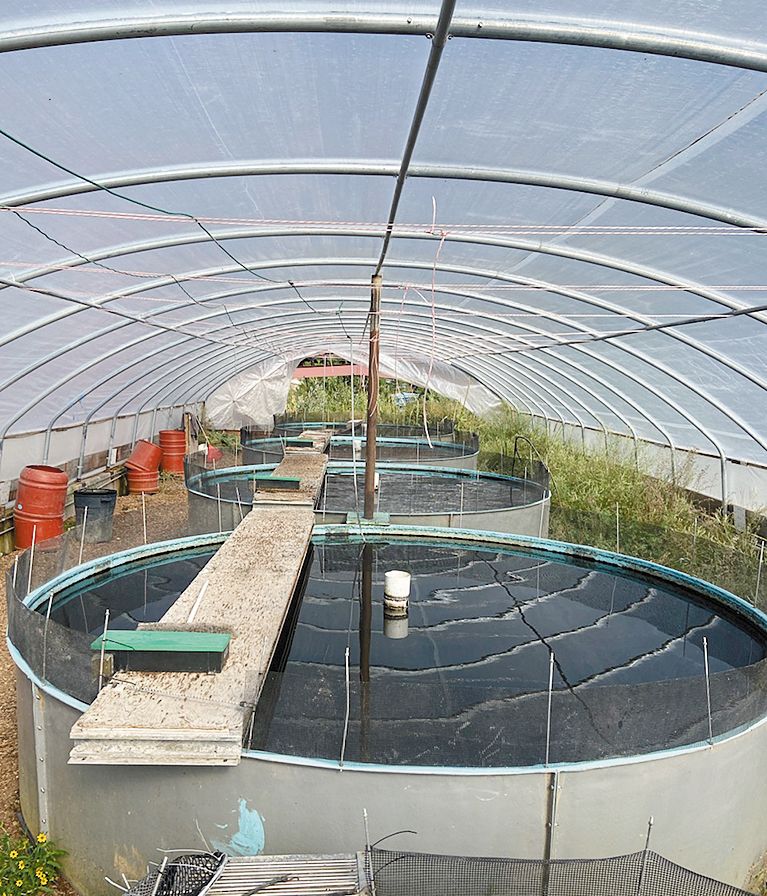
“Once I had the initial plant design and understood the concepts, I scaled it up by a factor of 20. I started redoing the piping, power– everything.” After two years of building, the little fish had grown and were large enough to move into the new state-of-the-art facility. “I’m growing fish in water that’s been going round and round for years,” Goodson explains. Today, his tanks hold roughly 25,000 pounds of sturgeon.
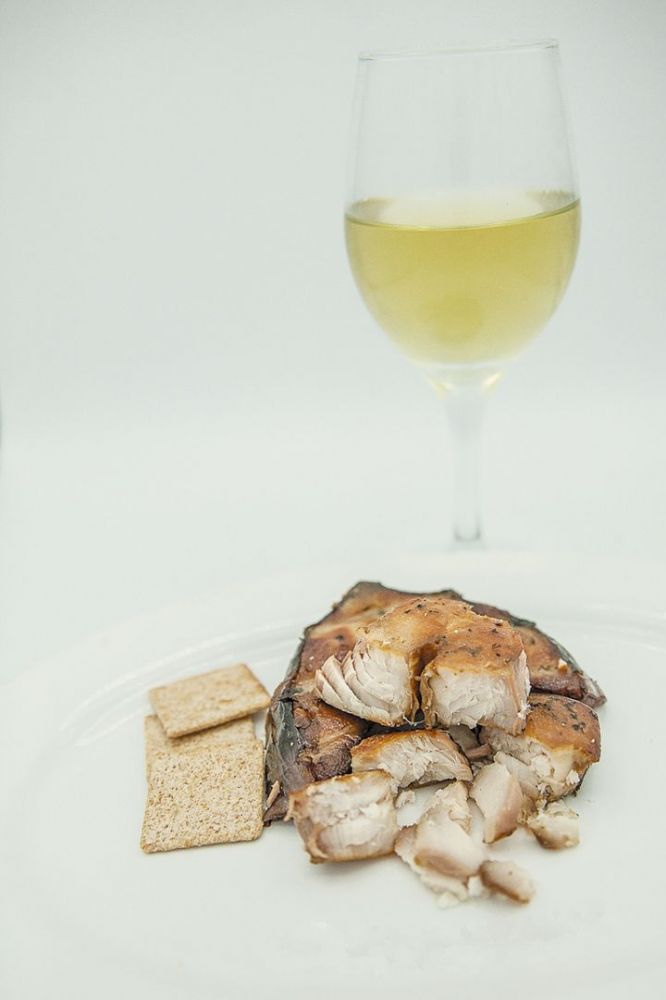
When the fish reach market size (about 10-12 pounds), they undergo a cold-water finish. “I’m recreating what happens in nature,” he explains. “In the wild, they live under frozen lakes and rivers, where spring snowmelt cools the water. We use 44-degree well water to mimic that for three weeks. They basically hibernate, stop eating, go still and their metabolism flushes. The result is beautifully firm, clean meat.” The skeleton of a sturgeon has no bones and instead consists of cartilage, similar to a shark. Fresh, frozen and smoked sturgeon can be purchased online.
Both FDA and Oregon Department of Agriculture-certified, Oregon Royal Sturgeon Company processes every fish onsite and uses the entire animal– rare in U.S. aquaculture. “This differentiates us from any other producers,” Goodson says. “We control every step of the process from breeding the females, harvesting and hatching the eggs, to producing fish year-round.”
White sturgeon are slow to grow and even slower to reproduce. “After all this time, mine are about two years away from producing high-quality caviar,” reports Goodson.
The long game doesn’t faze him. “A vintner friend once told me it’s about the same timeline for a 92-point Cabernet,” he says. “From start to finish, it’s a dozen year process.” He pauses, smiling. “Soon, I hope to have my ‘92-point’ caviar.” Like vintners, Goodson is willing to wait for perfection.
Oregon Royal Sturgeon Company
51775 OR Highway 62, Fort Klamath
oregonroyalsturgeoncompany.com
Monday – Friday, 1–3 pm
(541) 381-0802
Paula Bandy and her dachshund, Copperiño, are often seen at Rogue Valley’s finest wineries, working to solve the world’s problems. She has covered wine, lifestyle, food and home in numerous publications and academic work in national and international journals. For a decade she was an essayist/on-air commentator and writer for Jefferson Public Radio, Southern Oregon University’s NPR affiliate. Most recently she penned The Wine Stream, a bi-weekly wine column for the Rogue Valley Times. Paula believes wine, like beauty, can save the world. She’s also a Certified Sherry Wine Specialist and currently sits on the Board for Rogue Valley Vintners. @_paulabandy