
Roots of the Matter
The science of vineyard cover crops
By Aakanksha Agarwal
It’s cellar season, when time slows down. The tractors are parked, the tanks and barrels are full, the vines enter dormancy. But below ground, the soil begins its most important work.
Around the state, growers are preparing vineyard floors for winter rains, restoring nutrients and building resilience to support their vines into spring.
In Oregon’s cool climate, where the rainy season is long and summer droughts grow ever harsher, this transition is critical. The months after harvest determine not only next year’s crop but also the long-term health of the land itself.
The Living Floor
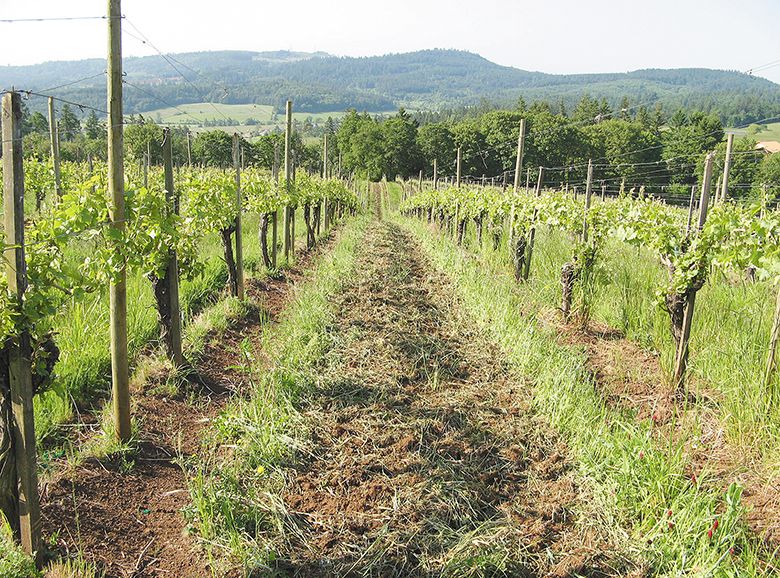
In the Eola-Amity Hills, ecologist and winemaker Mimi Casteel views her Hope Well vineyard as an interconnected ecosystem. “Since I don’t do any tilling, my soils are already covered with vegetation rejuvenated by fall rains,” she notes. “I have a ‘living’ floor.”
This living floor refers to the dense network of plants and roots protecting and feeding the soil year-round. As rain returns, that system springs to life, allowing roots and microbes to exchange nutrients and rebuild soil structure. These microbes don't just feed the vines– they may be shaping the wine itself, though that connection remained mysterious until recently. To encourage the process, Casteel finishes each growing season with one or two sprays of compost tea. Made from organic matter and water that has been aerated and brewed with beneficial bacteria and fungi, "It boosts microbiological diversity," she explains, to prepare the soil's microbial community for the winter ahead.
For Casteel, everything begins with living roots. Roots release sugars and organic acids, known as exudates. These serve as food for soil microorganisms. In return, those microorganisms break down organic matter and minerals into nutrients the vines can use. “Living roots are part of living plants,” she adds. “They feed the life in the soil, and that life feeds the plants.”
Healthy soils act as sponges, absorbing and storing rainfall while maintaining structure so oxygen and nutrients can move freely. Bare or compacted soils, by contrast, seal off under Oregon’s heavy rains, forcing water to run off rather than sink in. Casteel calls it a simple but essential principle: “When soils are covered with a diversity of plants, when they are being fed, supported and protected, they breathe.”
The Science of Cover Crops
At the Oregon Wine Research Institute, a partnership between Oregon State University and the wine industry, professor and viticulture extension specialist, Patricia Skinkis, Ph.D., studies soil and canopy management. She reports that while winter may look like a dormant season, it is when much of the soil renewal actually occurs.
“Plants growing in soil allows rainfall to infiltrate rather than running off the surface and causing erosion,” she shares. “Cover crops also contribute nutrients, particularly carbon and nitrogen. Carbon feeds microbes and nitrogen becomes available as plants break down.”
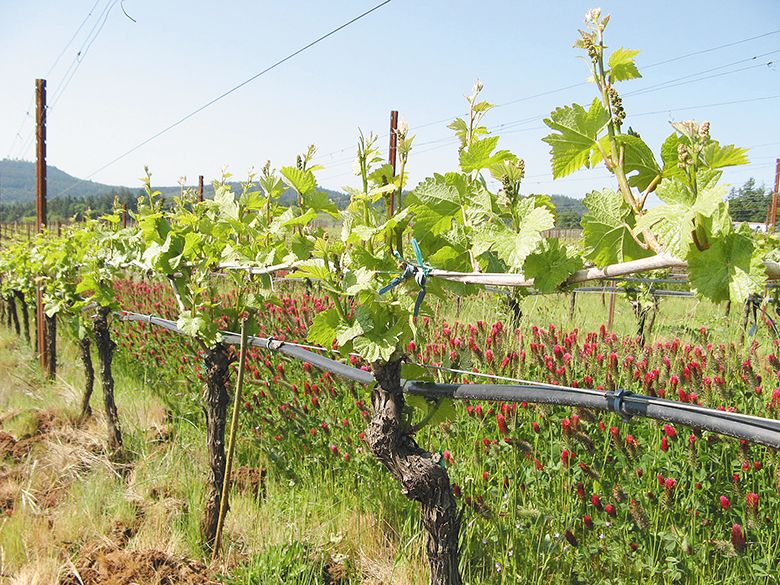
The goal is keeping the soil active and biologically-rich as the vines sleep. Cover crops such as rye, barley, vetch and clover provide both protection and fertility. Grasses contribute long-lasting organic matter that improves texture and structure. Legumes add nitrogen naturally through symbiotic bacteria in their root nodules. Together, these plants build a self-sustaining cycle that reduces the need for external fertilizers.
“Growers are learning balance is everything,” observes Skinkis. “Too much tilling or overly aggressive cover crops can cause problems just as quickly as leaving the ground bare.” This “integrated vineyard floor management” approach combines low-impact cultivation with thoughtful plant diversity to support long-term soil health.
From Science to Practice
In Southern Oregon’s Applegate Valley, Troon Vineyard & Farm put these principles into practice. The property has become a leading model for regenerative agriculture. Garett Long holds an MS in Soil Science and Biogeochemistry from UC Davis. As Troon's director of agriculture, he oversees both the organic compost program and the vineyard livestock integration.
“Once harvest wraps up, we give each vineyard a long ‘thank-you’ drink of well water infused with vermicompost tea,” Long shares. “Harvesting ripe grape clusters creates many open wounds the vines must heal using their sap flow.” The compost tea boosts beneficial microbial activity, aiding vines in closing those wounds.
Troon’s team then spreads compost (between two and five tons per acre), allowing the rain to wash it into the soil. “Timing is key,” Long asserts. “In 2020, we planted cover crops too early. They germinated with the first good rains, but died when the weather became drier. Now we wait a little longer to seed, so the plants are established before the shortest days of winter.”
By November, the vineyard floor is alive with new growth and moisture. Once the vines have dropped their leaves and entered full dormancy, Long brings in a small flock of sheep. The sight of sheep wandering between dormant vines might surprise visitors, but it's intentional regenerative agriculture. Their manure enriches the soil, and their grazing manages vegetation naturally. “We only graze mature vineyards,” he reports. “And avoid young blocks where the sheep might damage canes or compact the soil.”
Before winter sets in, a biodynamic soil spray known as BD-500 is applied using a lightweight electric vehicle and fine sprayers to avoid compacting the newly seeded ground. “We prefer applying this horn manure during a descending, waning moon,” Long adds. “It encourages microbial activity and root growth.”
Defining Healthy Soil
Healthy soil is not only fertile but develops structure, porosity, organic matter and biological life. Casteel describes, “It feels springy and absorbs the rain while smelling absolutely incredible.”
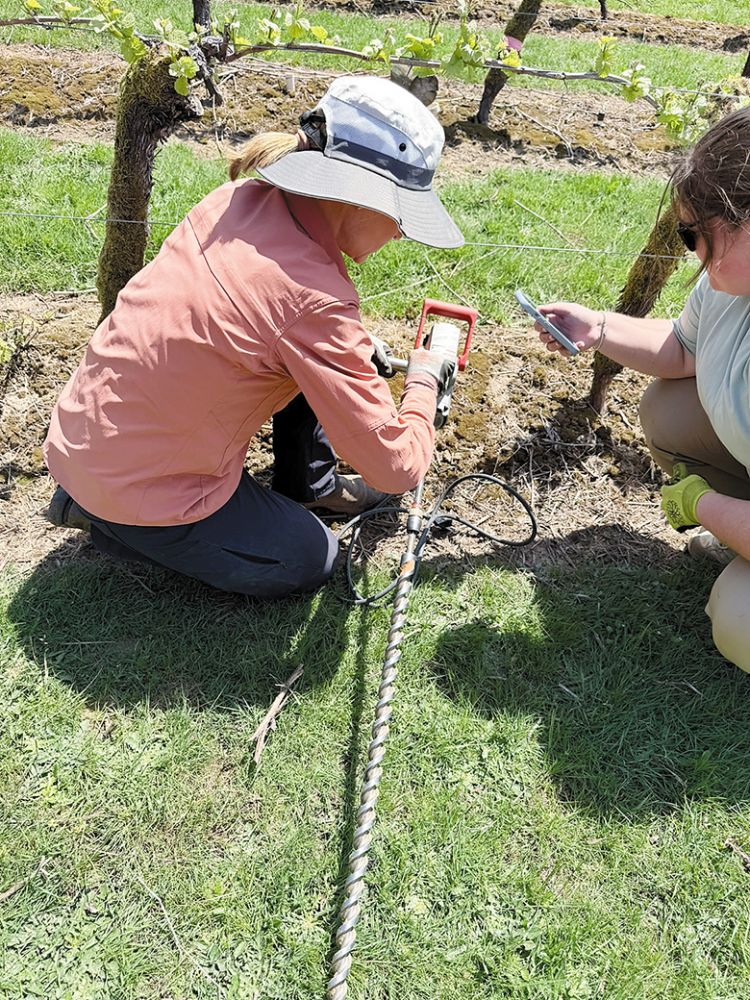
Researchers measure these qualities through soil organic matter content, respiration rates and aggregate stability. Skinkis finds more growers are now using soil-health lab tests to track these metrics, often through facilities such as the Oregon State University Soil Health Lab.
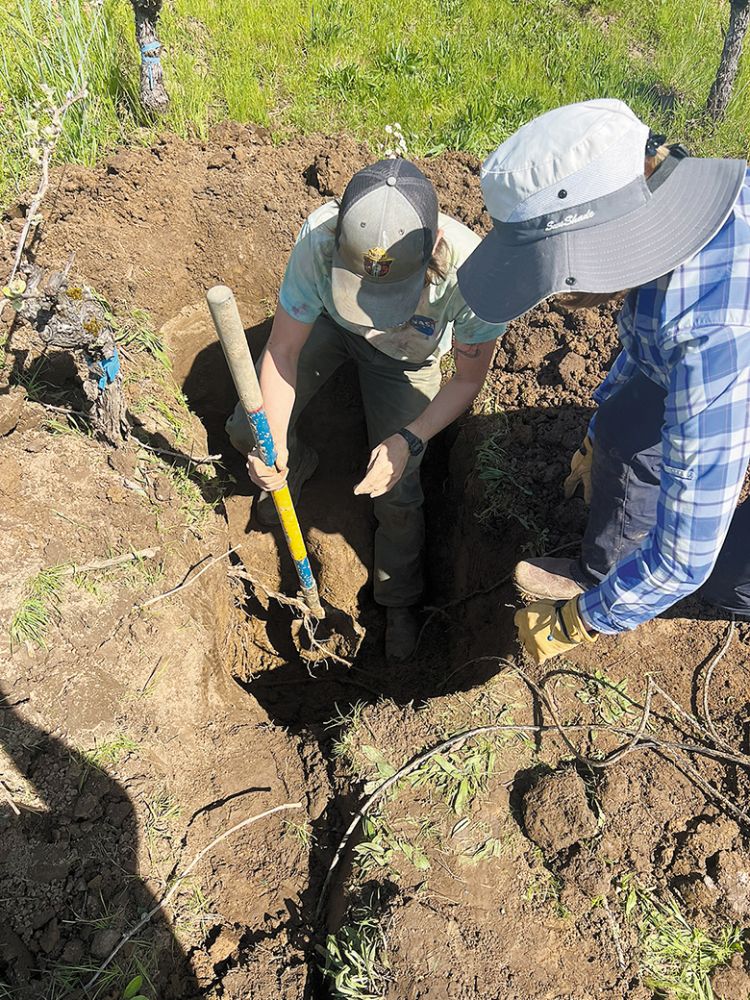
At Troon, the data shows progress. “Between 2018 and 2022, we saw only small increases in organic matter in the top eight inches of soil,” Long states. “But, from 8 to 36 inches deep, we found increases up to 200 percent.”
That’s where long-term carbon storage takes place. Because vines are perennial crops, their deep roots help sequester carbon far below the surface, where it is more stable. “That improvement proves regenerative systems work,” he continues.
Adapting to Oregon’s Changing Climate
Oregon’s shifting weather patterns make soil management both challenging and essential. Heavy winter rains can erode bare ground, while hotter, drier summers strain the soil’s ability to hold moisture.
Tilling has long been a defining line between farming philosophies. However, Oregon’s winegrowers are discovering flexibility is essential. While Casteel strictly practices no-till farming, she notes, “'I have and do champion no-till, but I am not dogmatic about it. Tillage disturbs the soil ecosystem, particularly the aggregate structure of soil, and over time that can lead to lots of issues. But not all tillage is created equal; some methods are far more destructive than others. Soil structure is tightly coupled to soil function. Roots, especially living roots, maintain and increase soil structure and function over time, and in rainy winters this is especially important.”
Soil structure is tightly linked to function, Casteel explains. When soil aggregates are destroyed, water can't infiltrate as easily. In a state where winter storms can drop inches of rain in a day, compromised soils lead to runoff, erosion and the loss of groundwater recharge. That has consequences far beyond agriculture.
Less soil water means drier landscapes, hotter summers and greater fire risk. “The water budget and overall resilience of a region,” she states, “are hugely affected by how agricultural soils are managed.”
Skinkis sees value in selective, low-intensity tillage to relieve compaction or incorporate compost. Over-tilling, however, breaks apart soil aggregates and releases stored carbon, while a total avoidance of disturbance can create its own challenges.
Most growers now practice what researchers describe as integrated floor management– a flexible approach employing light tillage where needed, combined with permanent vegetation or cover crops elsewhere. The goal is balance: maintaining vine vigor without undermining the soil’s long-term resilience.
Long shares that philosophy. Early in Troon’s regenerative transition, the team moved to a completely no-till system. “We wanted to believe cover crops and vines could coexist perfectly,” he notes. “But I noticed serious competition for water and nitrogen.” Now, Troon tills only under the vine rows, roughly 20 percent of the vineyard floor, protecting young vines while leaving most of the soil undisturbed. To maintain fertility organically, Troon produces roughly 300 tons of compost each year. “Our relationship with tillage has changed,” Long recalls. “No-till is aspirational, but it takes years for vines and soil biology to reach equilibrium.”
Building Biodiversity
For both Casteel and Long, above ground biodiversity is inseparable from soil health below. At Hope Well, natural pest control is simple. Casteel’s living floor supports a helpful eco-system of birds, insects and native pollinators. At Troon, more than 10 acres are designated as biodiversity reserves filled with milkweed, buckwheat and native flowering plants. “Build it, and they will come,” Long describes. “The many bees and butterflies around the farm confirm our system is working.”
Biodiversity also buffers vineyards against extremes. A wide range of plants and insects stabilizes the environment, reduces erosion and supports beneficial microorganisms. “Growing plants is the simplest sign a soil is healthy,” adds Skinkis. “If the soil can sustain plant life, the microbial community below is active too.”
From Soil to Wine
Growers often say great wine begins in the vineyard, but for Oregon’s regenerative devotees, it begins even deeper. “Living soil is different from weathered rock,” observes Casteel. “It is alive. It is where the most interesting components of wine are born.”
That vitality shows up in the glass at Troon. “Our visitors often note a unique energy in our wines. In fact, after regularly tasting that “je ne sais quoi” in biodynamic wine, Craig Camp, Troon’s general manager, transitioned all the farming and winemaking techniques,” Long shares. “It is hard to put one’s finger on exactly how soil health links with delicious, expressive wines. Recent research suggests it may be the untold multitude of microbes underfoot in the vineyard, and the unique yeast and bacteria that naturally coat grapeskins.”
Scientific studies are confirming that connection. Microbial communities in vineyard soils and on grape surfaces play a role in influencing fermentation, thus shaping both aroma and texture. Wines fermented with native yeast often show more site-specific characteristics than those made with commercial strains. “Climate and soil, of course, have a major impact on microbial life, but truly what we understand to be a ‘sense of place’ is actually the fingerprint of microbes,” Long adds.
Preparing for the Future
As Oregon faces longer dry spells and unpredictable winters, these soil-focused strategies have become not only ecological choices but economic ones. Casteel believes resilience in the vineyard starts underground. “Our soils are our livelihoods,” she acknowledges. “But they are also part of how our state will adapt to a changing climate.”
Long’s long-term goal is to continue measuring those changes scientifically. This year, he plans to track progress by revisiting the same fields first sampled in 2018 and 2022. By digging new soil pits nearby in an undisturbed location, he ensures more accurate results. “Do the benefits plateau or continue to grow?” he asks. “These answers help us understand how quickly the soil responds to regenerative management.”
Skinkis points out how Oregon’s diverse soils, from volcanic basalt to granitic and serpentine formations, are naturally resilient. “Even if a grower doesn’t seed a cover crop, something will grow,” she notes. “This demonstrates that the soil’s biological system remains intact.”
By December, Oregon vineyards have rows of bare canes, green alleys of cover crops and a thin layer of mist hanging low over the hills. Beneath the surface, microbes are digesting organic matter, fungal networks are knitting through the soil and roots– still alive– are breathing life into the ground.
This is the hidden season of wine, never described in tasting notes, yet defining future vintages.
Aakanksha Agarwal is a wine, travel and lifestyle writer from India. Formerly a Bollywood stylist, she now resides in the U.S., embracing writing full-time while juggling family life and indulging in her passions for cuisine, literature and wanderlust.