
Rooted in Responsibility
Oregon’s wine community demonstrates ecological stewardship and outstanding wines go hand in hand
By Michele Francisco
"It was an honor just to be nominated.” This phrase can sound cliché, especially during awards season. However, in this context, the sentiment is genuine.
Decades in the making, Oregon wine is having a much-deserved moment on the environmental stage. Still, readers may have missed a new category in Wine Enthusiast’s 2025 Wine Star Awards: Environmental Advocate of the Year. The global shortlist of five nominees included not one, but two Oregonians.
Two peas in a pod
While neither Craig Camp, general manager at Applegate Valley’s Troon Vineyard & Farm, nor Mimi Casteel, owner and winegrower at Hope Well Wine in Sheridan, received the award, their nominations highlight something significant: the wine world is taking notice of Oregon’s deep commitment to sustainable winegrowing.
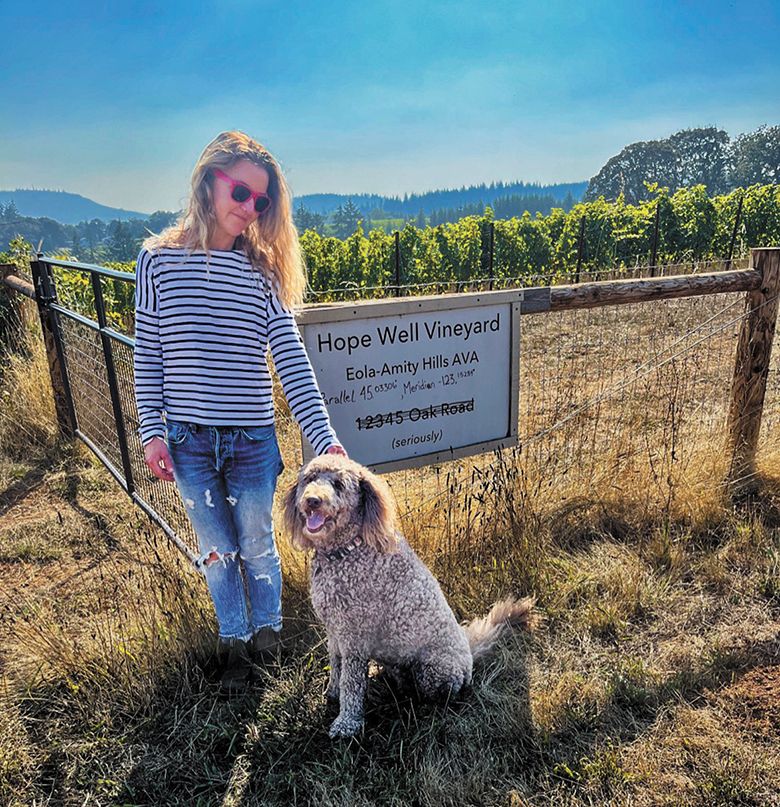
Casteel, who grew up at Bethel Heights Vineyard in Salem, worked as an ecologist and botanist for the U.S. Forest Service before returning to the family business. Today, she promotes regenerative farming practices, splitting her time between Bethel Heights and her own label.
When asked about the nomination, she notes, “It is an honor to stand with Craig and a sign of Oregon’s potential to lead in the journey towards a future state of restored function and abundance.”
Camp is the driving force behind Troon’s dramatic shift from conventional farming to what is currently the world’s only Demeter Biodynamic and Regenerative Organic Certified Gold winery.
In 2016, shortly after being hired, Camp began reviving the vineyard’s depleted health. After years of standardized farming, it suffered from vine disease and soil compaction. A decade later, the farm is a model for regenerative agriculture.
Camp says, “Certainly, Mimi and I are honored, but these nominations should be considered a recognition of Oregon’s entire wine industry and its commitment to responsible winegrowing. It is also a recognition that implementing these concepts on your farm improves the quality and individual personality of the wines you make.”
He continues, “I admire Mimi for following her personal vision on how to achieve these goals. Her leadership and creativity in finding practical solutions are both a gift and an inspiration to winegrowers throughout the world.”
Farming 101
Regenerative farming isn’t merely a trend in Oregon; it’s part of our state’s winegrowing DNA. With numerous certification options, vineyards and wineries are adopting programs that fit their needs while challenging them to improve.
Here are the certifications most commonly found in Oregon.
LIVE
Formed in 1997, LIVE, an internationally accredited program, educates and certifies winegrowers across the Northwest. The nonprofit promotes low-input farming and worker health and safety, along with reducing greenhouse gas emissions and encouraging habitat conservation, including native oaks. The most recent LIVE stats underscore Oregon’s focus on sustainability: 255 certified vineyards, over 11,000 vineyard acres and 26,324 total farm acres (vineyard and other land). Nearly 6,200 acres are dedicated to biodiversity.
Beyond Oregon, there are two LIVE-certified vineyards on the Washington side of the Columbia Gorge, as well as five in Walla Walla, Washington.
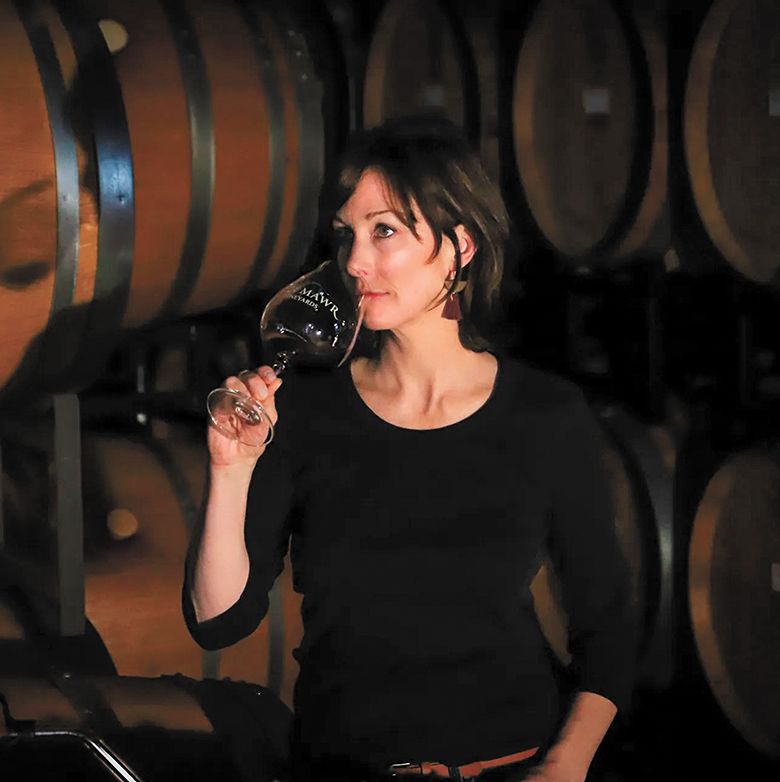
Rachel Rose, Bryn Mawr Vineyards’ winemaker and vineyard director, recalls how she chose Oregon.
“The LIVE program was one of the things that initially drew me to the Pacific Northwest from abroad, explains Rose. “As a young viticulturist, I was struck by the region’s forward-thinking approach to minimizing inputs in both the vineyard and winery. I thought it was an exciting concept and wanted to get involved. That desire led me to Ponzi Vineyards, one of the pioneers of LIVE.”
After joining Bryn Mawr Vineyards, she began implementing new agricultural practices.
“We began farming to LIVE standards when I came on board to manage the vineyard in 2010. Bryn Mawr officially received our certification in 2019, and we are moving into our seventh year as LIVE members,” reports Rose.
The LIVE program offers additional certifications with several partner organizations, including Salmon-Safe and Pollinator Partnership.
Look for the LIVE logo on the back label of a wine. Frequently, the Salmon-Safe and new Bee Friendly logos are printed there as well. (To learn more about the LIVE program, read “Certifiably Good,” published in OWP’s Feb. 2025 issue.)
Organic
Organic farming prohibits synthetic pesticides and genetically modified organisms.
Wine labels may state “made with organically grown grapes,” or the wine itself may be USDA Organic certified, in which case it’s made with organic grapes and contains no added sulfites.
Consumers should look for these statements or the Oregon Tilth logo on the back label.
As the second-largest wine-producing state, Washington is home to more than 900 wineries. Data from the Washington State Wine Commission reports 50,000 acres of vineyards planted in the state. A search of the USDA’s Organic Integrity Database identified 33 certified organic wineries and vineyards. Four are located in the Walla Walla Valley and another four are in the Columbia Gorge. Together, these vineyards represent more than 2,500 acres of organically farmed land, including 232 acres in the Gorge and Walla Walla Valley.
By comparison, Oregon has 1,070 wineries and wine companies and nearly 47,500 planted acres, according to the Oregon Wine Board. Within the Organic Integrity Database, I found 44 wineries and vineyards are certified organic, covering a combined 3,100 reported acres.
If you’re interested in learning more, the Organic Winegrowers Network is hosting its second annual conference on April 20-21. Consumers and trade can register at organicwinegrowers.com.
Biodynamic
Austrian scientist Rudolf Steiner popularized the principles of biodynamic farming in the mid-1920s with a lecture series titled “The Spiritual Foundations for the Renewal of Agriculture.” He believed the entire farm should function as a single ecosystem rather than separate components. Steiner’s biodynamic theories are incorporated in the Demeter Biodynamic Farm Standard. By following the outlined guidelines, farms can become certified biodynamic by the Demeter Association.
“The concept of ‘whole farm,’ seeing your farm as one living integrated organism, is the heart of biodynamics,” describes Camp. “Troon is almost 100 acres, evenly divided between vineyard and other crops. Biodiversity is the secret weapon on an organic farm. Our goal is to achieve a balance and harmony with nature on our farm.”
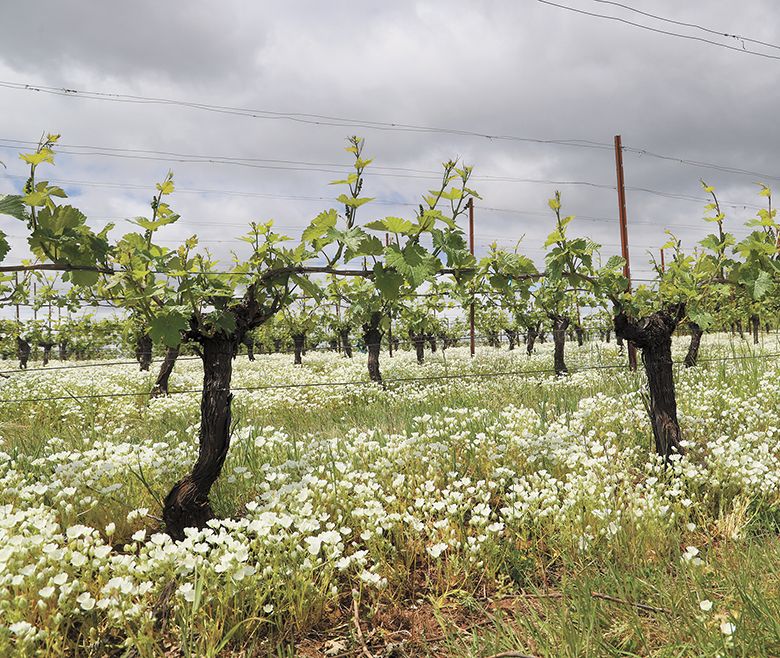
Finding an ideal equilibrium requires effort, patience and attention. As Camp notes, “When a system is in balance, you need fewer inputs to grow successful crops. In our case, Troon has an integrated cider apple orchard, food forest, diverse cover crops, pollinator habitats, vegetable gardens, hay fields, re-wilded honeybees, along with sheep and chickens. Each of these living systems brings unique microbiology and beneficial insects that spread throughout the farm.” He continues, “When planting the farm, we selected plants we believed would be the most successful. Now we are learning what each of them wants to give us.”
Jacksonville’s Cowhorn Vineyard & Garden, founded in 2005 by Barbara and Bill Steele, is counted as one of the first five biodynamic vineyards in the nation.
Mini Byers, who purchased the property in 2021, explains why the site appealed to her. “When I first encountered Cowhorn, I was really just curious. It is such a small, boutique estate growing about 25 acres of Rhône varieties, farmed biodynamically, which immediately caught my attention. I have always been deeply drawn to Rhône varieties, and it is not something you see done with this level of intention in Oregon very often,” Byers admits.
She continues, “Originally, I came simply to taste and learn more about what Bill and Barbara had created. They were among the earliest certified organic and biodynamic vineyards in the United States, and certainly pioneers here in Oregon. During that visit, it became clear they were hoping to pass the property on, and somehow the stars aligned. What began as curiosity quickly turned into the opportunity to steward something truly special,” adds Byers.
Currently, Oregon has 21 U.S. Demeter-certified biodynamic vineyards and wineries, per the Demeter USA website. One of those vineyards is King Estate, the largest biodynamic vineyard in North America. Only four vineyards in Washington are U.S. Demeter-certified, with one located in the Columbia Gorge.
According to the Wine Institute’s website, California has just 39 biodynamically-certified vineyards and wineries out of 5,900 winegrape growers, 4,700 bonded wineries and 477,000 acres of wine grapes.
Regenerative Organic Certified
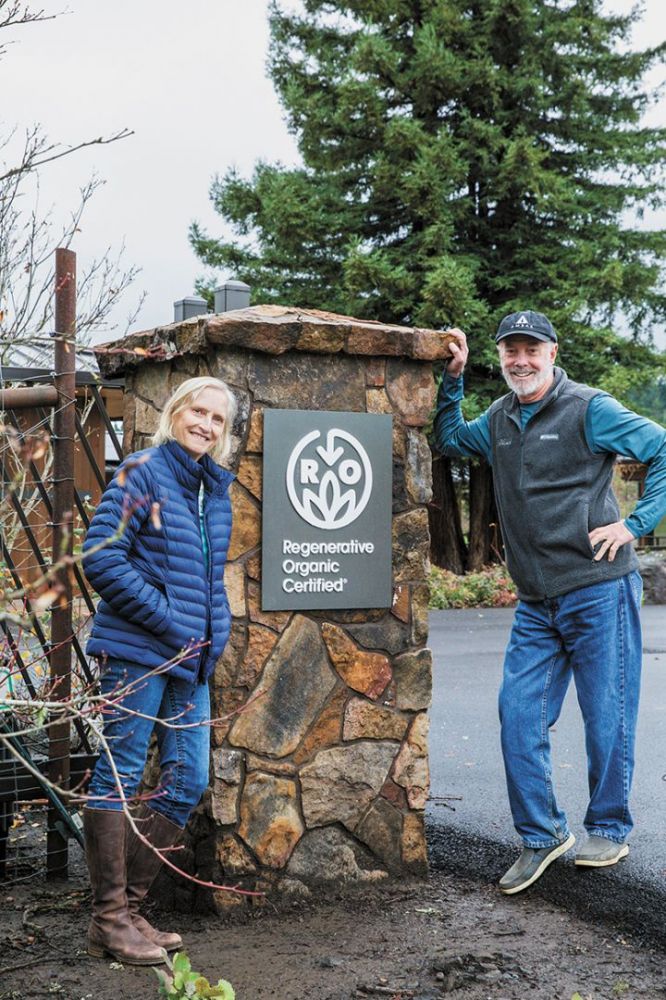
Regenerative Organic Certified, known as ROC, is the most stringent farming certification. Relatively new, it builds upon the USDA Certified Organic standards, with additional emphasis on three pillars: soil health and land management, animal welfare and farmer and worker fairness. The Regenerative Organic Alliance manages the certification process.
To date, two Oregon wineries have achieved ROC: Troon now has gold status and Ambar Estates has silver. One Washington winery, Estelbrook Farms and Vineyard, located in the Columbia Gorge, also has silver status.
“When I arrived at Troon, my goal was Demeter Biodynamic certification as I believed it was the ideal framework to bring this farm back to life. In 2019, we were certified by Demeter in the winery, and in 2020, we achieved our whole farm certification,” notes Camp. “That same year, we discovered the ROC and felt the three certification pillars aligned with Troon’s mission.”
Ambar Estate, located near Newberg, is the first ROC vineyard in the Willamette Valley. When I ask owners, Rob Townsend and Pam Turner, why this particular certification was important, they explain, “When we acquired the land that has become Ambar Estate, we wanted to create a truly unique vineyard that could produce memorable wines with a sense of place. We were also determined to do so in an environmentally and socially responsible way. We wanted a science-based approach that went beyond organic farming, and as we dug deeper, it became clear that regenerative organic viticulture was the way to go. We appreciate its focus on improving soil health, minimal or no tilling, the use of compost, sheep grazing, enhancing resilience through biodiversity and promoting the welfare of our farmworkers. We decided to become Regenerative Organic Certified because we believe accountability is important.”
Read “Mother Earth Needs Ewe,” published in OWP’s April 2023 issue, to learn more about these farming methods.
Building Sustainability
Sustainability extends well beyond farming. The U.S. Green Building Council’s LEED (Leadership in Energy and Environmental Design) is the world’s most widely used green building rating system. Here, Oregon is neck-in-neck with Washington– each state has three LEED-certified wine-related buildings. However, there is one significant distinction between our two states: Oregon’s buildings are privately owned wineries, whereas those in Washington are all publicly owned (and funded) wine education facilities.
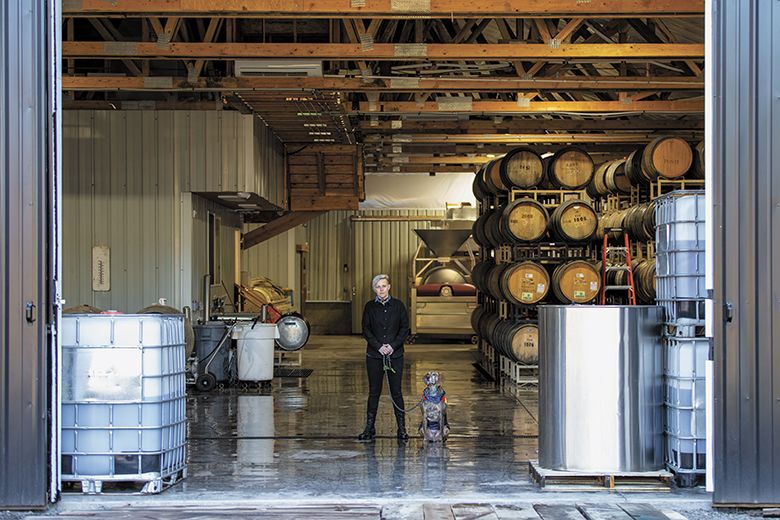
While converting a tractor barn at her Dayton property into a wine production facility, winemaker Remy Drabkin, owner of Remy Wines, wanted to use eco-friendly materials. Her search led to McMinnville contractor John Mead of Vesuvian Forge Concrete Surfaces. Together, they developed an environmentally-conscious concrete formula that sequesters carbon.
Drabkin notes, “Concrete is one of the most destructive materials on Earth, accounting for more than seven percent of global carbon emissions, so it is one of the greatest changes we need to make in construction. Ours was the first winery built with a carbon-sequestering concrete floor, using the Drabkin-Mead formula,” she shares. The durable formulation achieves its carbon-neutral state through the use of biochar, a carbon-negative material made from pyrolyzing organic waste. Reclaimed materials found on the property, recycled winemaking equipment (such as wood from pallets) and items sourced from rebuilding centers were also used in the building’s construction.
Read more about the Drabkin-Mead concrete and other ways wineries are conserving resources in “Pushing the Eco Envelope,” published in OWP’s March 2023 issue.
The trees and the bees
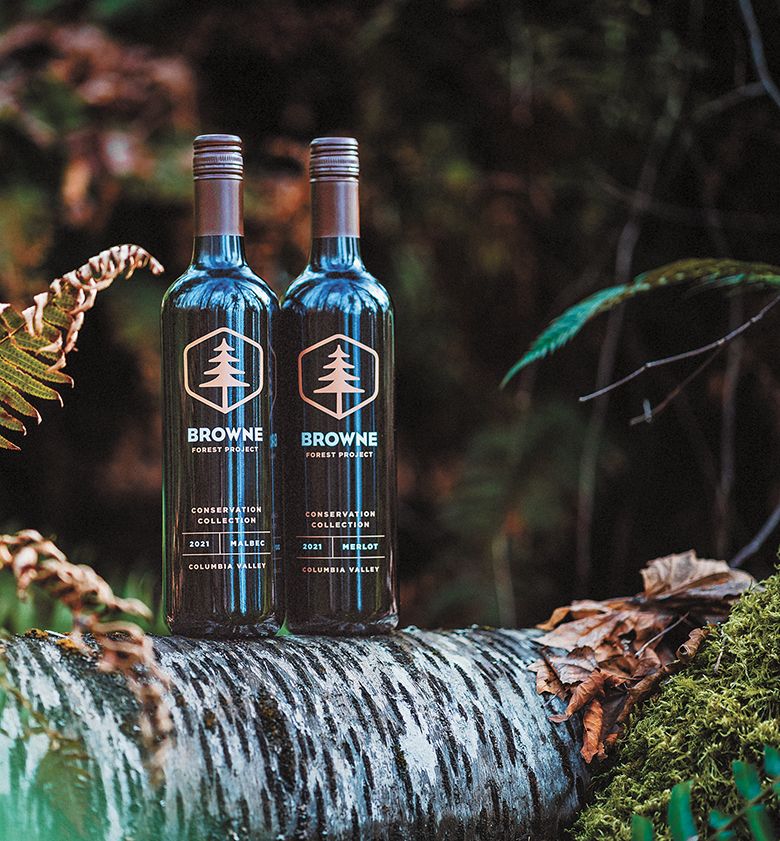
Deforestation is a frequent headline today. Tree loss contributes significantly to climate change so Walla Walla Valley’s Browne Family Vineyards created the Browne Forest Project. By partnering with One Tree Planted, the winery is poised to reach its goal of planting 1 million trees.
Andrew Browne, founder of Browne Family Vineyards, recalls, “We selected One Tree Planted as our partner in this mission because they make it simple to give back. They work directly with local reforestation organizations on the ground to create real, meaningful impact for nature, people and wildlife. As of this month, The Browne Forest Project has planted 400,000 trees.”
He goes on to explain how tree restoration helps the environment. “One Tree Planted taught us that– in addition to so many other benefits– trees help fight climate change, prevent soil erosion and support wildlife,” notes Browne. “Here in the Pacific Northwest, we have felt firsthand the devastating impact of flooding and forest fires on our winemaking regions. The Browne Forest Project is our small, yet meaningful way to make change. These minor consistent actions can compound into something epic over time!”
By joining forces with nonprofit Pollinator Partnership, LIVE members are also certified as Bee Friendly. LIVE’s executive director, Chris Serra, explains, “The Bee Friendly Farming partnership offers a significant amount of support to plant and protect pollinator habitat. They provide opportunities for our members to obtain plant material through various grants as well. They also help us include pollinator-specific standards in the LIVE standard that we otherwise might not have had. LIVE members are encouraged to use the Bee Friendly logo on their wine labels,” states Serra.
Drabkin, too, is abuzz about bees. “At Remy, we support pollinator populations in many ways. Over half of our 30-acres is riparian forest with natural water systems and the vineyard is LIVE certified. We follow more strict guidelines than the LIVE regulations, including not using glyphosate, which is extremely toxic to pollinators. Besides planting native plants and flowers, we worked with neighbor wineries and Oregon State University to create pollinator pathways for bees and butterflies between our properties,” Drabkin reports.
Proving it works
While good farming practices may produce warm, fuzzy feelings, do they actually improve soil and vine health? The people I spoke with agree science is essential to measuring and tracking true success.
Casteel voices her thoughts: “Yes, I believe that we cannot rely on our senses alone to understand the processes we steward. Following data on my own farm has always been important, but I also believe what we learn together as peers can take us much farther. I feel it’s also important to work with and encourage groups of colleagues to measure and share results. By aggregating information, we can learn more broadly from the patterns that emerge.”
After prioritizing specific biodynamic techniques, including partnering with nearby Noble Dairy, Byers notes progress. “We closely monitor vineyard health through soil analysis and ongoing sampling. We track indicators such as organic matter, nitrogen levels, microbial life and overall soil vitality. We also evaluate the fruit itself, from grape chemistry through fermentation and the resulting wines,” she shares. “Over the past few years, Cowhorn has seen clear improvements in vine balance and soil vitality. The vineyard feels more alive and resilient, and that vitality ultimately carries through to our wines in their natural balance, energy and expression of place.”
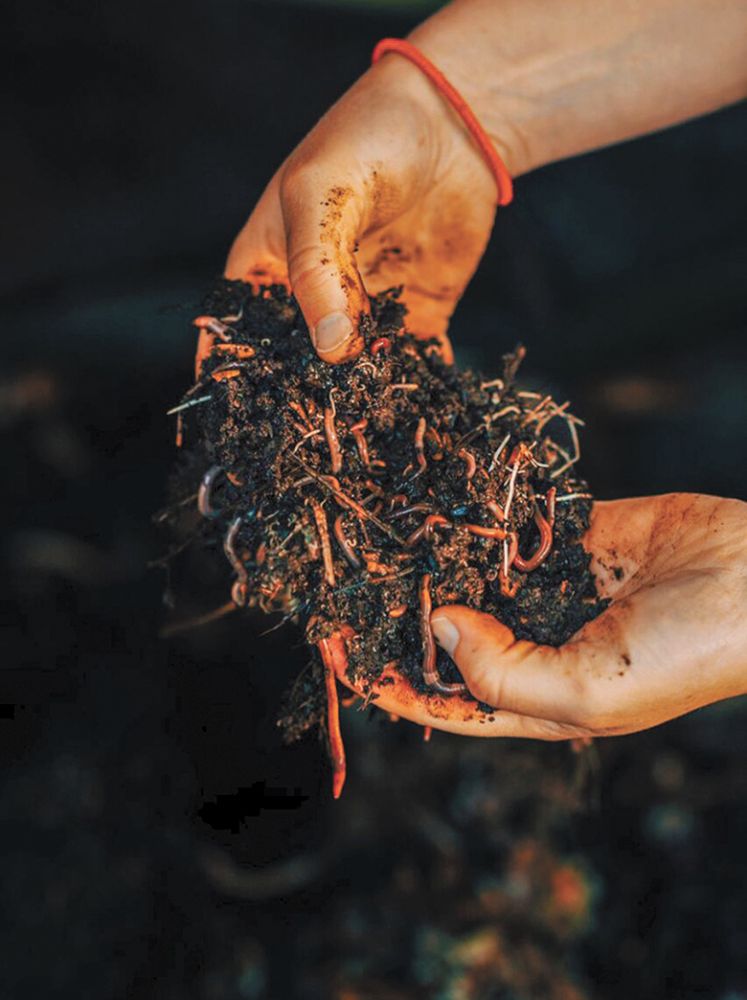
Camp concurs on the importance of measuring and tracking the results of the many efforts implemented at the farm. He explains Troon’s process and philosophy. “We practice what I call practical biodynamics. I believe it is a toolbox of probiotic preparations that feed and strengthen the natural systems of the soil and plants. Probiotics are everywhere now; there is not a drugstore in the country without racks of them,” Camp quips.
“Troon’s team is science-driven. Our director of agriculture, Garett Long, leads our biodynamic program. He has a Master’s in soil science from UC Davis and finds soil testing a vital tool both as a requirement of our certifications, but also when making our farming decisions. Regular soil testing has proven levels of organic matter have dramatically increased,” reports Camp. “Those results are visible in the health of our vines, from leaf-blade and petiole sampling and consistently improving must chemistry. Healthier soils make healthier vines, which in turn produce healthier wines to drink,” adds Camp.
He concludes with an astute observation: “From LIVE to organic certified vineyards to demanding certifications like Demeter Biodynamic and Regenerative Organic, Oregon leads the American wine industry in producers that care about the impact of their work on the environment and making life on Earth better for the generations that follow us.”
Cultivating the future
Across Oregon, from pollinator pathways to biodynamic vineyards, winegrowers are redefining what stewardship looks like in the modern wine industry. Their work reflects a simple but powerful idea: when the land thrives, the vines follow– and the wines
tell that story.
Byers shares her thoughts on land stewardship. “I have learned you must be incredibly diligent and deeply connected to the vineyard itself. The goal is not simply to grow grapes but to cultivate vitality in the soil and broader ecosystem around the vines. When that vitality is present, the vineyard begins to find its own balance, and the wines express more deeply the place they come from.”
“Oregon wine was shaped by a belief that the grapes speak for the land, and the land must be treated with great care and respect. This is the foundation of Oregon wine– where authenticity meets creativity– and each bottle represents the quality brought to life by the unique soils, aspect and climate of each Oregon wine region,” observes Gina Bianco, Oregon Wine Board executive director. “It is this distinctiveness that motivates winegrowers to embrace and carry on environmental stewardship traditions and winemakers to bring the sense of place to life in each world-class Oregon wine.”
The nominations of Camp and Casteel may have brought national attention to Oregon’s environmental leadership, but they represent a much broader movement. Across the state, winegrowers are proving that stewardship, science and sustainability can coexist with exceptional wine. As Oregon’s vineyards continue to evolve, it’s becoming increasingly clear the future of wine is rooted not just in the glass– but in the health of the land itself.
WEST COAST WINE STATS
OREGON
Fourth-largest wine-producing state in the nation
1,070 wineries/wine companies // 47,000 planted acres
(Oregon Wine Board)
WASHINGTON
Second largest wine producing state in the nation
900 wineries // 50,000 vineyard acres
(Washington State Wine Commission)
CALIFORNIA
Largest wine producing state in the nation
5,900 winegraper growers // 4,700 bonded wineries // 477,000 acres of winegrapes
(Wine Institute)
Organic wineries and vineyards
OREGON
44 certified vineyards/wineries // 3,100 planted acres
WASHINGTON
33 certified vineyards/wineries // 2,500 vineyard acres
(USDA Organic Integrity Database)
CALIFORNIA
678 producers // 33,500 harvested acres of winegrapes
(California Agricultural Organics Report 2023-2024)
Demeter Biodynamic wineries and vineyards
OREGON
21 certified vineyards/wineries
WASHINGTON
4 certified vineyards/wineries
CALIFORNIA
39 certified vineyards/wineries
(Demeter USA)
Regenerative Organic Certified wineries and vineyards
OREGON
2 certified vineyards/wineries
WASHINGTON
1 certified vineyard/winery
CALIFORNIA
23 certified vineyards/wineries
(Regenerative Organic Alliance)
Michele Francisco spent her childhood reading and writing, eventually graduating from UCLA with an English degree. She attended graphic design school and began a career in design and marketing. After moving to Oregon in 2010, Michele studied wine at Chemeketa Community College and began Winerabble, a Northwest-focused wine blog. She has been a cheerleader for Oregon wine since her arrival.