On the Ridge of Greatness
Ribbon Ridge AVA celebrates its 21st anniversary
By Annelise Kelly
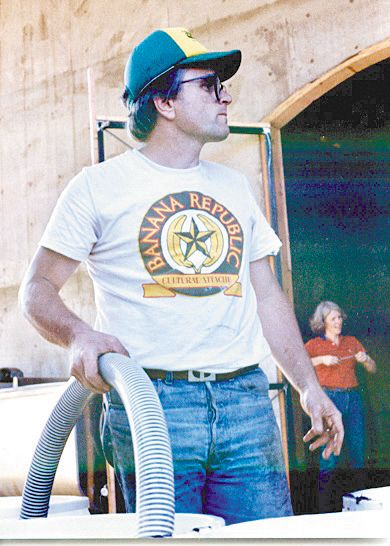
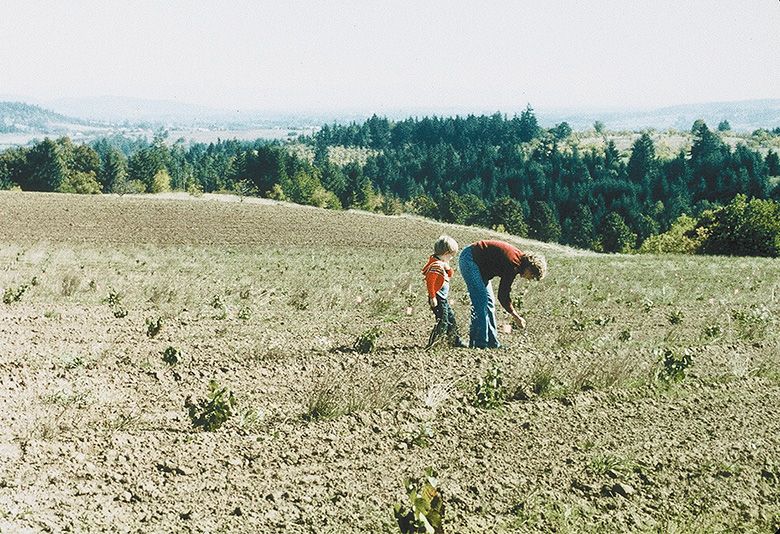
In 1980, Harry Peterson-Nedry bought land on a narrow, fog-prone ridge running north to south on the outskirts of Newberg. His contemporaries were skeptical and considered it to be too far west, too deep in the Coast Range shadow and too high in elevation to ripen grapes reliably. But Peterson-Nedry forged ahead and planted.
Twenty-five years later, on July 1, 2005, that ridge became an official American Viticultural Area, or AVA. It’s Oregon’s smallest at 3,350 acres, and by nearly any measure, one of its most distinguished. Today, the Ribbon Ridge AVA celebrates its 21st anniversary. Let’s reflect on what a small community of farmers, winemakers and true believers built on a patch of ancient ocean floor in the Northern Willamette Valley.
RIBBON RIDGE ORIGINS
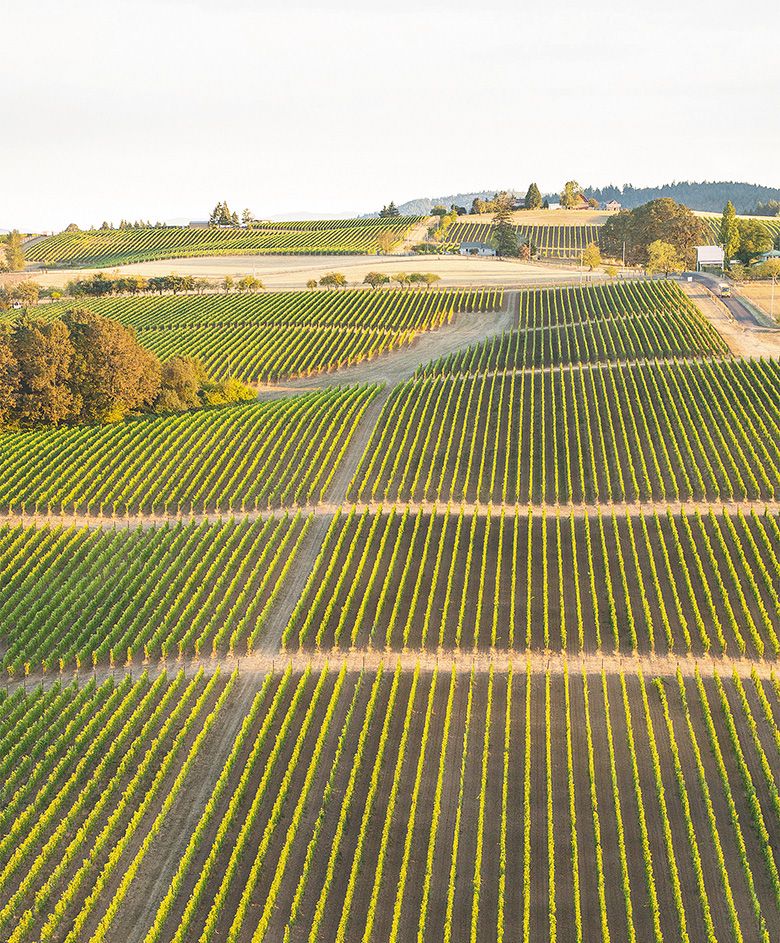
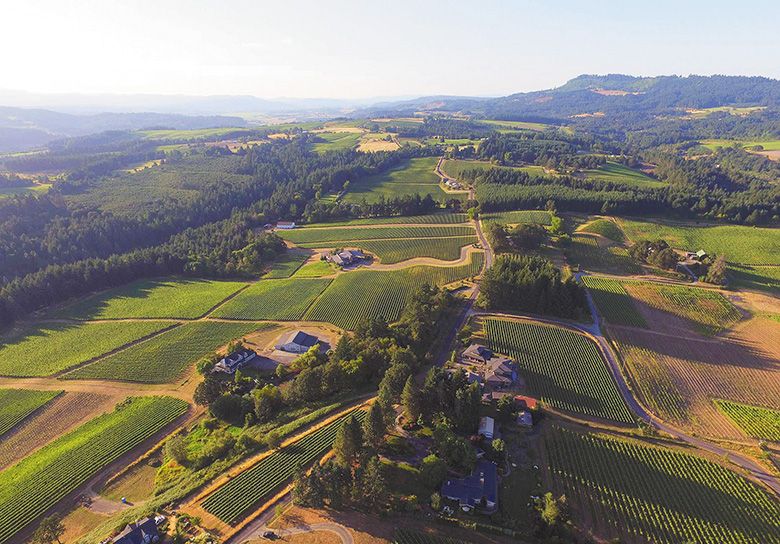
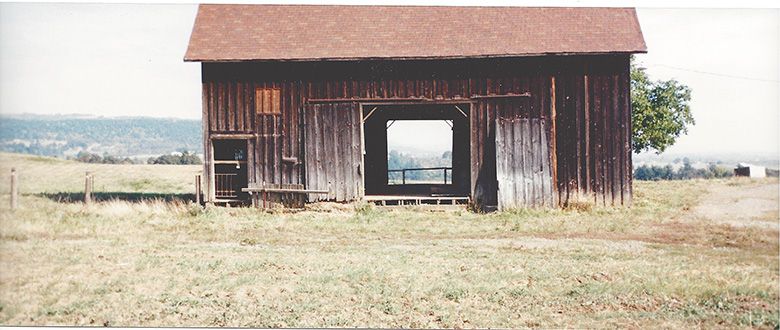
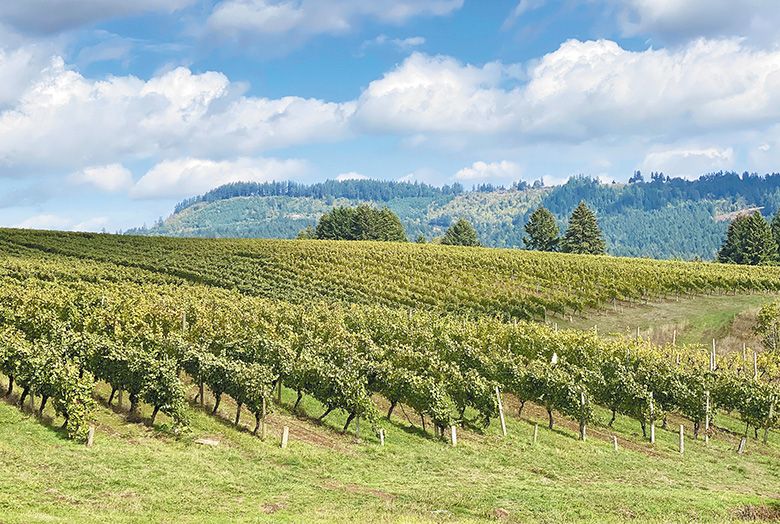
Ribbon Ridge is an island-like formation rising 683 feet above the Chehalem Valley floor, bounded on all sides by creek valleys. Colby Carter, an early settler from Missouri, named the ridge in 1865, and it evolved into a farming community growing a range of crops, including walnuts, prunes, hazelnuts and Christmas trees.
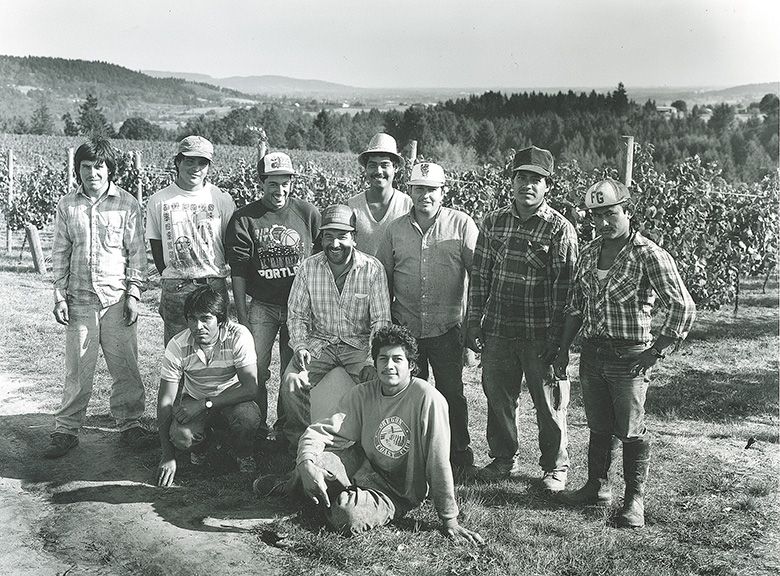
Peterson-Nedry founded Ridgecrest Vineyards by planting the first dozen acres in 1982, long before anyone considered drawing an appellation boundary around it. Michael Etzel of Beaux Frères arrived four years later. Brick House Vineyards’ Doug Tunnell came next, planting his 40-acre estate in 1990 with a maverick commitment: farming the entire property organically. The wines from the area share distinct characteristics.
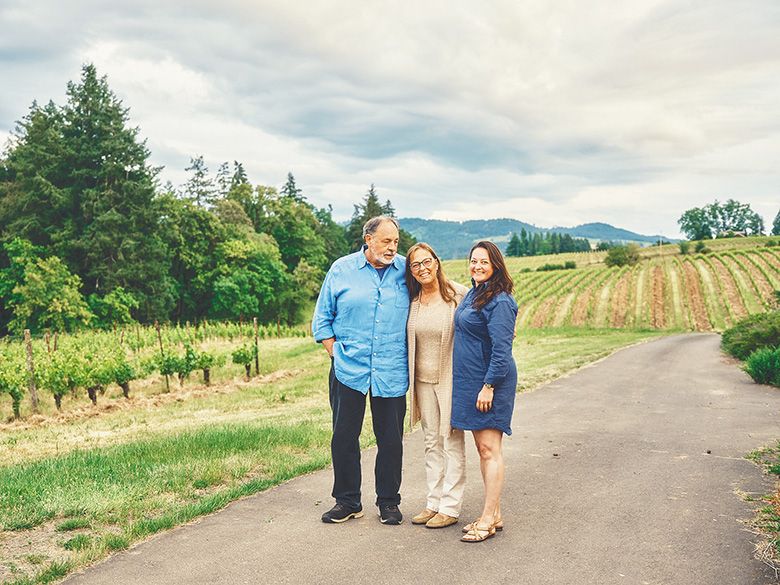
The conversation about formalizing that distinction began in earnest around 2001. “From the beginning, several of us believed Ribbon Ridge was very unique. It produces exceptional grapes; complex and structured, intensely fruited, 3D in nature and particularly consistent,” shares Peterson-Nedry. He joined Tunnell and Dewey Kelly (of Ribbon Ridge Vineyard) in leading the petition effort. “Everyone on the ridge was consulted in multiple meetings to get full buy-in,” Peterson-Nedry recalls.
DISTINCTIVE GEOGRAPHY
Ribbon Ridge is a nested AVA within a sub-appellation of both the Chehalem Mountains and Willamette Valley. The designation confirmed what the growers long believed: Ribbon Ridge was not merely part of the surrounding Chehalem Mountains formation. “When standing on our deck and looking across a valley to the Chehalem Mountains, the geological difference is obvious,” observes Savannah Mills, winemaker at Brick House Vineyards, president of the Ribbon Ridge Winegrower’s Association, and Doug Tunnell’s niece.
Ribbon Ridge measures 3.5 miles long by 1.75 miles wide, with roughly 650 acres currently under vine. The geology is uniform, consisting of marine sedimentary soils, predominantly the Willakenzie series, laid down in the upper Eocene era. “It’s one of the few AVAs that’s entirely one soil type,” reports Ridgecrest Vineyards’ co-owner and winemaker, Wynne Peterson-Nedry. As a result, “the wines are relatively uniform in their characteristics.” The compact size of the AVA means there’s minimal variation in elevation, further promoting consistent fruit.
Daniel Warnshuis, founder of Utopia Estate Winery and former president of the Ribbon Ridge Winegrower’s Association, explains, “the finely textured siltstone and sandstone, with thin topsoil, causes the vines to stress, creating darker fruit with more concentration.”
The ridge’s topography provides an additional layer of protection. Its higher elevation shields it from weather extremes and allows for air and water drainage on all sides. Camille Stabler, general manager at Eminent Domaine, points to the interplay of sun and cold. “We get plenty of sun exposure, but also evening temperature shifts, keeping everything fresh. This provides a depth of flavor and complexity.”
Morning fog lingers at lower elevations before burning off, and the rain curtain created by the ridge itself, as Warnshuis notes, makes the appellation “a little bit warmer and drier than the surrounding Chehalem Mountains, helping us ripen our fruit in a cool climate.”
Bruno Corneaux, founder, owner and winemaker at Domaine Divio, came to Oregon from Burgundy in 1996. He was immediately drawn to Ribbon Ridge, where the soils reminded him of Burgundy. “It had the highest level of clay I could find in the entire Valley.” That clay, he asserts, retains water during dry stretches and encourages roots to go deeper as the soil dries. These conditions produce “floral notes and silky tannins.”
DISTINCTIVE WINES
These wines, across producers and vintages, highlight the subtle distinctions shaped by different growing practices and winemaking styles, making it an intriguing destination for the detail-oriented wine enthusiast to explore. While “you can make slightly different wines,” Harry Peterson-Nedry observes, “in general, they share basic similarities.” He describes the Pinot Noir crafted from his vineyard in vivid terms. It’s “deeply saturated and three-dimensional, like dusty blackberries growing on the side of a gravel road.
Stabler notes, “there’s a uniquely silky, beautiful finish within all the wines that come off the hill.”
Warnshuis points out the aromatic dimension. “Ribbon Ridge has particular floral– rose petal and geranium– aromatics that complement the vibrant fruit, resulting in lovely wines.”
Ribbon Ridge has earned a reputation for superior quality. On average, Wine Spectator scores wines from the AVA higher than those from surrounding appellations, and Stabler notes many Ribbon Ridge wines have earned “crazy scores.” She’s quick to add perspective, saying, “I don’t know if scores are driving sales the way they once did. At some point, you must be confident in what you’re doing.”
Pinot Noir dominates, accounting for roughly 68 percent of plantings, but white wine ambitions on Ribbon Ridge deserve equal attention. “Pinot is king, Chardonnay is the darling, plus some really fun options,” states Stabler, from Grüner Veltliner to Grenache to sparkling and more. A focus on Aligoté earned Domaine Divio an invitation to join the prestigious Les Aligotéurs, becoming the only producer outside Burgundy admitted to the French association devoted to the variety. Harry Peterson-Nedry is emphatic that “our white wines shouldn’t be discounted. This AVA is the source of multiple outstanding still and sparkling bottlings.”
THE GREEN ETHOS: A DEFINING COMMITMENT
Ribbon Ridge is not merely defined by the soil, but also by how its growers tend it. From the earliest days of the AVA, its founders incorporated an environmental ethic into the area’s identity through the Ribbon Ridge Statement of Principles– a set of voluntary commitments to low-impact techniques that reduce “dependence on outside inputs of all kinds” and “our reliance on agricultural chemicals.” (See sidebar for more details.)
“I’m fairly certain the majority of our vineyards farm at least organically, or some version of sustainable, regenerative or biodynamic,” reports Mills. “I think there’s a purity to the wines that shows through based on that.”
Stabler adds, “The owners are living on their vineyards, farming grapes on the land where they also drink the water and raise their kids. We’re really conscientious of how we farm.” That combination of personal stake and professional pride, she suggests, is what distinguishes Ribbon Ridge from other appellations.
A COMMUNITY OF PRODUCERS
Perhaps due to its geography, Ribbon Ridge is exceptionally close-knit and supportive. Mills speculates that’s because it’s always functioned as an agrarian community. “The ridge once had its own school; I think north of our property. The dance hall was on the Beaux Frères property,” she notes. “In the late 1800s, a group of men would fish, sharing their catch with all the neighbors. I think it’s really special how this little ridge has always been tight-knit.” It’s a simple heritage of neighbors knowing one another, sharing equipment and looking out for each other’s operations– a mutual reliance small farming communities have always depended on.
Wynne Peterson-Nedry shares, “I know all of our neighbors, all our neighbors know us. If a tractor breaks down or car gets stuck, you have lots of friends up here. It feels like the original wine community from the eighties or nineties where you just are friends with everybody and help everybody out.”
A remarkable roster of celebrated producers: Beaux Frères, Brick House Vineyards, Patricia Green Cellars, Trisaetum Winery, Utopia Estate Winery, Domaine Divio, Eminent Domaine, Ridgecrest— all operate within a few miles of one another. “We have some very early pioneers of the Willamette Valley wine scene here,” acknowledges Warnshuis, citing Peterson-Nedry, Tunnell and Etzel alongside later arrivals including Tony Soter and the Jackson family. “All on this very tiny patch of dirt that’s not getting any bigger.”
21 YEARS LATER
In 2002, Ribbon Ridge had three commercial wineries and 286 planted acres. Today, the Ribbon Ridge AVA website lists 33 wineries and vineyards. The bottles from those producers appear not only on local shelves but in restaurants and wine shops across the country and abroad, and are often lauded by wine publications. Harry Peterson-Nedry is characteristically understated about what’s been accomplished. Scores and accolades don’t interest him much. “The reward,” he declares, “is having somebody come back and buy a second case of wine, and then a third case, and a fourth case.”
The AVA’s 21st year is also a moment of institutional renewal. Mills is enthusiastic that “getting the board refreshed and getting some of the younger voices who’ve moved to the ridge, drawn here by the foundational brands — it’s good to grab hold of that energy and put it to use for community benefit.” This August, the association will host a ridge-wide crawl, inviting visitors to work their way through the wineries, collect stamps and experience the appellation at its most welcoming. The ridge has also expanded beyond wine: a brewery and two distilleries reside alongside the many vineyards.
For Warnshuis, the trajectory is clear. “As the overall recognition for Oregon wines grows, and as we do a better job of differentiating the nested AVA characteristics and hence the wines they produce, the more valuable all of that will be to the consumer.”
Ribbon Ridge, with its ancient soils, pioneer founders, next-generation winemakers and unshakeable identity, is mature, established and continuing to bloom. As Heather Meader, co-owner and co-founder of Eminent Domaine expresses it, “it’s kind of a shining star as far as just being really small and distinctive.”
Explore Ribbon Ridge
Win wine, merch and tastings during this month’s Roam the Ridge event. The more you places you visit, the more chances to win. Details and participating wineries at RibbonRidgeAVA.org
Ribbon Ridge Winegrower’s Association Statement of Principles
We the winegrowers of Ribbon Ridge, recognize the unique nature of soils and micro climes of our American Viticultural Area.
We undertake to farm our vineyards in ways born of respect for the earth and all the creatures that share these hillsides with us.
We acknowledge the limits of our soils and accept reducing yields in harmony with these limits will create wines more expressive of our unique location.
We honor the principle of minimal intervention in the natural system that nurtures our vines. This includes reducing dependence on outside inputs of all kinds.
We undertake to reduce our reliance on agricultural chemicals including employing organic weed control practices; deep tilling by hand or with a mechanical weed bar to eliminate chemical herbicides from our land.
We consider the waters of the Ribbon Ridge watershed to be a precious and limited resource and pledge to engage in practices to preserve them.
We consider irrigation to be a tool to be used sparingly, when our vines are in their early years of establishment or when extreme weather conditions prevail.
We acknowledge the great contributions of our farm workers in this pursuit and pledge to be mindful of their well-being while in the field and the needs of their families in securing a better life through work with us on our farmland.
We recognize the importance of balance in all living things and strive to achieve it in our vineyards, our wineries and our wines.
After living in Denmark, the Netherlands, L.A. and the Bay Area, writer Annelise Kelly settled in Portland, where she delights in food carts, Douglas firs, dancing and getting crafty. Thanks to Annelise’s broad interests, her career path has weaved through cooking, events, technical writing, decorative painting and retail display. Wanderlust takes her across borders and oceans every chance she gets. Connect with Annelise at annelisekelly.com.