Life After Death
How this funeral director became a winemaker
By Aakanksha Agarwal
After careers in funeral service and event planning, Samantha Maiden returned to the Walla Walla Valley to steward one of its oldest vineyards and to lead a winery. At Windrow Estate near Milton-Freewater, old vines, bold Bordeaux blends and a fiercely local philosophy are shaping a new chapter for a historic site.
Samantha Maiden noticed the smell of the soil when she stepped onto Windrow Vineyard for the first time. Having grown up merely three miles down the road, she never planned to return. Yet, standing at the end of the driveway that morning, “I walked onto this property and the dirt smelled like my childhood,” Maiden recalls.
It was visceral enough to override years of distance. As a teenager, she vowed to leave Milton-Freewater for good. At the time, she felt few opportunities existed in the small farming town. But the vineyard, and the life she imagined around it, slowly drew her back.
Today, Maiden is the owner and winemaker at Windrow Estate, stewarding a vineyard whose oldest Cabernet vines were planted in 1981. The site sits at the base of Walla Walla’s Blue Mountains, where the wind blows through basalt-laced soils and diurnal temperature swings from day to night retain acidity while ripening grapes slowly and evenly. For decades, the fruit from these vines helped build the region’s reputation. Now Maiden is writing the vineyard’s next chapter.
After high school graduation, Maiden enrolled in a Portland mortuary school, eventually becoming a funeral director. The transition into wine would come years later.
“From taking care of the dead to learning how to keep something alive and creating a beautiful wine, the chemistry felt backwards at first,” Maiden says with a laugh. “But I can tell you it smells a lot better.”
Funeral directing required a level of emotional endurance that shaped her early career. The work meant helping families navigate grief and loss, often during the most difficult moments of their lives. Over time, she notes, the emotional weight of the job started taking a toll.
She shares, “The weight of what I took on was so large that even though I was providing comfort to families, it was taking away comfort from my own life.”
Eventually, Maiden returned to school for an MBA. During that time, she was approached about buying a Portland wedding and event center. The move unexpectedly shifted her career from mourning to celebration. She began coordinating weddings, retirement parties and other life events, experiences that reshaped her idea of hospitality.
The work also introduced her to the social rituals surrounding wine and gathering. “Wine brings people together,” Maiden observes. “There’s nothing like sharing a bottle of wine with good friends on the porch on a really beautiful day.”
As Maiden began raising children, the Valley she once wanted to escape looked different. Returning to a community she understood and being closer to family held more weight. “I had a hard time watching the locals start to retire without any real local investment,” she states. “I wanted to come back and put my efforts into the community I really cared about.”
Windrow Vineyard appeared almost unexpectedly.
In 2021, Maiden flew to the Valley with her cousin and now business partner, Karra Blair. The two arrived on a small commuter plane from Portland and drove out to the property together.
“We hopped a little tiny puddle jumper from Portland, and I brought her onto the property,” Maiden recalls. “And we fell in love with it.”
The purchase almost didn’t happen. “I found out I was pregnant on a Monday,” she adds. “And by Thursday, I received a call from the real estate agent saying the vineyard sale might be available after all.” But there was one catch. “Only if I could close in seven days,” Maiden marvels.
The timing was surreal. “In the same week, I found out I was having a baby and buying a winery.”
Maiden did not arrive with formal winemaking training. Instead, she began learning quickly, leaning on consultants while enrolling in online coursework and classes through Walla Walla Community College. The vineyard itself, however, offered a strong foundation.
“The beauty of my vineyard is that it’s old and the fruit is very high quality,” she observes. Maintaining the quality of the fruit out in the vineyard and extending that care into the cellar, she believed, could lead to strong wines as she learned the craft.
Windrow’s first full estate vintage was harvested in 2023, with several wines bottled in late 2024. The wines are reaching the market this year. “The wines are tasting beautiful,” Maiden shares.
Her winemaking style leans toward powerful reds. Cabernet Sauvignon performs especially well on the property, where hillside plantings and limited rainfall produce small berries and concentrated fruit.
“We have beautiful soil and big diurnal shifts,” Maiden explains. “We can stress the vines to get very small berries.”
Different Cabernet blocks planted decades apart supply various blending options. Some vines contribute bright fruit and acidity, while others bring deeper structure and tannin. The oldest block produces a softer, layered expression of the vineyard.
“When you can play with all three of those and blend something each year, you get something pretty magical in your glass,” she notes.
Even while focusing on Bordeaux-style reds, Maiden has begun experimenting in the cellar. One project started as a personal challenge. Not naturally drawn to white wines or rosés, she began exploring alternative styles that might appeal to her own palate.
After tasting a white wine made from Cabernet Franc elsewhere in the Columbia Valley, Maiden decided to attempt a version of her own. The result is Blanc Franc, a white wine made from Cabernet Franc grapes harvested early and pressed immediately off their skins. She also produces rosé from Petit Verdot and plans to experiment with Charbono and possibly white Merlot in future vintages. One upcoming red blend, called Ramming Heads, combines fruit from two historic vineyard blocks. “It is incredible,” Maiden says simply.
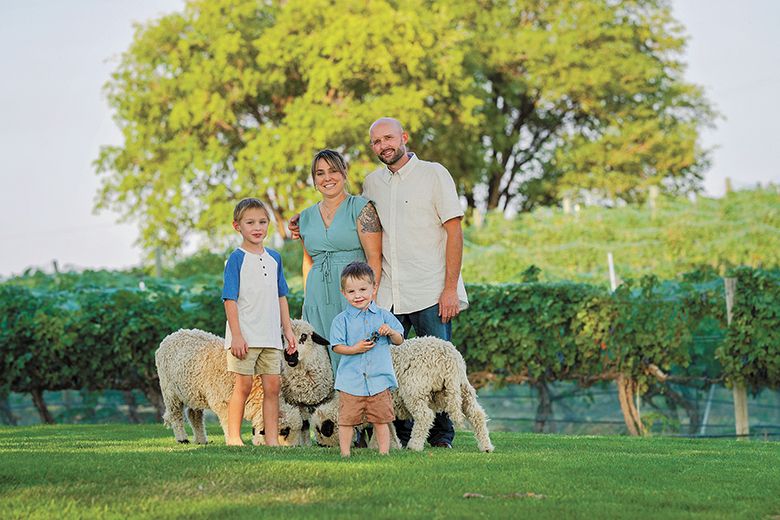
As the wines evolve, so does the farming. Maiden has begun reshaping vineyard practices to emphasize sustainability and biodiversity. She is working toward Salmon-Safe certification and experimenting with strengthening soil health and vineyard ecology. Wildflowers now grow between rows to encourage beneficial insects, and sheep graze beneath the vines, trimming leaves and suppressing weeds while contributing organic material to the soil. “They help push down the weeds,” Maiden says. “And it has been amazing.”
The vineyard team reflects another shift. Windrow is now owned, operated and farmed entirely by women, with vineyard management led by Sadie Drury of North Slope Management. The crew lives in the local community and receives benefits, an approach Maiden sees as central to the vineyard’s future. “Taking care of the people who live here is important,” she asserts.
That belief traces back to her childhood. Her stepfather, an emergency room physician, was for many years the only Spanish-speaking doctor in the Valley and often treated vineyard workers who lacked many resources.
“My dad used to have vineyard workers show up at our house without any health insurance,” she recalls. “He would do procedures on the kitchen table.”
Owning a vineyard has not been easy. The death of a winemaker disrupted long-standing grape contracts, leaving Maiden scrambling to rebuild a client base for Windrow’s fruit in a changing wine market. “The market has changed drastically since we bought,” Maiden reports.
Still, she remains deeply committed to the land and work required to sustain it.
“I take care of the living,” she adds. “It is important to me that I put everything I have into what I’m doing.”
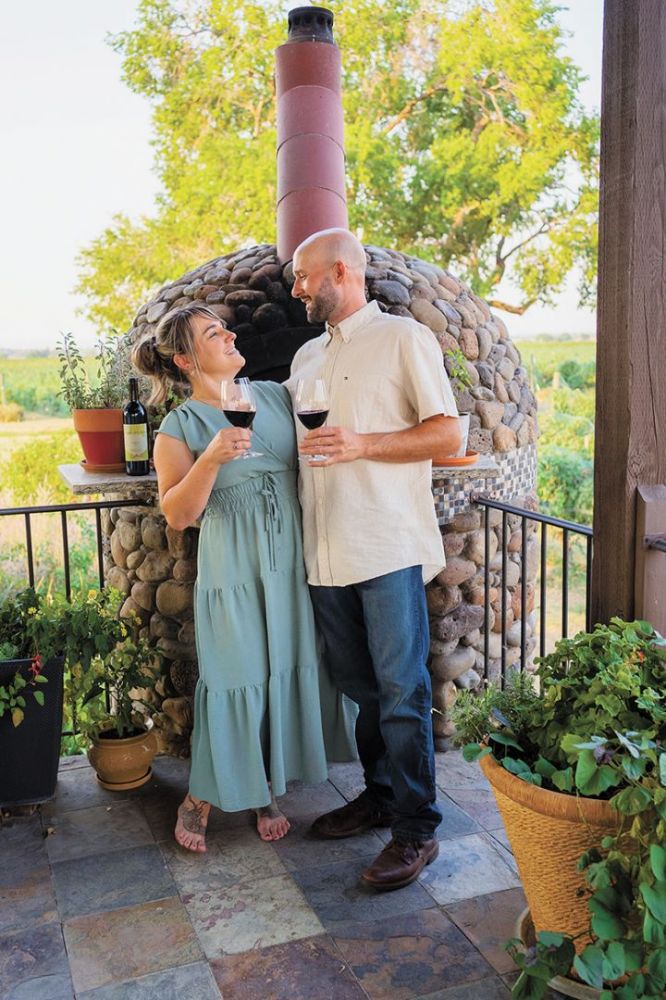
Visitors arriving at Windrow taste in a space that was once Maiden’s house. Guests gather on a wide porch overlooking the vineyard rows, often with Maiden herself pouring the wines.
“It’s more like walking into a big, beautiful house,” she states. “We want people to come stay a while, enjoy being here, come back.”
For Maiden, the vineyard’s future is closely tied to the future of Milton-Freewater itself. She hopes the region continues to grow while maintaining the qualities that make it distinctive.
“What makes the area special is that it’s not very big,” she says. “The sense of community is beautiful. The lack of pretension is beautiful.”
Looking ahead, she hopes to welcome more visitors and continue refining the wines from Windrow’s old vines. Ultimately, she hopes that anyone opening a bottle years from now experiences something deeper than flavor alone.
“I hope they can feel the intention and love in that bottle,” Maiden shares. It took, after all, an unlikely path to get there. “A lot of work. A lot of sleepless nights,” she adds. “But that’s what I hope they feel.”
Windrow Estate Winery
52015 Seven Hills Rd., Milton-Freewater
Thurs.–Sat. 11 a.m.–5 p.m.
windrowestate.com
(509) 593-0162
Aakanksha Agarwal is a wine, travel and lifestyle writer from India. Formerly a Bollywood stylist, she now resides in the U.S., embracing writing full-time while juggling family life and indulging in her passions for cuisine, literature and wanderlust.