Inclusion Served Here
Why Oregon wineries are embracing alcohol-free options
By Annelise Kelly
Wine is rich in enjoyable aspects, such as diversity, craftsmanship and terroir. The good news is we can enjoy these elements even if we’re moderating our alcohol intake. Welcome to the world of nonalcoholic wines, where the complexity and nuance we expect in wine are increasingly preserved with technology.
Brooks Wine, a winery in the Willamette Valley’s Eola-Amity Hills, is focusing on craft nonalcoholic, or NA, beverages during its year-long Sip & Savor program.
Each quarter, the winery hosts a roundtable of experts on the topic, along with book signings, demonstrations and tastings. During select weekends, Brooks also offers special menu pairings of several dishes specifically with NA wine.
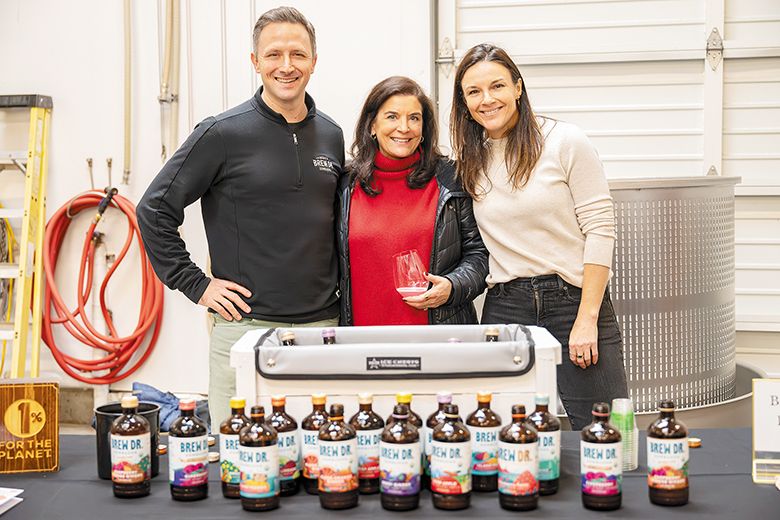
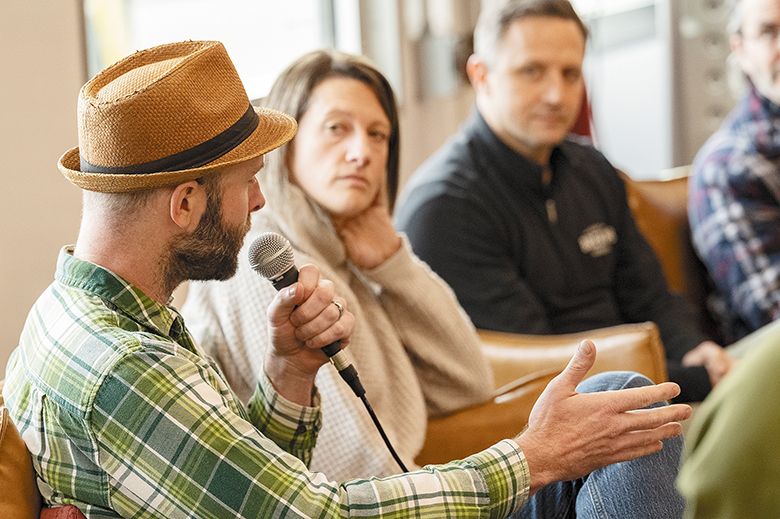
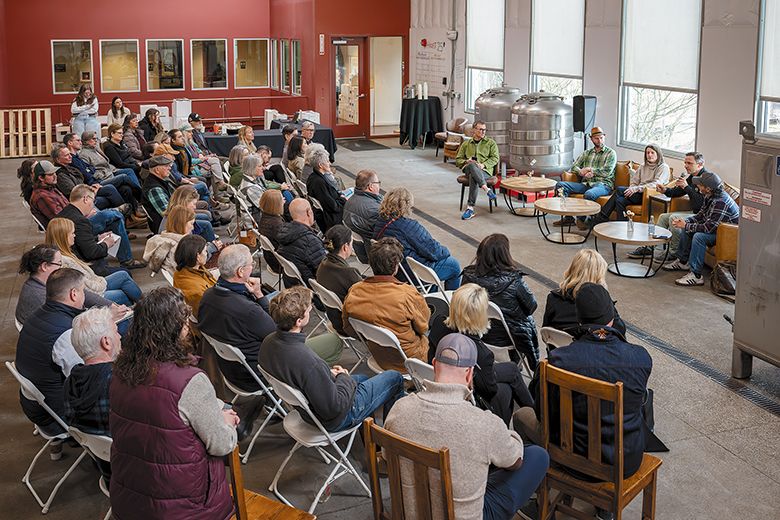
This January, an audience of more than forty people gathered at Brooks to listen to the first panel discussion. Moderated by Clive Pursehouse, U.S. editor of Decanter magazine, it featured four speakers: Cyler Varnum, founder and winemaker at Varnum Vintners; Matt Thomas, founder and brewer at Brew Dr. Kombucha; Ari Walker, founder and president at DHŌS Spirits; and Joanna Engel, associate winemaker at Union Wine Company.
Welcomed with a glass of NA bubbly from Well Played Wines, guests heard an informative dialogue among the panelists, followed by an interactive Q&A. After the discussion, attendees sampled NA beverages at a series of stations, each providing the opportunity for lively conversation with the makers. Lastly, DHŌS Spirits provided a cocktail demo, serving up tart, vibrant nonalcoholic French 75s.
MAKING NA BEVERAGES
The panel explained how nonalcoholic craft beverages can be made by adding or subtracting.
DHŌS makes spirits using an additive process by combining various herbs, spices and citrus. While some wines are made with this method, wine panelists Varnum and Union employ a subtractive process. After conventionally fermenting wine, both companies then remove the alcohol. Brew Dr. Kombucha follows the same process. (Readers may recall the Whole Foods Market recall of 2010, when authorities found some commercial kombucha brands with alcohol levels as high as 3 percent, significantly above the legal 0.5 percent limits.)
There are three common techniques for removing alcohol: spinning cone technology, vacuum distillation and reverse osmosis. Currently, Brew Dr. dealcoholizes 16 flavors of craft kombucha using spinning cone column distillation equipment, the only system of its kind in Oregon. It also contracts with wineries creating NA wine. According to Thomas, “it’s the most delicate way to remove alcohol without changing the liquid.”
At less than 0.5 percent alcohol, NA drinks are considered food products rather than wine. These beverages are governed under different regulations, so they include an ingredient list and nutrition facts, including calories, on the label.
WHY CONSUMERS EMBRACE NA BEVERAGES
In part because wine consumption has decreased by 20 percent since 2020, DHŌS Spirits has conducted extensive research into drinking habits, interviewing 2,500 former wine drinkers, notes Walker. While the largest cohort was motivated by sobriety, the second largest group is composed of “purity” wine drinkers, primarily ages 35 and younger, who are interested in organic and biodynamic farming practices yet not price-driven. Walker says the way to bring these drinkers back is by offering “certifications, transparency and NA alternatives.”
Jen Cossey, general manager at Brooks, believes many wine drinkers value “conscious consumption.” She explains, “I feel strongly that it isn't about either/or. It's not about black or white, or we don't drink or we do drink, or that alcohol is good or bad for you. Rather, how do we incorporate it into our lifestyle in a way that makes sense for all the things we want to accomplish?” She found some visitors will enjoy a glass or a flight of conventional wine before switching to NA to prolong the convivial experience of enjoying time with friends in wine country.
Some mixologists add NA spirits like those crafted by DHŌS to reduce a cocktail’s alcohol level rather than making it alcohol-free. Thomas observes, “our wearables are telling us not to drink,” so people want lower alcohol options.
Another consideration, as Engel points out, is “lower alcohol means fewer calories.” Alcohol contains about 7 calories per gram, so removing it drastically reduces calories. Compare roughly 120-140 calories for a glass of red wine versus 20-30 calories in one without alcohol.
Ultimately, the panel agrees consumers crave more options, whether they’re motivated by sobriety, health concerns, pregnancy and breastfeeding, safe driving or another reason.
WHY PRODUCERS EMBRACE NA BEVERAGES
Producers respond to consumer interest, and winemakers are driven to welcome people to the table. “It's brought inclusion,” notes Varnum. “Having something for everybody is something that's kind of paramount to our business. Having a nonalcoholic beverage really extends the scope of who we can appeal to and include.” He’s discovered it can retain customers who remain interested in wine but are no longer drinking alcohol.
At Brooks, “we have offered an NA cocktail for years in the tasting room,” reports Cossey. “Unfortunately, I felt like it sort of called out people drinking something different from everyone else.” By adding a full flight of NA wine (all crafted by other producers), Brooks ensures “everyone has a very shared experience, whether they are consuming wine with alcohol in it or not. Since rolling out the NA wine flight last year, the response has been really positive. Our wine club members love it.”
Today, “A wine country itinerary might be planned around NA availability,” points out Varnum.
THE SIP & SAVOR SERIES
“Seeing the response from our members, guests and the community was part of the catalyst” for creating the series, recalls Cossey. While planning the Sip & Savor events, she recognized “it's a much larger conversation than NA wine. There are all these other wonderful products being made for lifestyles centered around moderation, conscious consumption and wellness. To be involved with the conversation and create space where people can have that discussion is great. Bringing the community together around wine is at the core of what we do. It’s the reason why Janie [Brooks Heuck] chose to carry on her brother’s legacy after his death. It doesn't always have to center around Brooks Wine, you know? And that's what I think is really wonderful about this series.”
UPCOMING EVENTS
Taste & Influence: Saturday, April 4
Energy & Motion: Sunday, August 2
Ritual & Rest: Sunday, October 11
Buy tickets at www.brookswine.com/sip-savor.
After living in Denmark, the Netherlands, L.A. and the Bay Area, writer Annelise Kelly settled in Portland, where she delights in food carts, Douglas firs, dancing and getting crafty. Thanks to Annelise’s broad interests, her career path has weaved through cooking, events, technical writing, decorative painting and retail display. Wanderlust takes her across borders and oceans every chance she gets. Connect with Annelise at www.annelisekelly.com.