
Finally Legal
Five Oregon wine regions turn 21
By Annelise Kelly
Let’s celebrate five Oregon growing regions hitting their “finally legal” birthdays. In 2004, the Columbia Gorge, Dundee Hills, Southern Oregon and Yamhill-Carlton all received designated status from the organization now called the Alcohol and Tobacco Tax and Trade Bureau, and McMinnville was granted status soon after, in January 2005. As each American Viticultural Area, or AVA, officially turns 21, let’s review what makes them special and how they got where they are today.
COLUMBIA GORGE
Established May 10, 2004
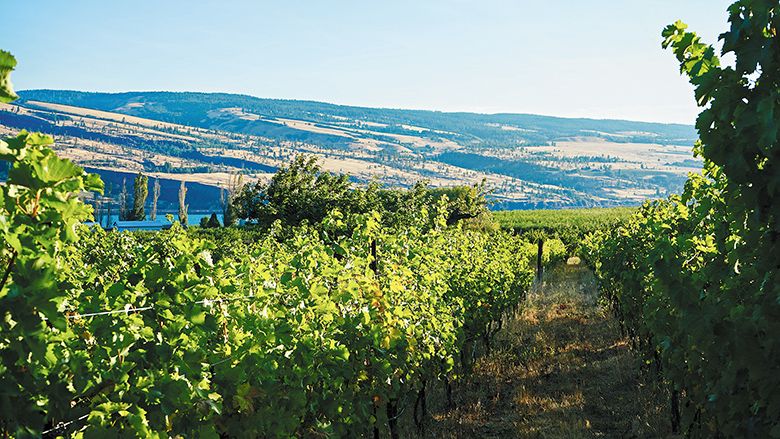
The Columbia Gorge stands out on this list as a bi-state AVA. This river corridor flanks both sides of the Columbia River and has a broad variety of conditions and soil, along with a highly varied climate.
“Our slogan once was: ‘we have a world of wine in 40 miles’ because there is a pocket for almost every variety as you move from west to east,” explains Bob Morus, founder and wine grower at Phelps Creek Vineyards in Hood River. “Whether on the west or east end of this district, where you are matters. Because we are in a transition zone between the Cascades and the high desert, we don’t share common grapes or even a similar climate. Here on the west end, we get 36 inches of rain annually. But the east end of the district, only 30 miles away, receives a mere 10 inches of rain and significantly more heat. Diversity is a defining characteristic of this region.”
The dramatic landscape, with forested cliffs and waterfalls in the west and exposed basalt columns in the east, was drastically impacted by the Missoula Floods. As an ice dam near Missoula, Montana, repeatedly developed and broke, huge volumes of water from a massive lake rushed through the Gorge between 18,000 and 12,000 years ago. These colossal floods carved steep-sided cliffs and widened the valley while depositing sand and gravel picked up along the way. As a result, the soil types here include volcanic rock, lahar, loess, silt and sand. Vineyards, planted at elevations ranging from sea level to 2,000 feet, yield further diversity while persistent winds create a cooling, drying effect.
“This relatively small geographical area has many microclimates,” states Morus. “On the west end, we experience a cool climate ideal for Pinot Noir, Chardonnay, Pinot Gris, Riesling and Gewürztraminer. Travel to the east end and you’ll discover Zinfandel, Cabernet and Merlot. In the middle, we have Rhône varietals, including Grenache and Tempranillo.”
Why is the Columbia Gorge AVA worth a visit? “Well, we're such a spectacularly beautiful area. We encourage visitors to explore the different styles, terrains and wine varieties. What you do have in common is a lot of passionate winemakers,” declares Morus.
DUNDEE HILLS
Established Nov. 30, 2004
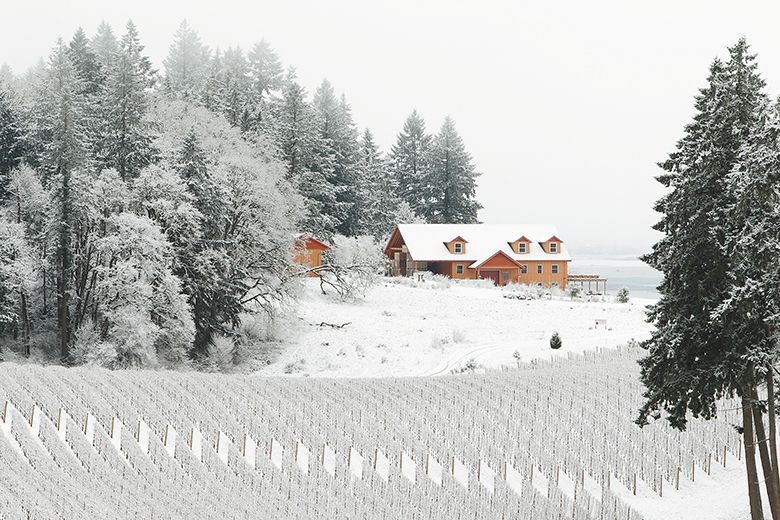
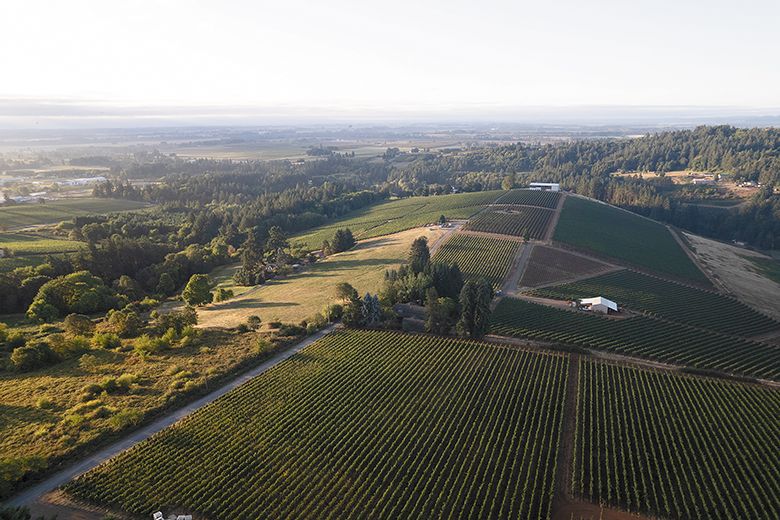
The Dundee Hills is one of 11 nested AVAs within the larger Willamette Valley. Located north of Highway 99W, the region is bordered by three additional designated growing regions: Yamhill-Carlton to the west, Ribbon Ridge to the north and Chehalem Mountains to the east.
David and Diana Lett established The Eyrie Vineyards in 1965 with Pinot Noir and Pinot Gris. They were quickly followed by the Erath, Knudsen and Sokol Blosser families. The area’s wine reputation was cemented after The Eyrie Vineyards 1975 South Block Reserve Pinot Noir ranked near the top of a blind tasting hosted by French magazine Gault-Millau in 1979.
Burgundian varietals deliver peak expression here. In addition to Pinot Noir, the region offers excellent Chardonnay, Pinot Gris, Pinot Blanc and sparkling wine.
The crest of the hills runs north-south, and the ancient, complex Jory red soil combined with the cool climate, nourishes top-quality, slow-ripening grapes with distinct acidity.
“When I think about terroir, it's not solely soil or climate, it's the interaction between them,” observes winemaker Russell Gladhart, co-owner of Winter’s Hill Estate with his mother, Emily. “We've got basalt bedrock and Jory soil. We’re also separated from the coast range, which means we’re slightly warmer. We’re fortunate to be close enough to the Van Duzer Corridor for its coastal breezes to reach us, creating an ideal combination of soil and climate working together to produce our wines.”
What makes it unique? “The Dundee Hills really stands out because of our variety of wineries. Very small wineries producing a few hundred cases neighbor large international companies with wine production on several continents and distributed across the world,” shares Gladhart. “The region's physical beauty and compact density add to the appeal. Visitors can easily stop at multiple wineries, driving less than a mile between each.”
While other varieties are planted, he quips, it’s primarily “Pinot Noir, Pinot Noir, Pinot Noir. It’s what made our name here in the world of wine.”
SOUTHERN OREGON
Established Dec. 8, 2004
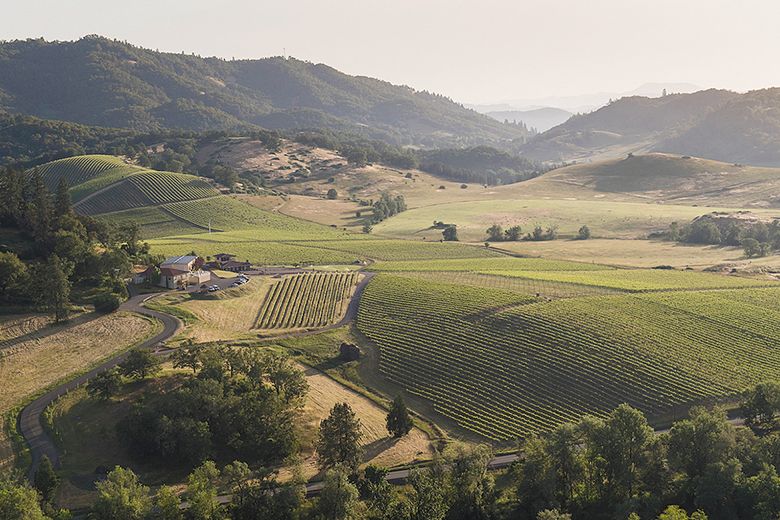
The expansive Southern Oregon growing region includes five nested AVAs: Elkton Oregon; Red Hill Douglas County, Oregon; Umpqua Valley; Rogue Valley and Applegate Valley (see sidebar). It stretches 125 miles northward from the California border, is 60 miles wide and covers part of three counties.
CEO of Abacela, Greg Jones, Ph.D., also serves as chair of the Oregon Wine Board and board member of the Umpqua Valley Wine Growers Association. Before joining Abacela, he spent many years in academia as a viticultural climatologist and atmospheric scientist.
Jones co-wrote the petition to create the designated area with father, Earl, founder of Abacela. They were motivated to solve the area’s obscurity problem. “We were producing great wine, but take a bottle to Chicago, Atlanta, New York, Boston, wherever, and say, ‘I'm from the Umpqua Valley,’ or ‘I'm from the Rogue Valley,’ and people would ask ‘Where?’ We decided to build a framework around our region, Southern Oregon, which is uniquely different from the Willamette Valley and Eastern Oregon. Doing so helped us become recognized geographically.” Thus, the appellation was launched, in part, to allow Southern Oregon’s two principal winegrowing regions– the Umpqua and Rogue valleys– to jointly market themselves, despite not even being physically adjacent. Producers can now use multiple AVAs on their labels, providing greater clarity to consumers. For example, a winery has the option of listing both “Umpqua Valley AVA” and “Southern Oregon AVA” on a label.
While working as a professor at Southern Oregon University, one of Jones’ first projects was documenting all the vineyards in the region as well as “70 distinct grape varieties growing in Southern Oregon.” This wide-ranging diversity is made possible by dozens of distinctive microclimates, four rivers: Umpqua, Rogue, Applegate and Illinois, combined with three mountain ranges of varying ages and structure: the Klamath and Siskiyou Mountains to the southwest and southeast, the Coastal Range to the west and the Cascades to the east and north.
The region, with the warmest growing conditions in the state, is dominated by the “Tempranillo-Syrah-Malbec red varieties trifecta,” according to Jones.
YAMHILL-CARLTON
Established Dec. 9, 2004
Nested inside the larger Willamette Valley appellation (established in 1983), the Yamhill-Carlton AVA was first planted in 1974 by two couples: Roy and Betty Wahle, who established Wahle Vineyard, and Pat and Joe Campbell, founders of Elk Cove Vineyard. Three years later, the Campbells produced the area’s first commercial wine.
Ken Wright, owner and winemaker at Ken Wright Cellars, marvels at how “they were remarkably prescient in choosing Pinot Noir. We’re in this region that is just mind-blowingly special. Pinot Noir loves this place. It wants to be amazing here.”
The balance of conditions in Yamhill-Carlton allows Pinot Noir producers to “win the day with quality. Anything world-class, whether its tomatoes grown in San Marzano or bamboo shoots from Kyoto– there are places where plants have found their absolutely perfect environment,” observes Wright. He also notes how “it takes years to realize real success in your farming. And that's the key, right? No one is capable of making world-class wine from ordinary fruit.”
Factors contributing to Yamhill-Carlton’s superb grapes include the area’s relative warmth, protected by surrounding ridgelines from the cooling Van Duzer Corridor winds. “We don't have those aggressive winds, which can shut the plants down. When the wind rises to 15 mph, the vines close their pores to protect themselves,” explains Wright. As a result, “we usually complete harvest here before neighboring areas. There's a benefit to being ahead of the curve– we often avoid challenging weather experienced by other regions.”
In addition, the sandy marine sediment soil drains quickly, producing a hormonal shift “where all vegetation stops– no new leaves, no shoots, nothing. The vines begin to mobilize stored carbohydrates to the fruit for ripening,” adds Wright.
This soil contributes to early ripening while producing lower-acid fruit, “so the wines from here tend to be very agreeable because there's slightly less acidity.
Texturally, they're very broad on the palate and don't have a lot of angular ‘elbows and knees’ qualities that need additional time to soften,” Wright shares. He also notes how marine sediments create savory notes like tobacco, cedar, leather and chocolate, along with spices such as anise and clove.
MCMINNVILLE
Established Jan. 18, 2005
The McMinnville AVA extends west from the city of McMinnville into the Coast Range foothills. Also in the Willamette Valley appellation, with vineyards up to 1,000 feet in elevation, the area is somewhat cooler and drier than its neighbors.
“It has some of the most unique soils in the Willamette Valley– a combination of marine sedimentary soils with basalt underlays,” states Dominic Allen, tasting room and wine club manager at Maysara Winery and president of the McMinnville Winegrowers Association. “Typically, the higher you go, the more Nekia and Jory volcanic soils you’ll find. Being near the coast range creates a small microclimate providing protection from the rains.” Lower precipitation and Van Duzer Corridor winds decrease the risk of mold and mildew. The breeze also “helps reduce our evening temperatures, thereby slowing down the ripening process and extending our hang time into the fall.”
These factors are expressed in McMinnville Pinot Noirs with “a complex palate of lush red and black fruits– blackberry, currant and pomegranate– plus spice and earth. But they also have a backbone of hardy tannins and bright acidity that allows long-term ageability.”
Allen continues, “Out-of-town guests at Maysara's tasting room often comment on the color of our wines. As the wind blows every afternoon, it causes irritation, causing the grape to develop thicker skins. Grape skins impart color, pigmentation and tannic structure. It’s not always what people expect when they pour a glass of Pinot.”
The Applegate Valley celebrates 25 years
APPLEGATE VALLEY
Established Dec. 14, 2000
The Applegate Valley AVA turns 25 this month. Stretching between Grants Pass and the California border, it’s nested inside the Rogue Valley growing region, within the larger Southern Oregon AVA.
Craig Camp, general manager of Troon Vineyard, notes how “the Applegate Valley is interesting because it's climatically transitional. We are warmer and drier than the Willamette Valley, but wetter and cooler than Northern California. I feel areas like ours grow some of the most interesting wines because we experiment with varieties that might be on the edge of ripening properly.”
He also cites the region’s soil diversity. “The Siskiyou Mountains are ancient, much older than the Cascades. They likely formed near Japan and were pushed across the ocean by tectonic plates before being jammed into our coast. So, you find these very, very old, very complex soil types that vary a lot. Across Troon’s property, we have decomposed granite from the ancient mountains alongside alluvial gravel from old runs of the Applegate River.”
“Climate-wise, we have a shorter growing season with extremely long days during the summer. Those extended days allow varieties like Syrah and Mourvèdre to ripen. However, as we near harvest season, the days get shorter and the nights cool down. We can leave fruit hanging on the vine as the phenolics, tannins and flavors develop and mature without much rise in sugar levels. Applegate wines possess the best classic European balance on the West Coast with restrained alcohol and higher acid. This is why I'm here.”
After living in Denmark, the Netherlands, L.A. and the Bay Area, writer Annelise Kelly settled in Portland, where she delights in food carts, Douglas firs, dancing and getting crafty. Thanks to Annelise’s broad interests, her career path has weaved through cooking, events, technical writing, decorative painting and retail display.Wanderlust takes her across borders and oceans every chance she gets. Connect with Annelise at www.annelisekelly.com.