El Legado del Corazón
The legacy of the heart is within these vineyard stewards' stories
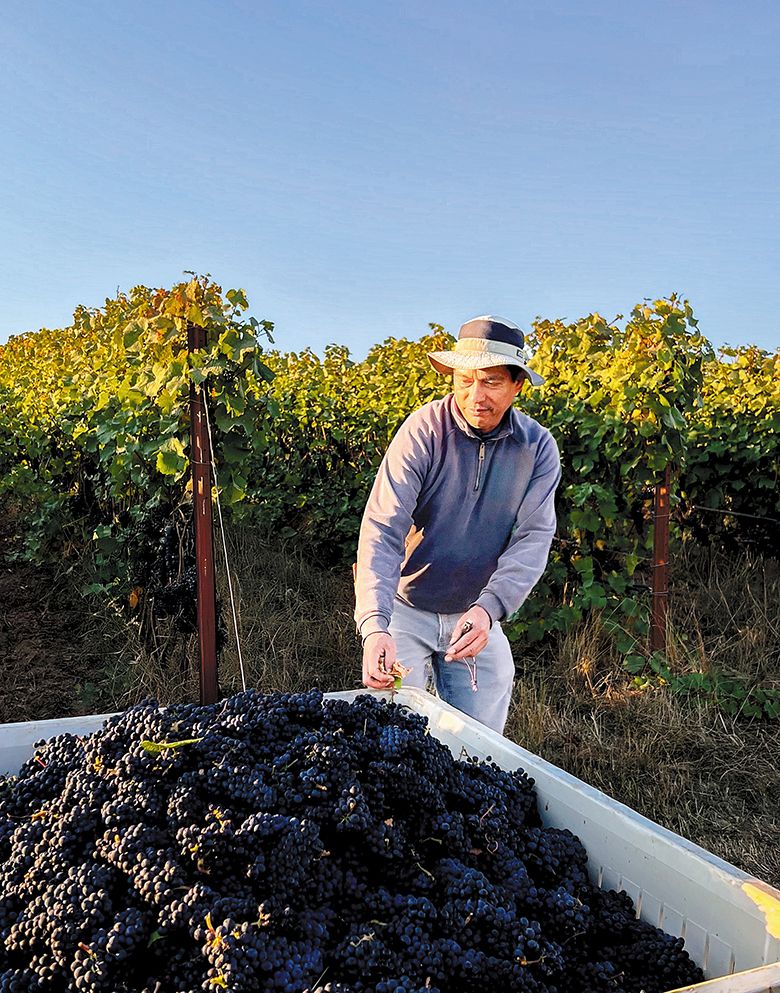
By Luis Romero
Loeza Vineyard
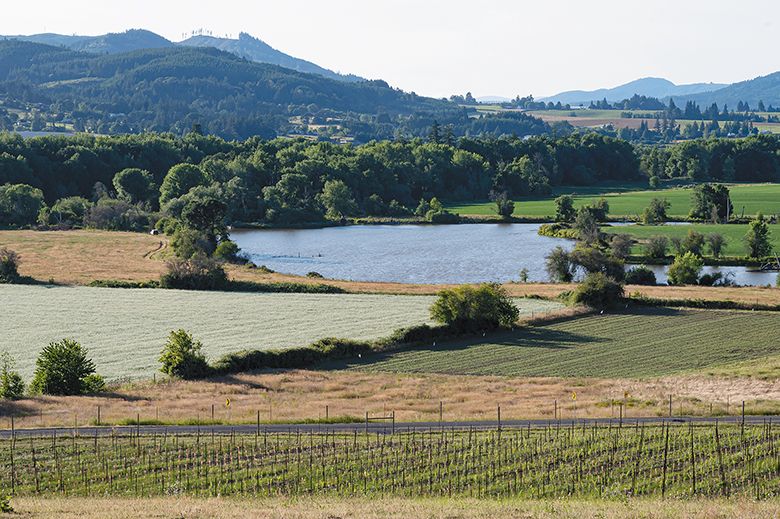
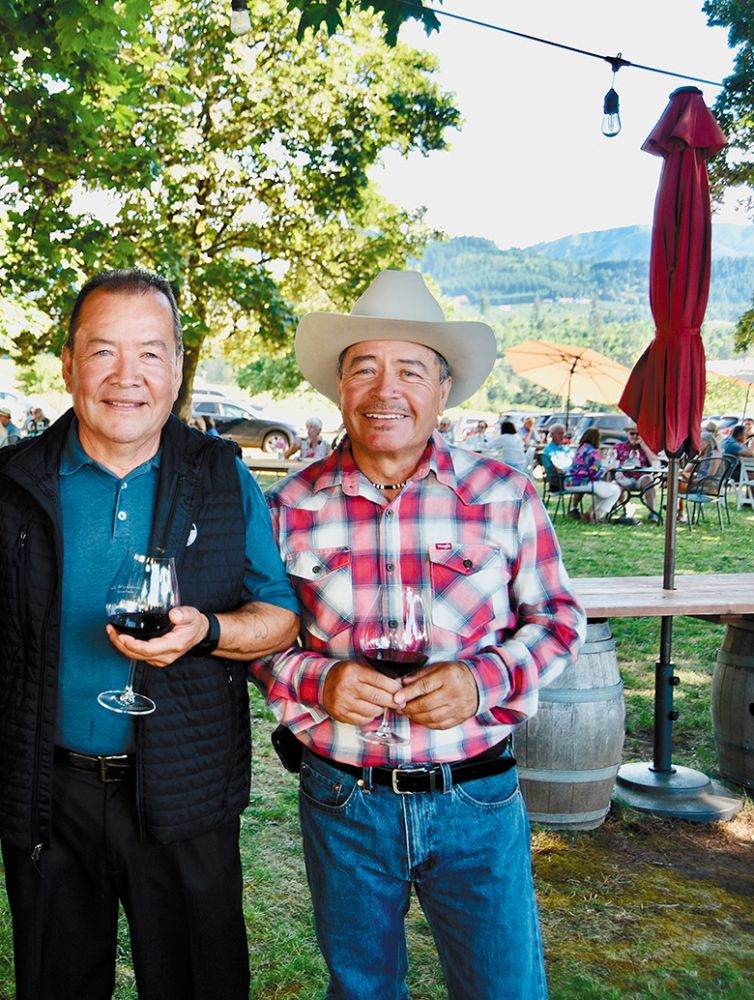
While driving the country roads around Gaston, you may see it– a vineyard called “Loeza.” When choosing vineyard names, owners often name their sites after family or something significant to them.
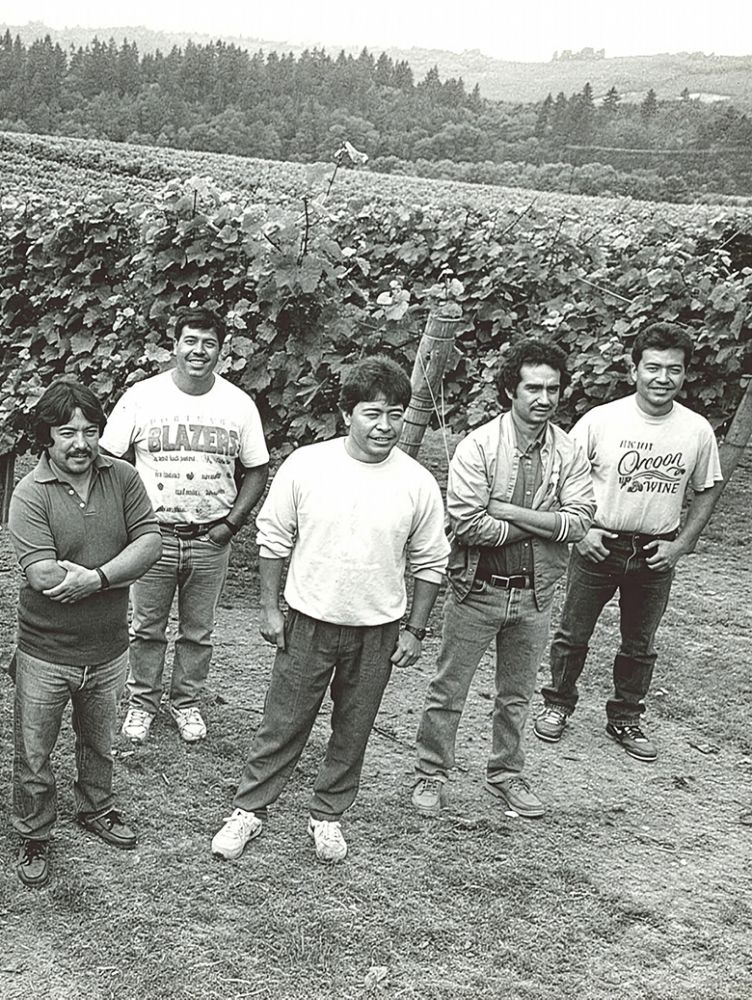
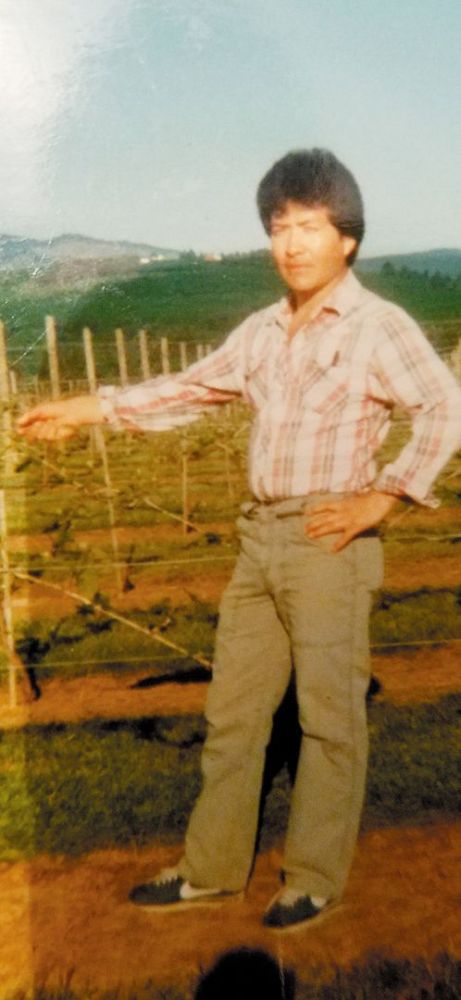
The Loeza Vineyard name comes from a partnership 46 years in the making. Loeza is the last name shared by brothers Efren and Miguel, who, along with their families, have carefully tended the land and the vines of Willamette Valley Vineyards. The story begins in the early days of the Valley with Bill Fuller and the vines he planted in 1973 at his Tualatin Estate Vineyard in Forest Grove. The vines were still maturing when Efren made his way down from the orchards in Washington and worked his first harvest in 1980.
Miguel began working with Efren the following year. Four years later, both brothers were assisting with all aspects of wine production, including bottling, a job done by hand back then. Anyone who has worked in the fields or agriculture knows the work is long and earnest, beginning with the first rays of sun and ending with its shimmering goodbye behind the hills and clouds.
While winery work requires seasonal staff during its peaks, it is a yearlong endeavor for the core players. After harvest ends each year, Efren and Miguel prune the vines as they enter their slumber in December, manage each of the three wire lines during trellis training in March, witness the birth of a new vintage with flowering in May and carefully select which leaves to pull throughout the growing season for improved air circulation and light exposure. The men also manage fertilizers and ideal application timing before harvest.
Efren learned how to sample grapes after veraison, as the seeds harden and are pierced by a knife to assess development. He and Miguel, along with other vineyard stewards, bite into ripening grapes, judging acidity, ripeness and tannin development before fruit is sent to the lab for scientific evaluation.
In 1997, as the Valley was coming into its own, Willamette Valley Vineyards acquired Fuller’s vineyards. Expanding acreage and innovative technologies were reshaping how vineyard work was done. The brothers, like the other men in this piece, navigated challenges and changes, unsure if they would still be needed. Fortunately for them and us, they were.
Of course, decades of tenure are never achieved alone. The brothers are quick to acknowledge and thank those who provided opportunities and support during their career journeys. For Miguel and Efren, it began with Fuller and continued with Jim Bernau, Willamette Valley Vineyards’ founder and president. Efren counts Bernau as being pivotal in his development and education. The men speak with reverence about those who helped them, and I’m confident the latter have similar respect.
With the departure of the previous vineyard manager at Willamette Valley Vineyards in 2000, the brothers’ future felt uncertain. Bernau offered Efren the job of vineyard manager and that of vineyard foreman to Miguel. When Bernau made the offer, Efren’s first thought was concern: could he do the job? Do it properly?
He recalled how Bernau assured the brothers they would be okay if the new setup did not work out. That assurance gave the two men the confidence to accept their new roles. Efren mentioned that after their handshake, he was handed a set of business cards with his new title. Bernau recognized they were the right choice before the brothers knew. The two men remain in these positions 26 years later.
Each brother separately referred to that day as key in their careers. Another significant milestone was the naming of Loeza Vineyard in 2017 as a thank you to their family legacy. The brothers dedicated the property to their father, who worked with them in the fields before his death, and to their sons, who also joined at times over the decades.
From Pulque to Wine
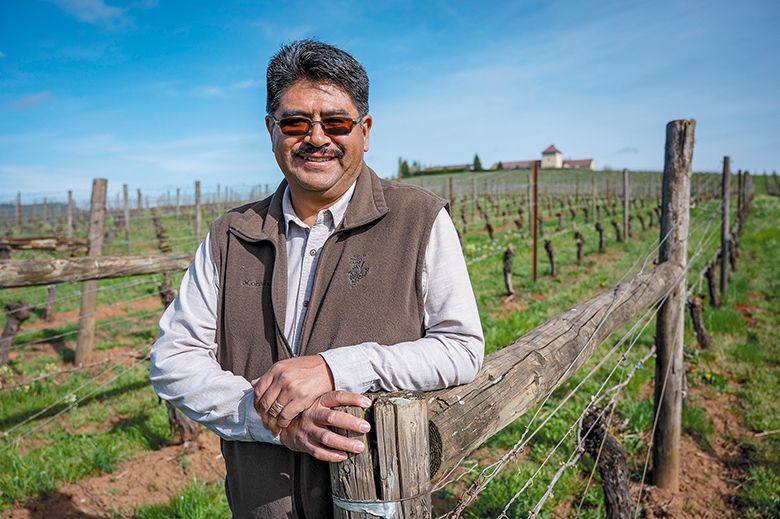
Meliton Martinez’s journey to vineyard manager of King Estate began in Mexico, where his family worked in agriculture, and, at 10 or 11 years old, he learned to make “pulque,” a fermented beverage made from agave. The tradition of “Tlaquisquero,” the person who makes pulque, has been passed from generation to generation by the indigenous people of the region. Martinez moved to Oregon when he was 19.
Like the Loeza brothers, Martinez began working in the vineyard during harvest. The year was 1993. He quickly sought to learn everything about the winemaking process, asking countless questions. While he did not yet speak English, that did not deter his curiosity, as he studied books about winemaking and grape growing while simultaneously learning English.
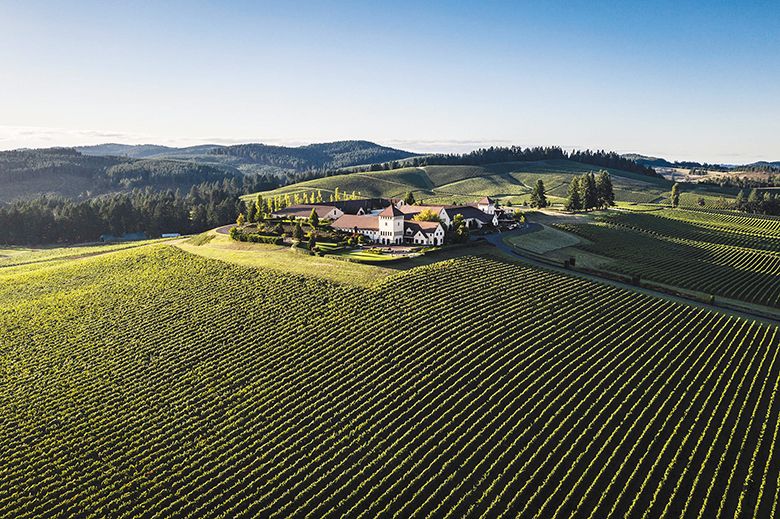
Martinez’s interests and commitment did not go unnoticed. Soon, mentors Dave Mitchell and Brad Biehl took him under their wings. With their support, Martinez’s career grew exponentially, as did King Estate’s vineyard holdings, increasing from 40 planted acres to over 530 today.
When listening to Martinez’s story, the respect he holds for those who helped him and for the vines is evident. Managing North America’s largest biodynamically certified and organically farmed vineyard isn’t always easy. Grape growing has evolved over the years, along with Martinez’s understanding of the land and his position. Six years after working his first harvest, Martinez was promoted to the vineyard manager, a position he’s held for 27 years. He also received business cards to make it official.
Martinez credits his mentors and support from the King family, including Ed King Jr. and Ed King III, as the reason he gets to do what he loves and live in wine country. You can hear his gratitude and happiness as Martinez speaks about the people he works with and the vineyards he manages. He keeps an ease about him despite being responsible for hundreds of acres of vines, crediting technology and tournesol machines to manage the land. Before this equipment existed, the job of turning the soil was done by hand using a large hoe called an asadón.
Today, Martinez sees himself as a mentor, guiding and teaching younger generations to grow their talent. He explained how his philosophy centers on developing his team’s skills. Doing so makes managing a large operation considerably easier.
We’re All Connected
Miguel Ortiz started at Ponzi Vineyards 37 years ago, in 1989. Working at nearby vineyards allowed Ortiz and the Loeza brothers to grow together and share knowledge and experiences over decades. It’s a quiet reminder of how wine is never the work of one person.
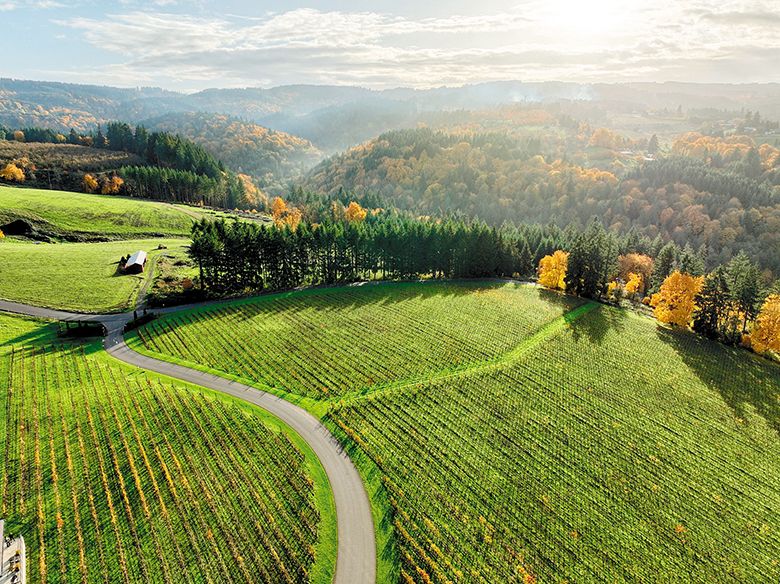
At Ponzi, Ortiz became responsible for vineyard maintenance and picking in 1992, before being promoted to vineyard supervisor in 1995, ensuring all processes were followed correctly along with managing harvest staff. He has served as vineyard manager for the past two decades. When Groupe Bollinger purchased Ponzi Vineyards in 2021, the Ponzi family transitioned Ortiz to their Laurelwood Vineyard Management Company, where he oversees nearly 200 planted acres. His responsibilities include hiring, training, managing the spray schedule and working alongside Ponzi’s winemakers to nurture a successful crop each vintage.
Like Martinez, Ortiz began working in agriculture as a child with his family. For him, the best part of farming is the uniqueness of each year. His impact on the vineyards farmed by Laurelwood Vineyard Management is undeniable. Ortiz shared how he has planted and replanted all the vineyards owned by the Ponzi family, except the original vines from 1968.
Memories From the Vineyard
It is hard to imagine vineyards owned by some of the most recognized wineries in the state without these men’s stories and input. The Loeza brothers have seen planted acreage increase to over 1,000 acres in their four decades with Willamette Valley Vineyards. Over the last three decades, Martinez and Ortiz watched as King Estate and Ponzi Vineyards have built prominent Oregon Pinot Noir brands.
During my interview with Ortiz, he showed a keen understanding of how no two years are alike, something vineyard managers know perhaps better than anyone. Efren recalled 2011, a year that was cold and rainy– even by Northwest standards. He remembered struggling to get the grapes ripe, even refusing a sales rep’s call to apply chemicals to speed the process. Instead, he waited, trusting the sun would eventually arrive, and he was ready by pruning accordingly.
Martinez and Ortiz both cited the 2020 Labor Day fires as distinctly memorable. Ortiz noted how the most significant damage did not come from the flames but instead from the smoke. He was grateful to work for Ponzi Vineyards, which chose to preserve integrity and quality, only bottling wine not impacted by the fires. Martinez expressed similar sentiments about King Estate.
But major natural events are not the only watershed moments in these men’s experience. Miguel’s story of the harvest in 2008 stands out. He explained how a mistake was made in the spray regime before budbreak. His voice changed, taking more gulps and carrying a sense of ownership for his vines. The mix-up created challenges in the yields, color and quality of the early grapes. He was devastated but resolute. He kept a close eye on the grapes, walking the vineyard every day to check on them, asking God for help– everyone’s last resort, religious or not. His vigilance, along with decades of experience and hard work, yielded nearly a full recovery in those blocks.
It is in their stories, in the solemn respect when talking about their mentors, and in the humility of their work that each year grapes of the highest quality are processed into wine for us to enjoy. From the early days of hand-placed corks and labels, from first jobs as harvest pickers, these men now oversee and mentor new generations of future vineyard managers. Hopefully, one day those they mentor will refer to them with respect when asked to share their stories.
As a beverage professional, I feel privileged to understand how a glass of wine carries something earned. Speaking with Efren, Miguel, Martinez and Ortiz summons new visions of grapes bursting to be tasted, fields plowed by hand, knives cutting through seeds and prayers lifted with the morning sun. Next time I drive through the vineyards, I will appreciate their peaceful grace and beauty, but also remember the work of those who make each year’s harvest possible. For that, I am grateful.
Wineries Hosting Tastings in Spanish
Bodegas que ofrecen catas en español
Alumbra Cellars, Atticus Estate Vineyard & Winery, Cória Estates, Cramoisi Vineyards, Gonzales Wine Company, PARRA Wine Co. and Valcan Cellars.
Adelsheim Vineyard offers both tastings and guided hikes in Spanish.
Luis Romero, M.S., M.A., is a wine, beer and spirits educator, certified sommelier, beverage specialist, and owner of the International Beverage Academy, an approved program provider offering WSET certifications in English and Spanish to professionals and enthusiasts alike. With more than a decade of university teaching and beverage education experience, Luis has spent his last two summers working in wineries across the West Coast. This season, he’s pouring at Elk Cove Vineyards while preparing for his WSET Diploma exam. His writing has appeared in Bon Appétit, Plate Magazine, among other digital and printed publications. His passion for life is only rivaled by his desire to learn and share new experiences with readers and loved ones alike. Sign up for his online courses at www.beveragecertified.com.