Couples Therapy: Part Two
The next generation of couple-run wineries
By Aakanksha Agarwal
Last month, I spoke with seasoned vintner couples whose partnerships were shaped over decades in the wine business.
For this story, I interviewed wine partners who replanted family farms, relocated for harvest or started from scratch in midlife – building wineries, careers and marriages in tandem. Together, they offer models for Oregon’s next chapter of winegrowing.
The Legacy Pivot: Kristof Wines, Yamhill-Carlton
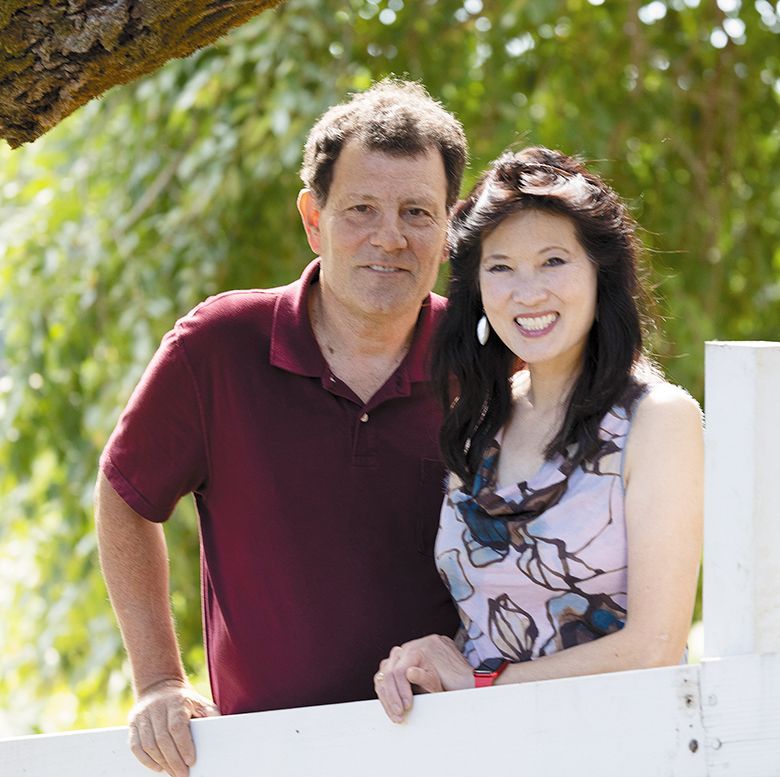
Nicholas Kristof grew up on this Yamhill-Carlton farm, but only recently did he and wife Sheryl WuDunn replace the family’s cherry orchard with wine grapes and cider apples. At the time, the couple was deeply immersed in reporting on the struggles of America’s working class. That experience sharpened their desire to build something tangible. “We wanted to do something at a micro level to help the community,” recalled Kristof, noting how cherries were not creating jobs or attracting visitors. It also fulfilled a dream of Kristof’s father. “My dad always wanted to grow wine grapes and make wine,” he shared. “He died in 2010 without accomplishing his goal.”
The decision involved the entire family, including Kristof’s mother and the couple’s three children. Early missteps included erecting a fence so effective it trapped deer inside the property. Still, the family persisted, leaning on winemaking partners and the broader Oregon wine community, which Kristof described as remarkably generous. From the outset, stewardship shaped every choice. Living on the farm, Kristof and WuDunn committed to sustainable farming and biological pest control, including releasing millions of tiny trichogramma wasps to combat codling moths. “It felt a little crazy to add wasps to our farm,” Kristof admitted, “but they didn’t bother us and completely eradicated the moths.”
Kristof Wines remains intentionally small but deeply collaborative. Decisions are made as a family, with WuDunn overseeing day-to-day management and regulatory work while Kristof focuses on storytelling and outreach. “We’re a democracy,” Kristof notes. “Sheryl has the Harvard MBA, so I defer to her on pricing to ensure the venture is on its own two feet.” For Kristof, the farm provides grounding after covering global crises for years. “I report on wars or genocide abroad, and then return to the farm to heal,” he confessed. The work has also reshaped how he thinks about wine and journalism alike. “A wine has an aroma. An article has a headline. Reporting captures a scene, and wine captures terroir.”
Built as a Family Chapter: Balsall Creek, Chehalem Mountains
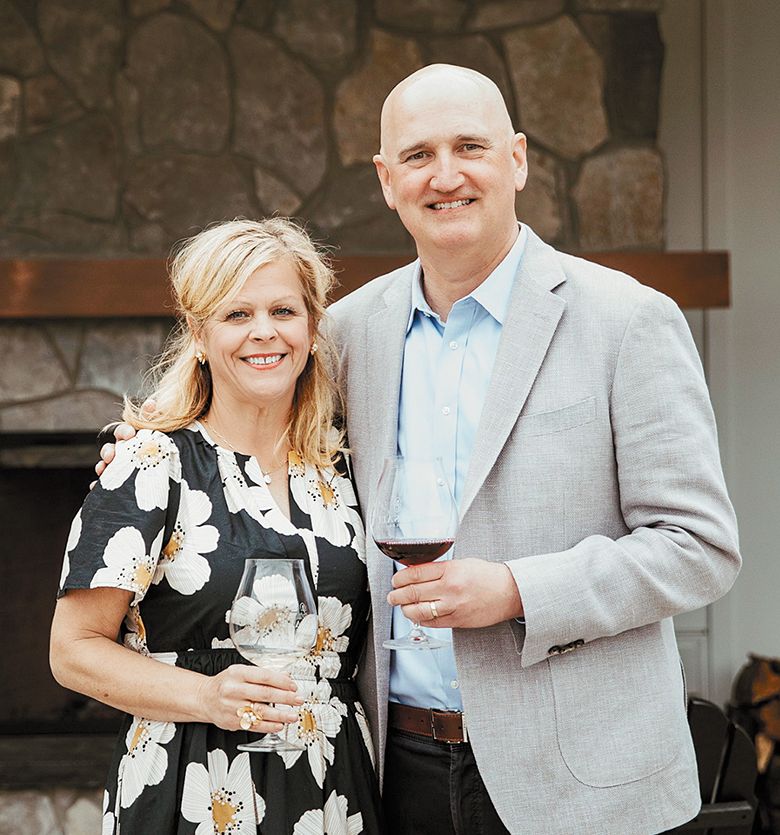
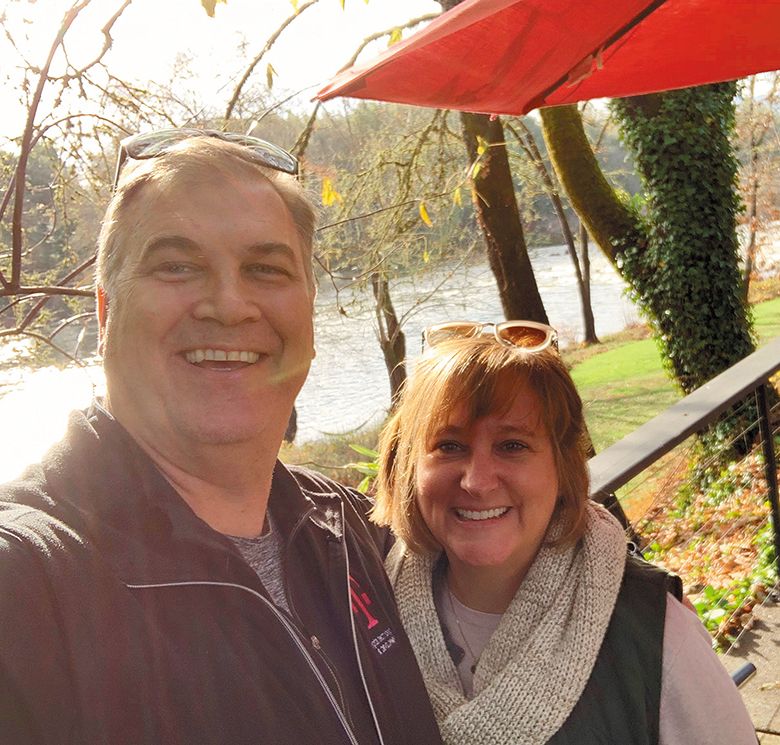
Balsall Creek was decades in the making. For Jon and Lesli Owens, the idea first took root more than 30 years ago while living in Europe, where close friendships with families in the French wine business offered an intimate look at vineyard life. Wine was never merely a product but instead offered a way to structure time, meals and relationships. Even then, Jon admitted, it was something they always imagined doing together. “We never considered not doing this as a team.”
When the timing finally aligned, Balsall Creek emerged not as a retirement project but as what Jon calls “the next chapter of our lives.” Their adult children and son-in-law now hold leadership roles across the winery, bringing multiple perspectives into decisions about the estate’s future.
Jon’s business background led him toward operations, finance and vineyard decisions, while Lesli gravitated toward hospitality and shaping guest experience.
Big-picture decisions around vineyard management, winemaking direction and customer experience are made together.
Stewardship is embedded in daily practice. The 35-acre estate is organically farmed and supported by solar panels and a growing farm-to-table garden.
Sustainability, Lesli observed, “informs most everything we do.” Sheep are planned to fertilize and trim vineyard rows, reducing reliance on heavy equipment and reinforcing a closed-loop approach to farming.
After Jon’s career kept him traveling, building something side by side changed their lives. “We really haven’t developed boundaries,” he declared. “The business has just become a part of our lives.” Rather than straining the relationship, the closeness has been grounding. “We get along better now than ever before.”
A Second Act With Dirt Under the Nails: Knostman Family Winery, Umpqua Valley
Knostman Family Winery began as a recalibration. After extended first careers, Chuck and Joni Knostman found themselves drawn to wine during a 2018 trip to Sonoma, where the appeal lay as much in farming as in the glass. They realized it was “a lifestyle we would enjoy” — and one to build together.
Roles progressed through education and experience. Chuck retired first, studying vineyard management and primary winemaking at UC Davis and Oregon State University. Joni followed, completing WSET coursework and running tasting room operations. “Most decisions are made jointly,” the couple shared, from blending and bottling to pricing and events, even as some vineyard and winery choices are handled independently.
Opening during the pandemic brought challenges, compounded by farming’s constant demands and wine’s extended timeline. Their children remain involved in supportive ways, helping during harvest and weighing in on blends. After 45 years together, Chuck and Joni described their approach simply: they have “always managed organized chaos” and “learned to always look out for each other,” a rhythm now extending into the vineyard.
From Harvest Crush to Full-Spectrum Sparkling: Landmass Wines, Columbia River Gorge
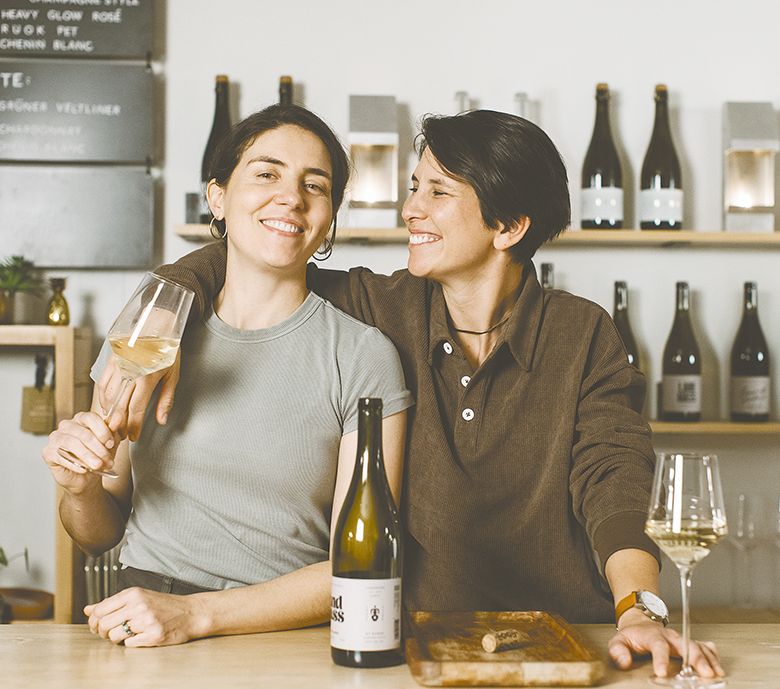
Melaney Schmidt and Malia Myers, the duo behind Landmass Wines, met in Los Angeles in 2011 and spent years in hospitality, bars, restaurants and coffee. Both in management-heavy roles, work was defined by long hours and fast decisions. Wine entered gradually, then decisively, when Schmidt began exploring industry jobs and realized it meant leaving Southern California.
A visit to Illahe Vineyards proved pivotal. When the winery mentioned they needed two people for the next harvest, Schmidt and Myers packed up their lives– along with their dogs and cat– and moved to Oregon in 2016. Harvest there felt like a team sport, Myers acknowledged, a place where “there was this unified goal and everyone was on board.”
They entered the wine industry from different angles. Schmidt gravitated toward formal education and technical questions, eventually attending winemaking school. Myers took a tactile route, working harvests, distribution and hands-on cellar jobs, drawing on a background in production and set-building. “Two people doing the same thing doesn’t really solve the problem,” Myers noted. Their differences became Landmass’s strength.
The winery began with just 200 cases. Six years later, production has grown to roughly 6,000 cases, with sparkling wine at the core of its identity. Growth has been deliberate. “You kind of have to put your ego to the side for the purpose of getting to the common goal,” Schmidt confessed. Over time, work and life merged into a shared language. “The business is our baby,” the two shared, noting how discussing wine rarely feels like work.
Hospitality as a Blueprint: Everen Wines, Walla Walla Valley
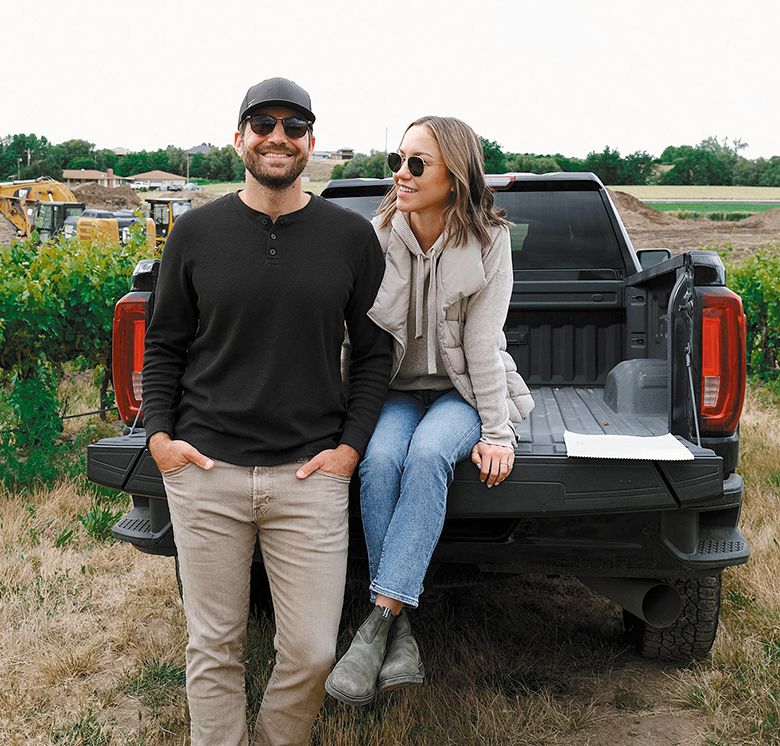
Everen Wines was born from a question rather than a plan. During a 2016 road trip through the Willamette Valley, Matt Aksel and Hope Trumbull witnessed a couple spending an ordinary weekday afternoon with their children. The moment lingered. “We both looked at each other and asked, how can we create that life?” Aksel recalled.
The answer came in deliberate steps. They began saving, purchasing a home in Walla Walla in 2018. Back in the Pacific Northwest, they committed to learning wine from the ground up.“For as long as I can remember, Matt and I have wanted to build something centered around our shared love of hosting, food and wine,” Trumbull described. The desire for control over every part of the experience persuaded Aksel to attend Walla Walla Community College’s enology and viticulture program.
Aksel handles operations, finance, systems and cellar work, while Trumbull leads branding, design and hospitality. The structure shifts as needed. “Our roles are ever evolving, based on what Everen needs from both of us that day, week or month,” Trumbull explained. Important decisions are made together. “Although our palates are uniquely different, we seem to always agree on the best blend for Everen,” she added.
The wines reflect a food-first philosophy. Everen works with sustainably and organically farmed vineyards across Washington and Oregon, including a three-and-a-half-acre Merlot vineyard, crafting wines that are vibrant and table-driven. “At the end of the day, we’re making wines we like to drink with friends over dinner on the patio,” stated Aksel.
Running a winery alongside full-time careers requires precision and conviction. Their days are tightly scheduled, but evenings are reserved for reconnection.
“One of the most unexpected parts of this whole thing has been an increase in trust,” Aksel marveled. “At the end of the day, it’s your partner you trust. That’s what makes it work.”
The Myth of the “Side Project”: Hundred Suns Wine, Willamette Valley
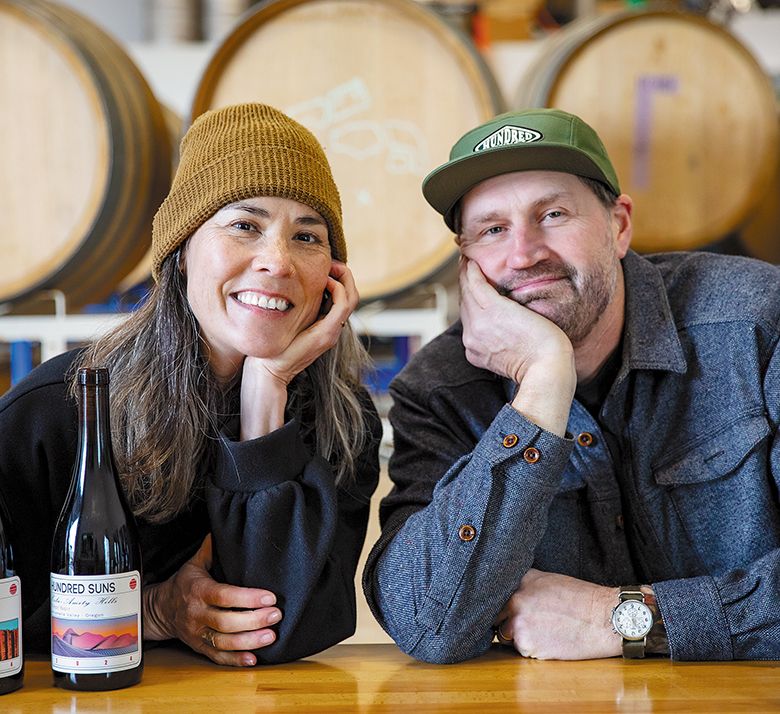
When Grant Coulter and Renée Saint-Amour sold their Portland home and moved to the Willamette Valley with young children, they imagined wine as a creative side venture, producing just 450 cases. “That’s not really what happened,” Coulter admitted. The winery grew, and so did the intensity.
In the early years, Saint-Amour handled much of the hands-on work, while Coulter, still employed full-time, guided the winemaking vision and learned the business from the inside out. Over time, clear lanes emerged. Coulter oversees vineyard sourcing, production and creative direction in the cellar, while Saint-Amour handles sales, finance and daily operations.
Coulter’s background working at established wineries provided technical grounding, but Hundred Suns offered creative freedom. “This was my chance to try anything,” he shared, from carbonic fermentations to whole-cluster work and varied sourcing across the valley. The goal is never novelty for its own sake. “The wines have to be delicious,” he asserted. “They must be something people want to come back to.”
Coulter approaches the idea of minimal intervention with skepticism, noting the constant attention vineyards require, especially in a changing climate. Owning and replanting their own site has intensified that reality. “When you live on the vineyard, it’s always staring you in the face,” he acknowledged.
As a couple, boundaries are the hardest part. Work easily bleeds into home life, particularly during harvest and release cycles. Their children help enforce the line. “If we don’t remind ourselves at the dinner table, our kids will,” quipped Coulter.
Aakanksha Agarwal is a wine, travel and lifestyle writer from India. Formerly a Bollywood stylist, she now resides in the U.S., embracing writing full-time while juggling family life and indulging in her passions for cuisine, literature and wanderlust.