2025 OWP Person of the Year: Andrew Davis
The Radiant Sparkling Wine Company and Lytle-Barnett
By Michele Francisco
We’re all familiar with the Paul Revere-type revolutionary who shouts loudly while galloping on horseback. However, not all revolutionaries draw attention to themselves. Some busily move mountains and affect real change in a quiet, reserved manner. It’s my pleasure to introduce you to someone who has significantly influenced Oregon’s wine industry– yet, whose name you probably don’t know.
But first, let me set the stage. Imagine it’s 2013. Back then, only a handful of Oregon wineries were making sparkling wine using the traditional method (like they do in Champagne). The most widely known is Argyle Winery, whose founder and head winemaker, Rollin Soles, is leaving to focus on ROCO Winery, a project he shares with wife, Corby.
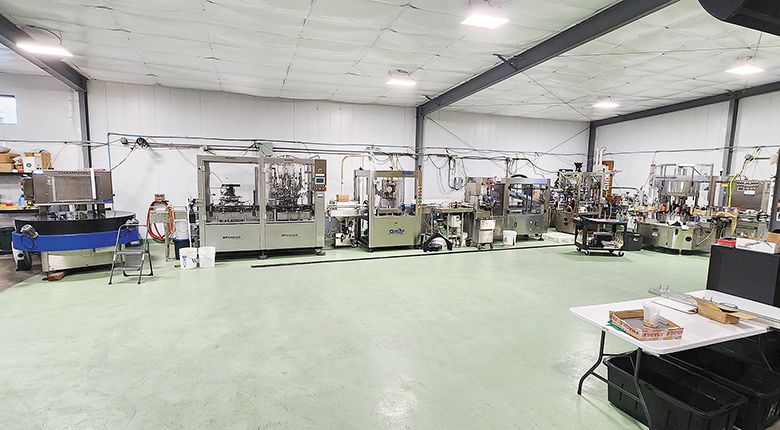
Another member of his winemaking team is also departing to launch an unusual business model. He plans to produce traditional method sparkling wines for existing wineries looking to join the bubbles game, but lacking the specialized, expensive equipment.
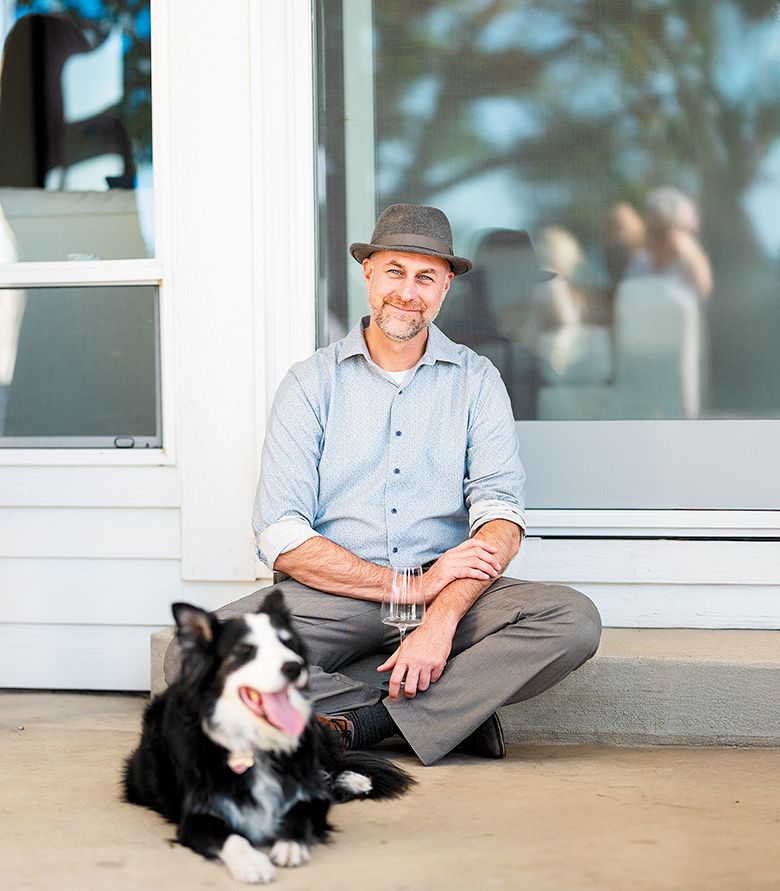
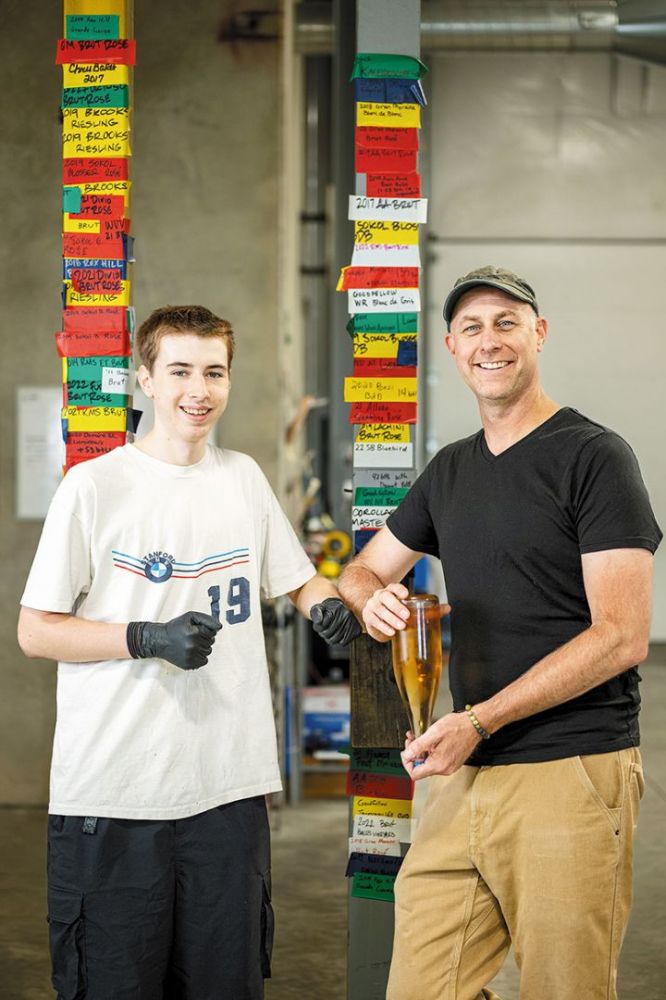
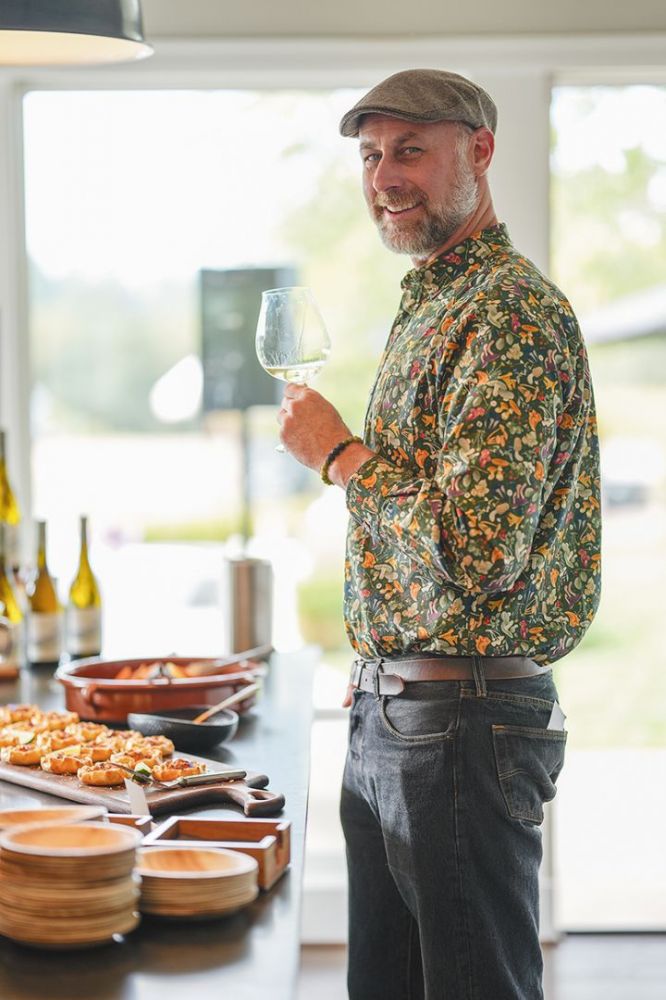
This revolutionary is Andrew Davis, and he is the 2025 Oregon Wine Press Person of the Year. Read on to learn why he was selected.
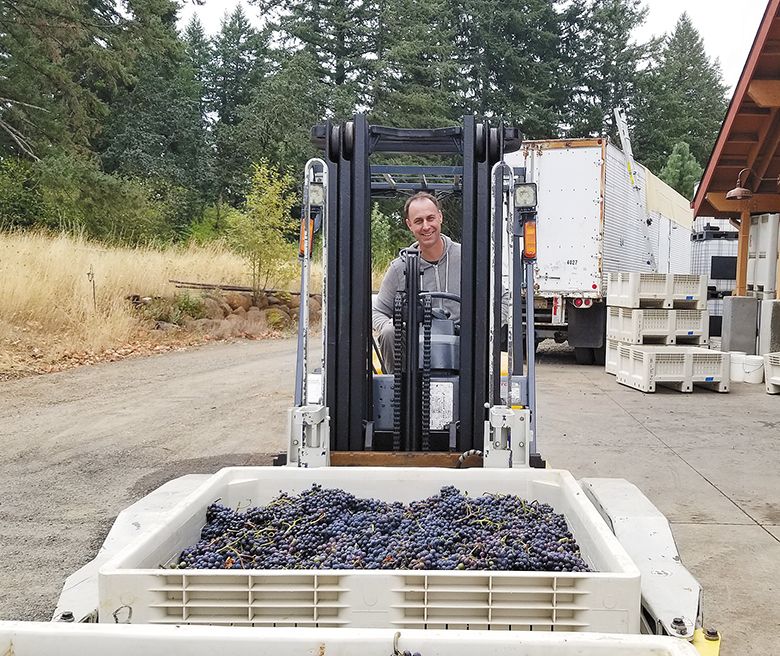
Davis started The Radiant Sparkling Wine Company the following year, in 2014. As he tells it, “I begged, borrowed and stole what I could. My father loaned me money, and I gave Rollin and Corby a small share of the business to get it off the ground. They were so generous and helpful. I had a duo gyro and small disgorging line tucked into a corner of the ROCO winery building. It was great.”
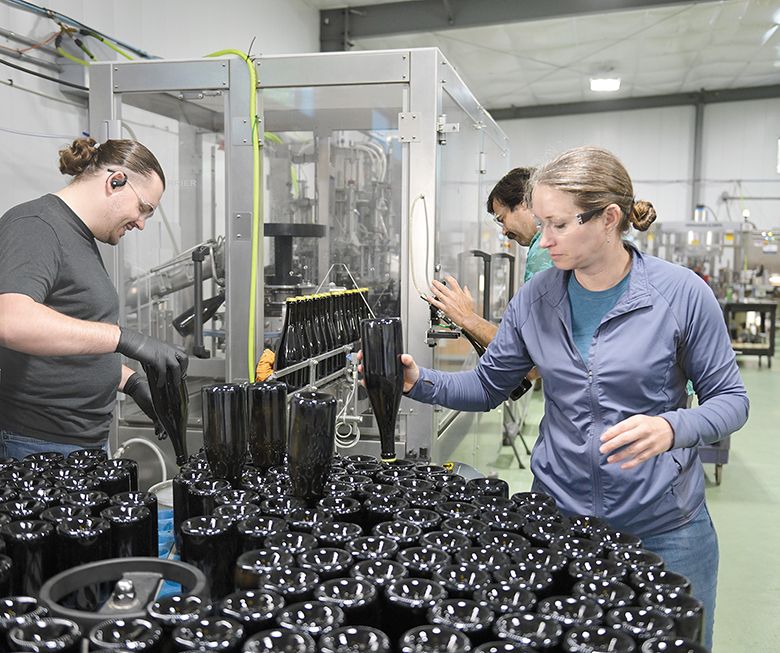
Since then, Davis estimates The Radiant Sparkling Wine Company has bottled over 350,000 cases of bubbles for his many clients. That’s an annual average of 32,000 cases– more than most Oregon wineries produce in a year. Davis, with his foresight, education and training, has been instrumental in creating an entirely new category for Oregon wine. Before Radiant, there were white, rosé and red. Now we have sparkling, too.
When I point this out to Davis, he replies, “That gives me more credit than I deserve. But I did open the door, that's what was needed. And crafting sparkling is very technical, so new producers can be apprehensive. They worry about making a mistake and not catching it. And then making another vintage and compounding that mistake… and making another vintage and not realizing the mistake until three years later.”
Davis adds, “Suddenly, they’ve got all this inventory that's shot. I’m not here to tell people what style they should be making. Instead, I’m here to bounce ideas off of and tell them what they need to do to get ready so they don’t have a problem.”
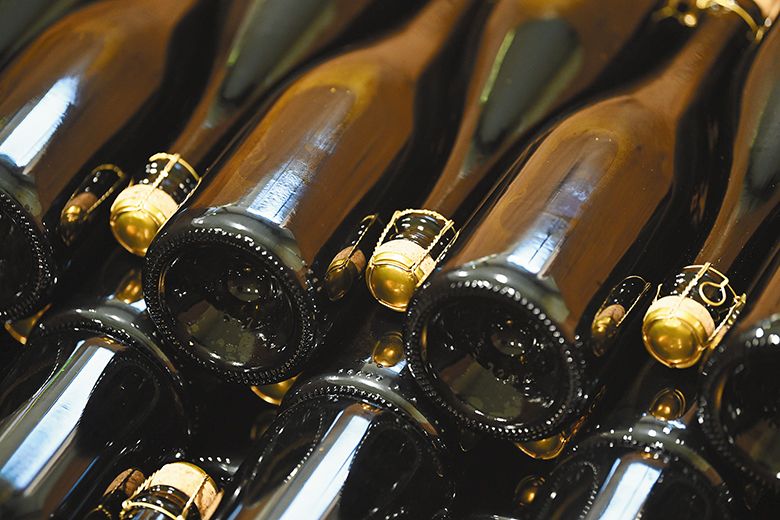
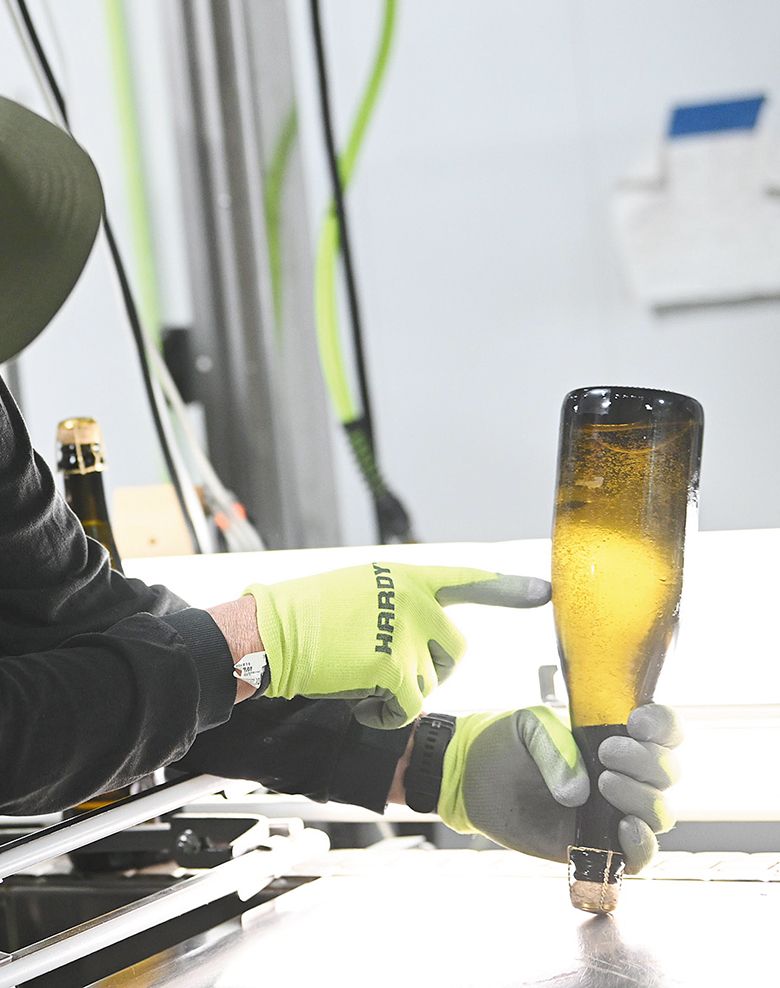
At Radiant, Davis takes his clients’ finished still wine and adds bubbles using the traditional method, where a second fermentation occurs inside each bottle. He puts his post-graduate degree in viticulture and oenology from New Zealand’s Lincoln University to good use. And Oregon wine has greatly benefited from his technical expertise.
“I have enough knowledge behind me to help the industry avoid some of the bigger pitfalls and downright silly mistakes. Those ‘you don't know what you don't know until you know it’ kind of missteps. I think that’s why we’ve been able to hit the ground running. We now have a second wave of 40 or 50 new producers with no background making sparkling, yet they’re crafting some pretty good wines,” explains Davis.
Consumer education is a key component. Traditionally-made sparkling wine is the most labor-intensive way to produce bubbles. This method produces the finest, longest-lasting bubbles and texture.
“I really think people understand still wine. They know it comes from grapes, and still think you need to stomp on them to extract the juice. That juice goes into a barrel and ferments, then a winemaker comes along to taste the barrels and blends them together before putting the wine into a bottle with a cork stopper,” observes Davis.
“They can mentally visualize the whole process with sparkling too. They’re pretty sure it comes from grapes, which are pressed… then there’s a gray cloud… before a popping noise. Even people who have worked in the industry for their entire lives can have misconceptions about what’s going on in the amorphous gray cloud between juice and pop,” Davis laughs. “So, education not only brings more knowledge to the table, but, as people understand something, they appreciate it more.”
Davis continues, “It’s a gross exaggeration, but still wines almost make themselves, going through the fermentation process without any help. If you don’t do anything, it will happen on its own. But you will never have a bottle of sparkling on your own. It takes intervention and technical prowess. It requires preparation, forethought and precision.”
Along with running Radiant, Davis is head winemaker for Lytle-Barnett, one of only a few Oregon brands focused exclusively on traditional method sparkling wines. In its first year, Davis made 400 cases of sparkling wine. Today, he makes 10 times that amount for Lytle-Barnett, now the second-largest sparkling producer in the state.
From the beginning, Oregon’s wine industry has attracted visionaries and protectors. We develop self-imposed standards much stricter than the Feds require. If a bottle says it’s from Oregon, consumers can be confident that 100 percent of the fruit was grown here. Federal rules only require 75 percent. To list a specific Oregon growing region, 95 percent of the fruit must come from there, as opposed to the federally mandated 85 percent. In order for an Oregon winery to list a specific grape variety on a label, such as Pinot Noir, it must contain at least 90 percent of the stated grape. Federal laws only command 75 percent. (Oregon does follow the federal percentages for 18 grape varieties.) Some state rules are more nuanced, but these examples provide a general sense of our rigorous standards, all designed to elevate “Brand Oregon.”
Davis notes, “When you apply for a label application, there isn’t a box to tick stating how the bubbles in the bottle were created. Some wineries, either out of ignorance or just because it sounds better, are putting the term ‘sparkling wine’ on bottles that aren’t in fact legally considered such. Technically, if a wine is forced carbonated, like Coca-Cola, the label should say ‘carbonated wine,’ not ‘sparkling wine.’ I’ve railed about this for years.”
As sparkling wine gains popularity, a small group of Oregon producers aims to develop clearer, more exacting label criteria. This groundswell has been dubbed “Method Oregon.” Davis and his colleagues hope to avoid consumer confusion by imposing standards that make it easy to determine which process was used to create the bubbles. Identifying sparkling wine produced using the traditional method should be simple. “It will come with an assurance to the customer, they know ‘Method Oregon’ means quality,” adds Davis.
Although Davis sold The Radiant Sparkling Wine Company to Vinovate Custom Wine Services last May, he remains at the helm, for now.
When asked about the future of Oregon sparkling wine, Davis first offers some perspective. “For many of the old-world iconic wine regions, there’s a new-world equivalent. Bordeaux-Napa. Stylistically, they’re distinctive yet both iconic expressions of the Cabernet Sauvignon grape. Burgundy-Oregon. Stylistically, they are slightly different, but no one would argue that both regions aren’t producing exceptional quality wines.”
He notes that “every single wine region in the world seems to have a little bit of sparkling if you look hard enough around the corners. Some more than others. But no one has reached for that gold ring and said, ‘We are going to be the icon equivalent to Champagne.’ In part because Champagne squashes all competition. It doesn’t really want that.”
While a number of Champagne houses have set up shop in California, Davis feels “the Champenois don’t see it as a competition. These are $25 bottles, not $80-100 bottles. Besides, it’s really too hot there to produce great, finesse-driven bubbles. On the other hand, Oregon has an ideal climate for sparkling wine.”
As this second wave of producers gain more knowledge and experience, Davis believes a third wave will follow. “We’ll see bigger investments and the industry will develop on a larger scale. This will allow the world to see the Willamette Valley as the iconic equivalent of Champagne. But it’s going to take time. We’re literally 13 years into the second wave,” he observes.
Our burgeoning sparkling category is quite youthful when compared to Champagne. The famous Dom Pérignon brand offers its P2 program, where bottles are aged at least 15 years. “Oregon’s second wave hasn’t even existed long enough to match the aging of those bottles, much less the ones aged 20+ years,” Davis declares.
“While this second wave includes so many new participants, they fall into two buckets: generalists and specialists. The generalists are wineries adding another SKU to their existing lineup… but those rarely extend beyond the wine club or tasting room,” Davis asserts. “The specialists are doing nothing but sparkling. Those four or five wineries are challenging the norms by experimenting with unique clones and new vineyard sites. Places like Corollary, Domaine Willamette, Arabilis and Lytle-Barnett are pushing the industry forward. That’s going to be the driving force to get the recognition and attract bigger brands with the ability to spread out beyond the tasting room. That’s what we need to see.”
At the start of our interview, Davis shared why he was drawn to bubbles. “I realized that if someone's got a glass of sparkling in their hand, they're smiling. It is so much better than any other beverage. It's jovial. It's enjoyment. It's pleasure. I wanted to be a part of that.”
As we wrapped up, he tells me, “I’m very proud of the people I get to work with in the industry and am really excited to be helping them. But it should never be about me– it should be about the wines coming out of Oregon. I just want to be the guy behind the curtain. And make sure this tide continues to rise.”
Revolutions bring major change. Oregon’s sparkling wine movement might remain stuck in 2013 without Andrew Davis and his vision for the future. It’s fitting to learn this revolutionary has had his hand in millions of bottles of sparkling wine over his career, spreading joy with every cork popped. I’d say mission accomplished.
WINEMAKING TIMELINE
The Radiant Sparkling Wine Company Founder, 2014 − present, McMinnville
Lytle-Barnett Winemaker, 2013-present, Carlton
Goodfellow Wines 2013, McMinnville
Argyle Winery 2006-2013, Dundee
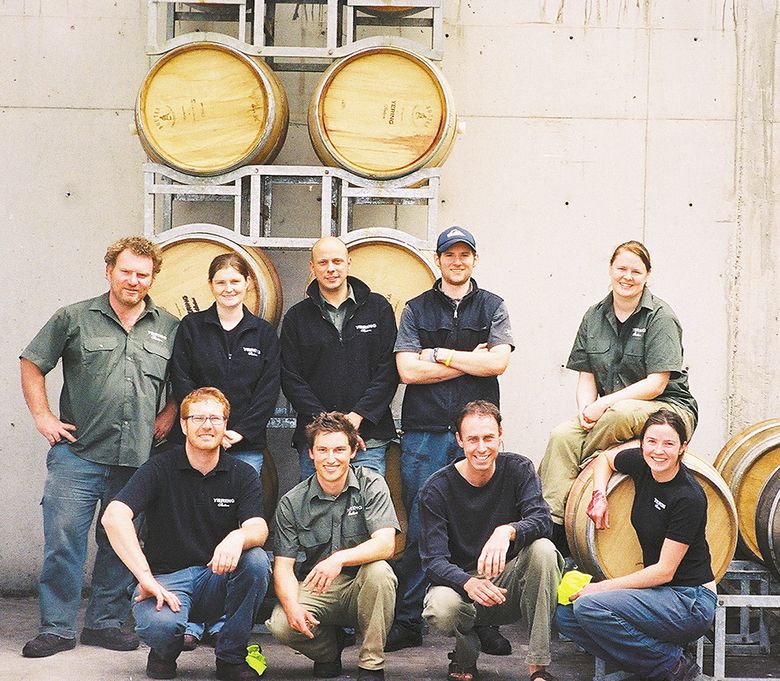
Yering Station Winery 2005, Yering, Australia
Hidden Bench Winery 2005, Beamsville, Ontario, Canada
Creekside Winery 2004, Jordan, Ontario, Canada
Argyle Winery 2003-2004, Dundee
Stonyridge Winery* 2002, Onetangi, New Zealand
Lincoln University 2001-2002, Lincoln, New Zealand
Post-graduate degree in Viticulture and Oenology
*the only winery where he hasn't made sparkling wine
Boards
Oregon Pinot Camp Planning Committee
LIVE Winery Technical Committee
Oregon Riesling Alliance
Oregon Chardonnay Alliance
Method Oregon Planning Committee
Awards & Scores for Lytle-Barnett sparkling wines
Wine Enthusiast
Editor's Choice
Lytle-Barnett 2020 Le Melangeur (94 points)
Lytle-Barnett 2018 Brut RosÉ (94 points)
Lytle-Barnett 2018 Blanc de Blancs (94 points)
Lytle-Barnett 2018 Blanc de Noirs (93 points)
Lytle-Barnett 2017 Brut (95 points)
Lytle-Barnett 2016 Brut (95 points)
Lytle-Barnett 2014 10-Year Extended Tirage Brut (96 points)
James Suckling
Lytle-Barnett 2016 Blanc de Blancs (92 points)
Wine Spectator
Lytle-Barnett 2019 Blanc de Blancs (92 points)
Lytle-Barnett 2018 Brut (91 points)
Jancis Robinson
Lytle-Barnett 2020 Le Melangeur (17.5 points)
Lytle-Barnett 2018 Brut RosÉ (17 points)
Jeb Dunnuck
Lytle-Barnett 2019 Blanc de Noirs (92 points)
Lytle-Barnett 2018 Blanc de Blancs (93 points)
Lytle-Barnett 2018 Brut (92 points)
Lytle-Barnett 2017 Brut RosÉ (93 points)
Michele Francisco, Editor
After a childhood spent reading and writing, Michele graduated from UCLA with an English degree. She moved to Oregon in 2010, studied wine at Chemeketa Community College and began Winerabble, a Northwest-focused wine blog. Michele has been a cheerleader for Oregon wine since her arrival.