
Pour, Rinse, Repeat
Revino’s refillable bottles are changing Oregon’s sustainability story
By Greg Norton
“Should I return your deposit?” the friendly clerk asked, puzzled, as I handed her an empty wine bottle.
It’s a fair question for anyone familiar with Oregon’s bottle bill, which adds a nickel or dime on beer, soda and water containers– but never wine.
Her confusion is a sign of something new: a unique partnership between Portland Metro grocery chain New Seasons Market and Revino, a company replacing single-use wine bottles with refillable ones. Shoppers can buy wine in reusable Revino bottles directly from wineries or at any New Seasons location, before returning the empties at checkout for rewards points.
No deposit necessary– just a new habit learned.
A WEIGHTY PROBLEM
The manufacture and shipping of both empty and filled wine bottles can account for the majority of a wine’s carbon footprint. According to Revino, its bottles cut carbon emissions by up to 85 percent compared to single-use glass.
Revino cleans, inspects and delivers washed bottles to wineries that can be refilled up to 50 times, though they become carbon-neutral after three fills.
“Our New Seasons partnership gives us an incredible opportunity to introduce reusable wine bottles to more customers across Oregon and Southwest Washington,” explained Adam Rack, Revino cofounder and chief operating officer.
SOUTHERN EXPANSION
The joint venture comes as Revino accelerates its broader expansion. The company, founded in 2022, has already collaborated with 120 brands and sold 2 million refillable glass bottles to date, returnable at more than 100 locations.
That growth is extending south. CalRecycle recently awarded Revino a $4.87 million grant to build a bottle-washing facility in Lompoc, Calif., the company’s first in the state. The facility, expected to open in late 2027, will wash 10 million glass containers annually and share space with the Lompoc Valley Community Health Organization. Revino is separately raising $5 million to cover construction and operating costs.
“We know recycling alone will not mitigate climate change. We must invest in reuse systems,” Rack noted of the California expansion.
CONTINUED GROWTH IN OREGON
Back in Oregon, Revino’s McMinnville washing facility is turning out its first pallets of washed, inspected bottles and shipping them back out to wineries to refill.
In the Applegate Valley, Schultz Wines is all in with Revino. “We didn’t hesitate at all after we found out what they were doing,” recalled owner Greg Schultz. Knowing the glass is made on the West Coast and not imported, adds to his enthusiasm.
Schultz bottles several wines in Revino’s Burgundy-style bottles with both cork and screw-cap closures, and looks forward to a Bordeaux-style option for his Tempranillo and other varietals.
Quady North Winery, a 15-minute drive from Schultz, serves as Revino’s regional distribution site where area wineries collect the empty bottles ready to be filled. Schultz remembers taking a call from Nate Wall, winemaker at neighboring Troon Vineyard, offering to pick up bottles purchased by Schultz alongside Troon’s allotment– saving him the drive.
“We help each other out, those of us who are interested in this kind of thing,” he shared. “It’s incredibly collaborative.”
NEW SEASONS, NEW HABITS
“Working with Revino allows us to build on our existing sustainability programs with a solution that’s both impactful and easy for customers to participate in,” reported Athena Petty, New Seasons’ senior sustainability manager.
Rack agreed: “We believe making reuse simple and accessible is key to changing consumer habits.”
Additional return locations only make that easier. Even without a deposit. Visit revinobottles.com/returns to find a convenient return outlet.
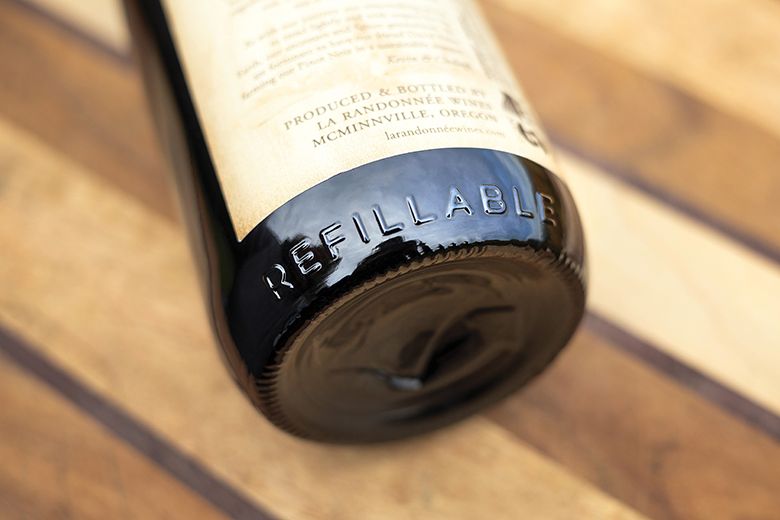
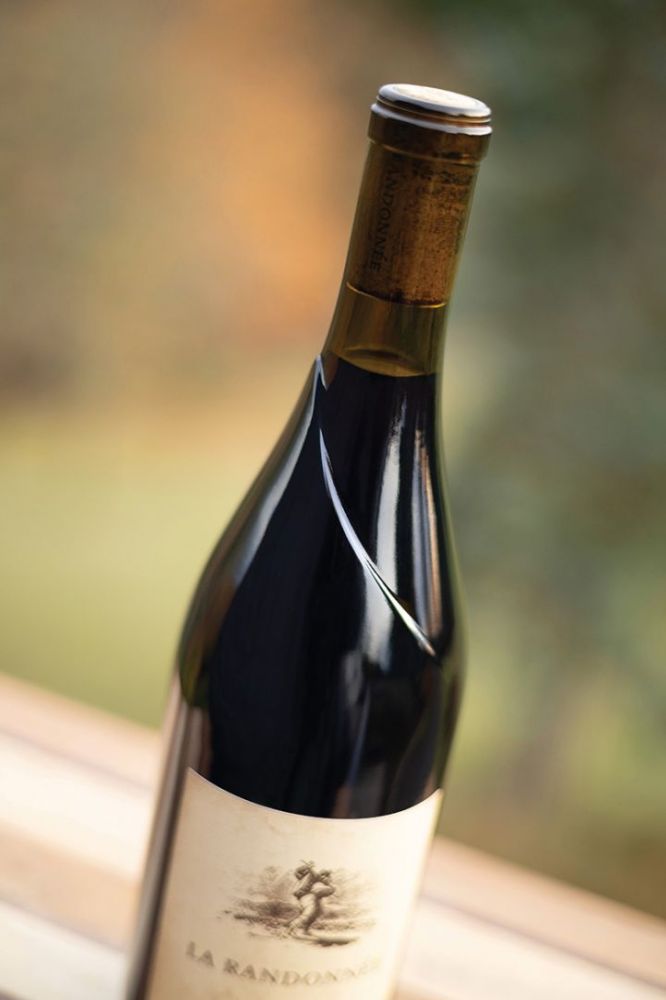
Editor’s note: Identifying a Revino bottle is easy. Look for the distinctive leaf-inspired motif on the neck and word “refillable” embossed along the bottom of the bottle. Follow this link to find wineries using Revino bottles: tinyurl.com/OregonRevino.
Greg Norton is a freelance writer with a broad background in nonprofit communications and the arts. He studied journalistic writing through the UCLA Extension and has traveled to wine regions around the world. Greg is a Certified Specialist of Wine and received the Level II award from the Wine and Spirits Education Trust. When not writing about wine, he can be found pouring it in a tasting room or wine bar near West Linn, where he lives. Read more by Greg at onthevine.blog.